Some acne cleansers are too aggressive.
This one looks more elegant.
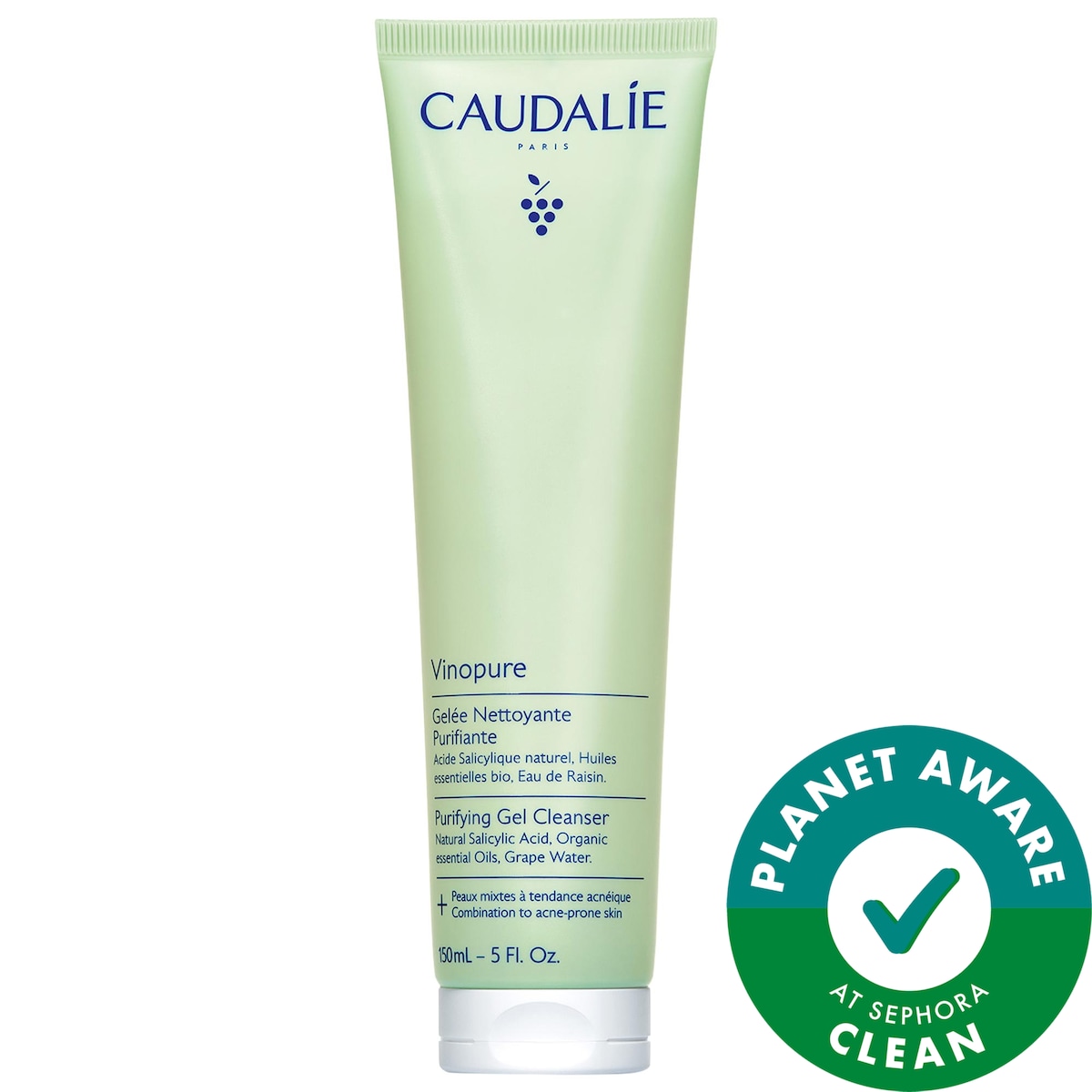
That is why Caudalie Vinopure Pore Purifying Gel Cleanser is easy to trust at first glance. The bottle feels clean. The brand feels calmer than the usual harsh acne aisle. The formula has salicylic acid, grape water, aloe, glycerin, and a gel texture that sounds like it should leave oily skin fresh without that stripped, squeaky feeling.
I get the appeal.
But I would not buy it just because it says salicylic acid.
In May 2026, I would treat this as a polished, lightly active gel cleanser for normal, combination, and oily skin that gets congested. I would be more careful if your skin is very sensitive, very dry, easily fragrance-reactive, or already irritated from acne treatments.
That is the catch. The cleanser makes sense for the right face. It is not the gentlest possible acne cleanser, and it is not a full acne routine by itself.
The quick answer
Caudalie Vinopure Pore Purifying Gel Cleanser is worth considering if your skin is oily, combination, or normal-to-oily and you want a fresh gel cleanser that helps with excess oil, clogged-looking pores, and acne-prone routines without feeling like a drugstore stripping wash.
I would skip it if your face feels tight after most cleansers, if fragrance or essential oils usually bother you, if your acne routine already includes multiple drying actives, or if you need a cleanser mainly to remove heavy makeup and sunscreen.
Here is the cleanest read:
| If your skin feels like... | My take on Vinopure Gel Cleanser |
|---|---|
| Oily by midday and congested around the nose | Worth testing |
| Combination with clogged pores but dry cheeks | Use carefully, possibly only once daily |
| Acne-prone and already using retinoids or benzoyl peroxide | Watch dryness closely |
| Dry, tight, or barrier-damaged | Probably not the first cleanser I would choose |
| Sensitive to fragrance, minty products, or essential oils | Patch test or skip |
| Wearing heavy makeup or water-resistant sunscreen | Use a separate first cleanse first |
The best use case is simple: a morning or second-step cleanse for skin that wants a fresher, clearer feel without moving into a very harsh acne wash.
What this cleanser is trying to do
Vinopure is trying to be an acne-prone skin cleanser that still feels like Caudalie.
That matters because acne cleansers often split into two camps. One camp feels medicinal and drying. The other feels too gentle to do much for oil and congestion. Caudalie is trying to sit between those two lanes: a gel cleanser with a clean-rinsing feel, salicylic acid, and a more sensorial brand identity.
Sephora lists it at $30 for 5 oz / 150 mL with a review average around 4.5 from more than 1,300 reviews in the local product data. Caudalie also sells a jumbo size on its own site and positions the cleanser for combination to oily, acne-prone skin, breakouts, spots, oily skin, and clogged pores.
That tells me the product is not trying to be a bland sensitive-skin cleanser.
It is trying to make oily and congested skin feel clean, fresh, and refined without the obvious punishment feeling people associate with stronger acne washes.
That is a useful job. It is also a narrow job.
The ingredient story in plain English
The formula starts like a gel cleanser should: water, grape water, gentle surfactants, glycerin, gums, and texture ingredients. Then it brings in salicylic acid, aloe, grape juice, and an essential-oil blend that includes geranium, peppermint, lemongrass, rosemary, lavender hybrid oil, and lemon balm.
The salicylic acid is the ingredient most people will notice first.
Salicylic acid is oil-soluble, which is why it shows up so often in products aimed at clogged pores and acne-prone skin. In a cleanser, it has less contact time than a leave-on treatment, so I would not expect it to behave like a full exfoliating serum. I would think of it as a support ingredient in a wash that is already meant for oil and congestion.
Glycerin is the comfort piece. It helps the cleanser avoid feeling too bare.
Grape water and aloe fit the softer Caudalie feel.
The essential oils are the part I would pay attention to if your skin is reactive. They may make the cleanser smell and feel more refreshing. They are also the reason I would not call this the safest possible pick for every sensitive face.
That does not make the formula bad.
It means the formula has personality. Personality is great when your skin likes it. It is annoying when your skin just wanted something boring.
The salicylic acid reality
I like salicylic acid in the right routine.
I do not like when a cleanser gets treated like a magic acne step because one ingredient is familiar.
The American Academy of Dermatology lists salicylic acid as a common acne ingredient and notes that acne products can cause dryness or irritation. Mayo Clinic also describes salicylic acid as an ingredient used in nonprescription acne products, while making the same broader point: irritation is possible, and products need time and consistency.
That is how I would approach this cleanser.
If your routine has no acne active and your skin is oily or congested, Vinopure may be a reasonable starting point.
If your routine already has a retinoid, benzoyl peroxide, exfoliating toner, acne serum, clay mask, and spot treatment, adding a salicylic cleanser twice a day may be too much. The cleanser may get blamed for irritation that actually comes from the whole routine being overbuilt.
Acne-prone skin needs consistency. It does not need every step to be active.
The texture question
Gel cleansers have to pass one very specific test.
Does the face feel clean without feeling tight ten minutes later?
That is the only test I care about at first. A cleanser can feel amazing while it is on the skin and still leave the face uncomfortable after rinsing. That delayed tightness is easy to ignore because the first impression was so fresh.
Vinopure is described as a gel that creates a light foam. I would expect it to feel clearer and more refreshing than a cream cleanser, but less plush than a milky or balm cleanser. That makes sense for oily and combination skin. It may be too much if your cheeks already feel dry after washing.
I would test it at night first.
Use it once. Do not add a new toner, serum, mask, or moisturizer the same day. Then wait. If your skin feels clean but comfortable, good. If it feels tight around the mouth or cheeks, reduce frequency or choose a gentler cleanser.
The sink test is not enough. The ten-minute test matters more.
What the review pattern tells me
The review signal is strong, but I would read it carefully.
A cleanser with more than a thousand reviews and a mid-4 rating is clearly working for a lot of people. The praise tends to make sense: clean feeling, oil control, freshness, and a more elevated acne-prone cleanser experience.
The complaints also make sense for the category. Some people will find it drying. Some will dislike the scent. Some will expect more acne clearing than a rinse-off cleanser can reasonably deliver. Some will love it in summer and find it too much in winter.
That is why I would not judge this only by stars.
I would ask whether the positive reviews sound like your skin. If people with oily, clogged, shine-prone skin like the fresh feel, and that is your problem, the signal is useful. If your problem is burning, peeling, and sensitivity, those reviews may not predict your experience at all.
Skincare reviews are most helpful when the reviewer has the same problem you have.
Who I would buy it for
I would buy Vinopure for someone who wants their cleanser to do a little more than rinse.
That person may have oil buildup around the nose, forehead shine, blackhead-prone texture, or acne-prone skin that does better with a clean gel wash than with heavy cream cleansers. They may also hate the feeling of cleanser residue and want the face to feel fresh before toner, serum, or moisturizer.
The strongest fit is:
- oily skin that still tolerates fragrance
- combination skin with clogged pores
- normal-to-oily skin that wants a fresher morning cleanse
- acne-prone skin using a fairly simple routine
- someone who likes a lightly foaming gel cleanser
- someone who wants an acne cleanser that feels less clinical
I would especially consider it when the routine is otherwise boring. Cleanser, moisturizer, sunscreen. Maybe one acne treatment at night. That leaves room for a lightly active cleanser without turning the face into a science project.
Who should skip it
Skip it if your skin is already annoyed.
If water stings, moisturizer burns, your cheeks are flaking, or your acne treatment has left the skin raw, I would not reach for a scented salicylic-acid gel cleanser first. I would move toward a bland, fragrance-free cleanser until the skin feels normal again.
Skip it if you know peppermint, fragrant essential oils, or spa-like skincare scents make your face red or itchy.
Skip it if your skin is dry but breaking out. Dry acne-prone skin is real, and it usually needs a gentler cleanser plus a treatment plan, not a fresher wash that makes the dryness louder.
Skip it if you want one cleanser to remove heavy makeup and water-resistant sunscreen. Caudalie notes that if you wear makeup, it is best to use a cleansing oil first and follow with Vinopure. That is exactly how I would use it. I would not force a gel cleanser to do the job of a first cleanse.
How I would use it
I would start with once a day.
Night makes the most sense if you wear sunscreen. Morning makes sense if you wake up oily and your skin tolerates cleansing twice daily. Twice a day is possible for the right skin, but I would earn that frequency instead of starting there.
My cautious test would look like this:
- Use a small amount on damp skin.
- Massage for a short cleanse, not a long exfoliating ritual.
- Rinse well.
- Follow with a simple moisturizer.
- Do not add a new acne treatment the same week.
If the skin feels good after three or four uses, keep going.
If the skin feels tighter, reduce to every other night or switch it to oily zones only. If the face burns, flushes, or starts flaking, stop and simplify.
The goal is not to prove you can tolerate it. The goal is to build a routine your skin can repeat.
How it compares to other cleanser options
This is where the decision gets clearer.
| Product | Image | Best role | My read |
|---|---|---|---|
| Caudalie Vinopure Pore Purifying Gel Cleanser |  | Fresh gel cleanse for oily, combination, congested skin | Best if you want salicylic acid support with a more polished feel |
| Dermalogica Acne Clearing Skin Wash Cleanser |  | More treatment-coded acne cleanser | Better if you want a stronger acne-cleanser identity and tolerate active formulas |
| Kate Somerville EradiKate 3% Sulfur Daily Foaming Cleanser |  | Oily, breakout-prone skin that responds to sulfur | Better if oil and inflamed blemishes are louder than sensitivity |
| belif Aqua Bomb Hydrating Jelly Cleanser | 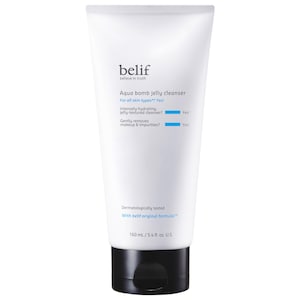 | Hydrating jelly cleanse for normal, combination, and oily skin | Better if you want freshness but not an acne-cleanser feel |
| Fenty Beauty Mini Total Cleans'r | 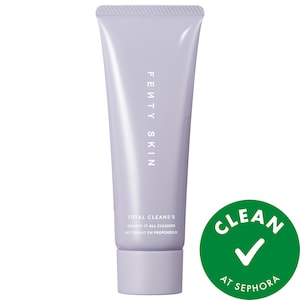 | Makeup-removing cleanser lane | Better if removing longwear makeup is the main problem |
That table is the decision.
Caudalie is not the most clinical acne cleanser here. Dermalogica and Kate Somerville feel more acne-treatment-coded. It is not the most hydrating cleanser here. belif is softer in that direction. It is not the obvious makeup-removal pick. Fenty is built more directly around that job.
Caudalie sits in the middle: oily-skin freshness, salicylic-acid support, and a more refined feel.
The makeup and sunscreen issue
This is where a lot of people use cleansers incorrectly.
If you wear heavy makeup, longwear foundation, waterproof mascara, or water-resistant sunscreen, do not expect one gel cleanser to be perfect every night. You may need a cleansing oil, balm, micellar step, or dedicated first cleanse before Vinopure.
That does not mean Vinopure is weak. It means cleanser roles are different.
A first cleanse breaks down makeup and sunscreen.
A second cleanse washes the skin.
Vinopure makes more sense as the second cleanse. If you ask it to do both jobs and your face still feels coated, you may over-cleanse with it and irritate your skin trying to make the cleanser do something it was not best built for.
The fragrance and essential oil caveat
I would not ignore the scent side of this formula.
Some people love a refreshing cleanser because it makes washing the face feel cleaner. Some people find that same freshness irritating. Peppermint, lemongrass, rosemary, lavender, and fragrance-linked components like linalool, limonene, citral, citronellol, and geraniol are all names I notice when someone tells me their skin reacts to scented products.
If your skin is resilient, this may be a non-issue.
If your skin has a history of stinging, flushing, or random redness, it becomes part of the decision.
I would rather someone skip a beautiful cleanser than spend three weeks trying to convince sensitive skin to enjoy it.
The one-week test
If I were testing Vinopure, I would keep the week boring.
No new masks. No new exfoliating pads. No new retinoid. No new vitamin C. No new spot treatment. Just the cleanser and the routine you already understand.
Track five things:
| Signal | What I would watch |
|---|---|
| Tightness | Does skin feel pulled ten minutes after cleansing? |
| Oil | Does the face look less greasy without feeling stripped? |
| Congestion | Do nose and forehead pores look calmer over time? |
| Irritation | Any stinging, flushing, itching, or new dry patches? |
| Routine fit | Does moisturizer and sunscreen sit better or worse after it? |
One good cleanse does not prove much.
One bad cleanse does not always prove everything either, unless there is burning or a clear reaction.
A week gives you a pattern. Patterns are more useful than first impressions.
Where Glass fits
Cleanser changes are hard to judge because the feedback is subtle.
The face may feel cleaner immediately, but the real answer shows up later: less midday shine, less tightness, fewer clogged-looking areas, or fewer irritated patches after actives. That is exactly the kind of routine change I would log in Glass.
Take the same front-facing photo twice a week. Track when you use the cleanser. Note dryness, oiliness, and new breakouts by area. If the skin improves, you will see a steadier pattern. If the routine gets drier or more reactive, you will catch it before you blame the wrong product.
The point is not to obsess over your face.
The point is to stop guessing.
My bottom line
Caudalie Vinopure Pore Purifying Gel Cleanser is a strong fit for oily, combination, and congested skin that wants a fresher gel cleanse with salicylic-acid support. It is most compelling when your routine is simple and your skin can tolerate a scented, lightly active cleanser.
I would not use it as a cure-all acne treatment. I would not make it remove heavy makeup alone. I would not start it twice daily on irritated skin.
Use it like a cleanser with a job: freshen, rinse clean, support clogged-prone skin, and leave enough comfort behind that you can still moisturize and wear sunscreen without fighting your face.
If your skin feels clean but calm after a week, it has a real role.
If your face feels tight, shiny, and irritated all at once, choose boring over beautiful.
Useful references: Caudalie Vinopure Gel Cleanser, Sephora product details, American Academy of Dermatology acne-prone skin care, and Mayo Clinic on nonprescription acne products.