I do not trust a moisturizer under makeup until I know where it fails.
Some creams look beautiful for ten minutes and then make foundation slide. Some feel hydrating but pill the second sunscreen touches them. Some are technically good skincare and still useless on a makeup day.
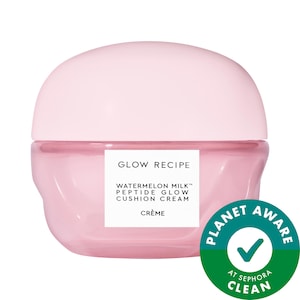
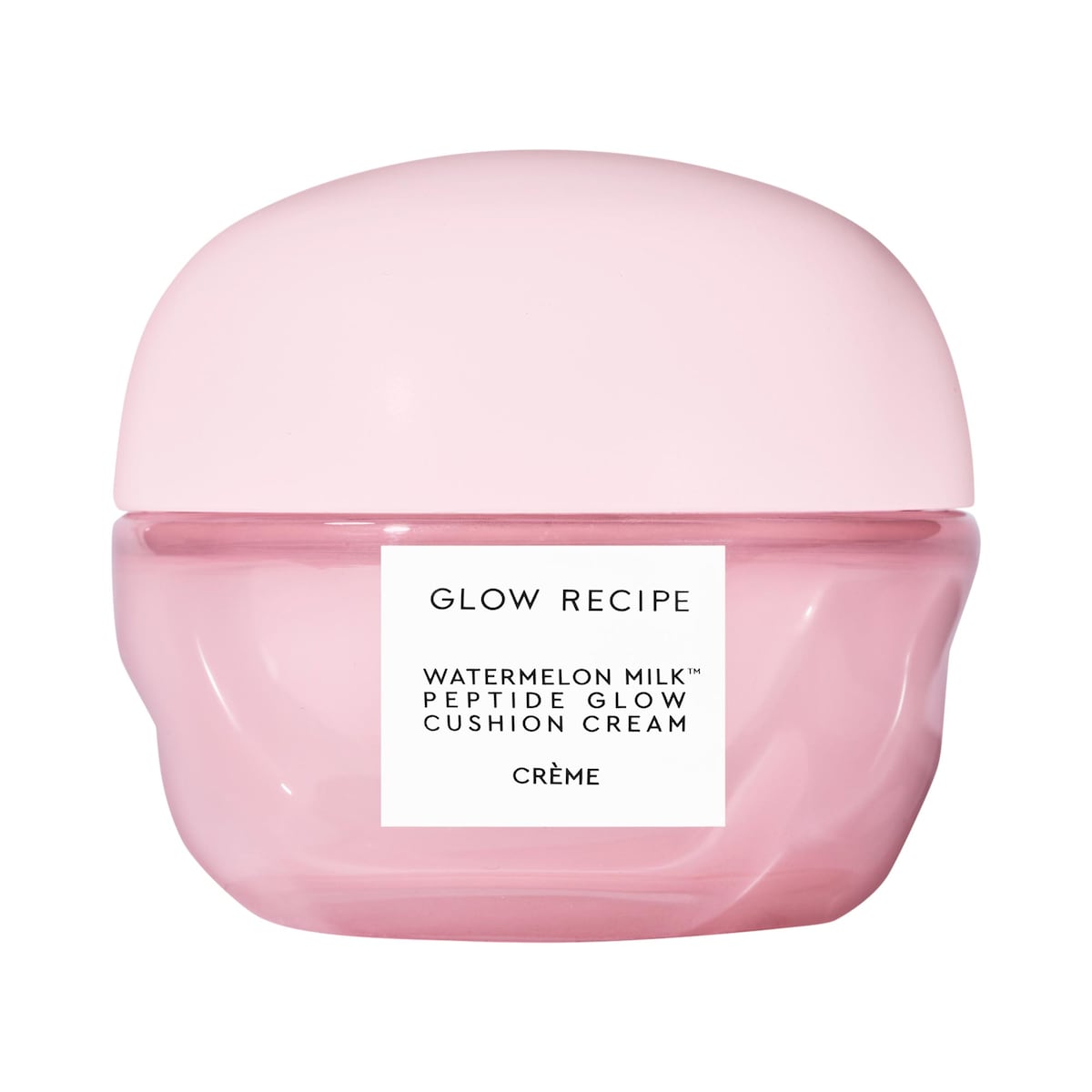
Glow Recipe Watermelon Milk Peptide Cushion Cream can work well under makeup, but only if you treat it like a moisturizer, not a thick primer. The formula has enough cushion to help dry patches look smoother, but it also has enough body that using too much can make sunscreen and foundation feel crowded.
That is the real story with this product. It is not a matte base. It is not a silicone-blurring primer. It is a fragrance-free, cushiony moisturizer that makes dry skin feel more flexible before SPF and complexion products. When the amount is right, makeup can look less flat. When the amount is too heavy, the whole routine can feel like it is sliding around.
The product page is here if you want the full ingredient and routine fit: Glow Recipe Watermelon Milk Peptide Cushion Cream.
Quick Answer
Use a pea-to-dime-size amount, press it into dry areas, wait a few minutes, then apply sunscreen. If you wear foundation, use less cream around oily zones and more around dry cheeks or the mouth.
This cream works best under makeup for dry, normal-dry, and combination-dry skin. Very oily skin may find it too plush for daytime.
The short version: I would use it to fix dry texture, not to control makeup. If your base separates because your skin is oily, this is not the first product I would reach for. If your base looks tired because your skin is dry, this cream has a real job.
Why It Can Help Makeup
Makeup usually looks bad over dry skin for three reasons: rough texture, uneven absorption, and dehydration lines. A lightweight gel can add water, but it does not always soften the surface enough for foundation to sit evenly.
Glow Recipe Watermelon Milk Peptide Cushion Cream has more cushion. The squalane, emollients, panthenol, ceramide NP, and humectants help the skin feel smoother before makeup. That does not mean it fills texture like a primer. It means the skin surface feels less thirsty, which is often enough to make base products behave better.
The Amount Matters
Most pilling problems start with too much product. If you apply the amount you would use for a night routine, then layer sunscreen and foundation on top, the stack may feel heavy.
For makeup days, use less:
- Pea-size for combination skin
- Dime-size for dry skin
- Extra half-pea only on dry patches
Press instead of rubbing aggressively. Rubbing can disturb the layers beneath and encourage pilling later.
I would rather under-apply and add a touch more to dry patches than start with too much. The face does not need one even coat of everything. The cheeks might need cushion. The nose might need almost none. That small adjustment is often the difference between "this pills" and "this works."
Best Morning Order
The simplest order is:
- Cleanse or rinse
- Hydrating serum if you already use one
- Glow Recipe Watermelon Milk Peptide Cushion Cream
- Sunscreen
- Primer if you still need one
- Foundation or skin tint
Do not add steps just because they exist. If the moisturizer already gives enough cushion, skip primer. If your sunscreen has a moisturizing finish, use less cream. The best makeup prep routine is the one that leaves fewer layers fighting each other.
How Long To Wait
Give the cream at least two or three minutes before sunscreen. Longer is better if you used a fuller amount. The goal is not for the cream to vanish completely. The goal is for the surface to stop feeling wet or mobile.
After sunscreen, wait again before foundation if you can. This is especially important with mineral sunscreens or rich skin tints. A crowded routine is more likely to streak.
Best Skin Types For Makeup Prep
Dry skin gets the clearest benefit. The cream can make foundation look less patchy around cheeks, nose folds, and the mouth.
Normal-dry skin can use it as a comfort layer, especially in colder weather or with matte foundation.
Combination skin should place it strategically. Use a thin layer on the T-zone and a fuller layer where the skin is actually dry.
Very oily skin may prefer a lighter product under makeup, then reserve this cream for night.
If Your Foundation Pills
Pilling does not automatically mean the moisturizer is bad. It usually means the layers are incompatible or too thick.
Try this order of fixes:
- Use half as much cream.
- Wait longer before sunscreen.
- Use less sunscreen rubbing and more pressing.
- Skip primer.
- Try it with a different sunscreen.
- Use the cream only on dry zones.
If it still pills with multiple sunscreens and foundations, it may not be your best morning moisturizer.
The test I like is one-product-at-a-time. Try the cream with sunscreen only. If that works, add foundation the next day. If pilling only starts when primer enters the routine, the primer is the problem. This sounds basic, but it saves you from blaming the most recent product just because it is new.
If Your Makeup Slides
Sliding means the stack is too emollient for your skin, your climate, or your foundation. This can happen when the cream, sunscreen, and base product all have a dewy finish.
Use the moisturizer only where you need it. Dry cheeks do not require the same amount as the forehead. You can also use a more matte sunscreen or set the center of the face with powder. If that feels like too much work, use the cream at night instead.
If Makeup Still Looks Dry
If makeup still clings to dry patches, the problem may not be the moisturizer. It may be cleansing, exfoliation, or the foundation formula.
Common reasons:
- Cleanser is too stripping
- Skin is over-exfoliated
- Foundation is too matte
- Sunscreen is drying
- You are applying makeup before skincare settles
This cream can help, but it cannot make an incompatible foundation become hydrating.
Primer Or No Primer
Most dry-skin routines should try it without primer first. A primer can help with grip or blur, but it also adds another layer that can pill.
If you use primer, choose one that has a clear job. Use a gripping primer only where makeup disappears. Use a pore primer only around visible pores. Do not apply a full layer of primer just because the routine feels incomplete.
Sunscreen Pairing
The best sunscreen pairing is one that does not already feel too heavy. If your sunscreen is rich and dewy, use less cream. If your sunscreen is drying, this moisturizer can make it more wearable.
Mineral sunscreens can be tricky because some formulas drag over moisturized skin. Let the cream settle, then pat the sunscreen on in sections. Chemical sunscreens often layer more easily, but the finish depends on the formula.
Foundation Pairing
Skin tints and natural-finish foundations usually pair best. Matte foundations can work if the cream is doing the hydrating base work. Very dewy foundations may become too shiny unless you use a small amount of cream.
The best test is not how it looks immediately. Check two hours later. If makeup still looks smooth and the dry patches are not back, the moisturizer is doing something useful.
I would be more careful with thick, full-coverage foundation. That kind of base already has its own texture and film. A cushion cream underneath can help if skin is dry, but it can also create too much movement. For full coverage, use the cream only where foundation usually cracks.
Night Before Makeup Days
The night before matters too. If your skin is dry, use the cream more generously at night and less in the morning. This gives the skin a better base without forcing the daytime stack to carry all the moisture.
A simple night-before routine:
- Gentle cleanse
- Hydrating serum
- Glow Recipe Watermelon Milk Peptide Cushion Cream
- Optional small balm only on stubborn dry spots
This often works better than overloading the morning routine.
Best Routine For Dry Makeup Days
If the goal is smooth makeup, keep it simple:
- Rinse or gentle cleanse
- Lightweight hydrating serum
- Thin layer of cushion cream
- Sunscreen
- Foundation only where needed
The fewer full-face layers you use, the lower the chance of pilling.
Where To Place It On The Face
One underrated fix is not applying the same amount everywhere. Dry skin is rarely dry in a perfectly even pattern. Most people need more comfort around the cheeks, mouth, and outer face, while the center of the face needs less product if makeup tends to move.
Use the cream like a map. Press a fuller amount where foundation clings. Use whatever is left on your fingers across the forehead and nose. This keeps the finish balanced instead of turning the whole face glossy.
What To Do With Powder
Powder can either save the routine or make dry patches obvious. If you use this cream under makeup, avoid powdering the whole face by habit. Set only the areas that crease, slide, or transfer.
For dry skin, a light press of powder around the nose, under the eyes, and center forehead is usually enough. Leave the cheeks alone unless they genuinely need setting. The cushion cream is doing its best work when the skin still looks flexible, not flattened.
How To Tell It Is Working
The best sign is not instant shine. It is how makeup looks after a few hours. If foundation is not separating around dry patches, if concealer looks less creased because the surrounding skin is not tight, and if the face feels comfortable instead of stretched, the moisturizer is helping.
If the skin looks great for ten minutes and then gets greasy, you used too much or paired it with the wrong sunscreen. If the skin still looks flaky, the routine may need a gentler cleanser, a hydrating serum, or less exfoliation before moisturizer ever touches the face.
The Makeup-Day Mistake I Would Stop Making
I would stop trying to make every skincare step full-face. Makeup prep is more strategic than that. Put the cushion where skin gets dry. Keep the center lighter. Let sunscreen be the last true skincare layer. Then use makeup only where you want coverage.
That kind of routine looks less impressive on paper, but it behaves better on the face.
Bottom Line
Glow Recipe Watermelon Milk Peptide Cushion Cream can be a strong makeup-prep moisturizer for dry skin because it gives cushion without the heavy balm feel. The trick is using less than a night amount and letting each layer settle.
It is best for dry patches, tightness, and matte-foundation comfort. It is not the best fit if your makeup problem is oil breakthrough or sliding.
FAQ
Can Glow Recipe Watermelon Milk Peptide Cushion Cream replace primer?
For dry skin, sometimes yes. It can make skin feel smoother and more comfortable, but it will not blur pores like a silicone primer.
Why does it pill with sunscreen?
Usually too much product, not enough waiting time, or an incompatible sunscreen texture. Reduce the amount first.
Is it better morning or night?
Dry skin can use it both ways. For makeup, use less in the morning and a fuller amount at night.