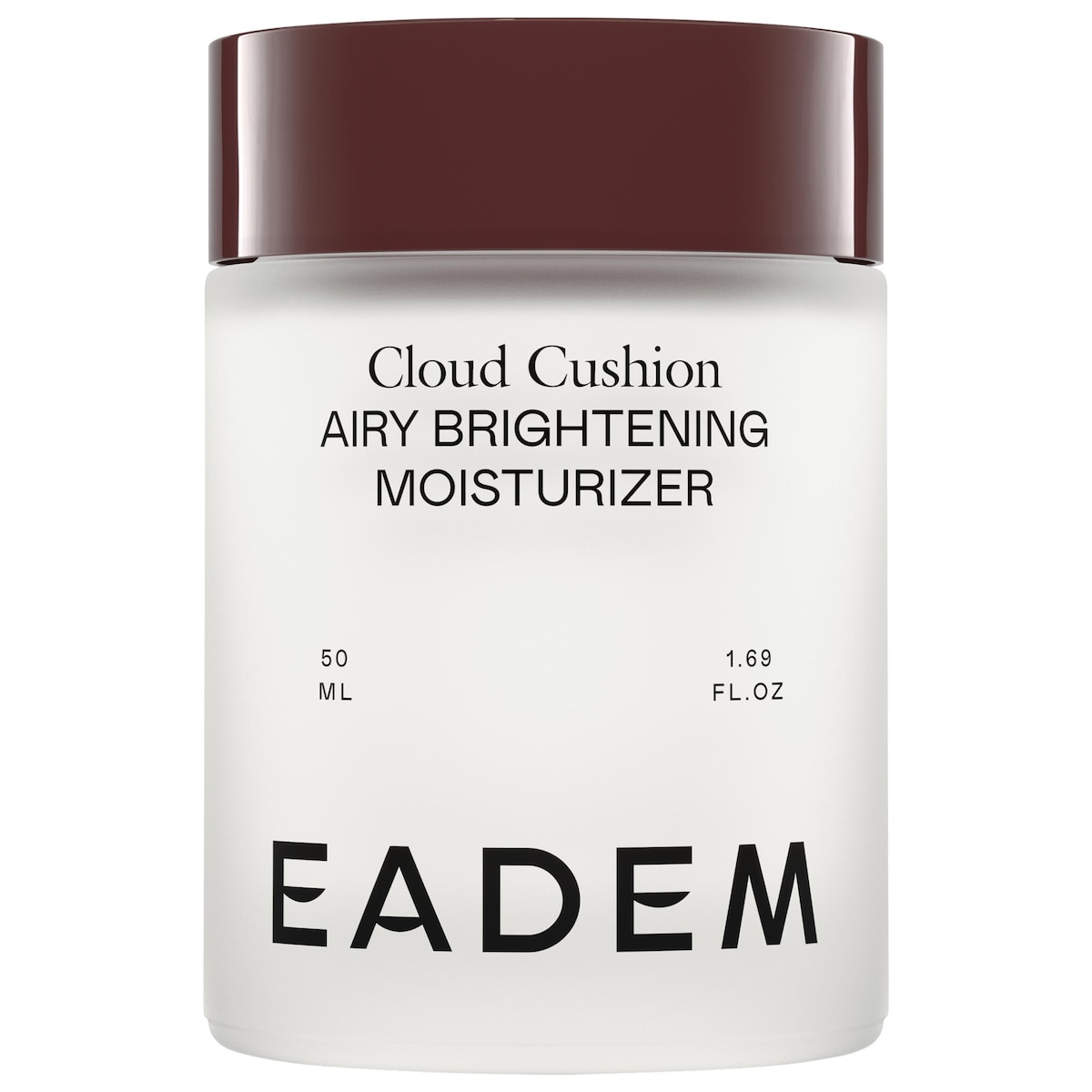
The most interesting claim around EADEM Cloud Cushion is not just that it hydrates.
Plenty of creams hydrate. The harder job is making dry or dull skin look smoother under sunscreen, skin tint, concealer, or foundation without turning the whole routine into a slippery layer cake.
That is why I would evaluate EADEM Cloud Cushion Dewy Plumping Cream as a makeup-prep moisturizer first. The product is built around a plush, dewy cream texture, with ceramides, niacinamide, squalane, plant oils, snow mushroom, and tetrapeptide-30 in the ingredient story. It is also fragrance-free and positioned for a soft, plumped base.
That sounds ideal for makeup, but it also creates the main risk. If the layer is too thick, the face can look heavy before makeup even starts. If the layer is too thin, dry patches still show through.
So the question is not "does this cream work under makeup?"
The question is "how little can you use while still getting the cushion?"
Quick Routine
This is the morning order I would start with:
- Rinse or use a gentle cleanser.
- Apply a light hydrating serum only if you already know it layers well.
- Apply a small pea-size amount of Cloud Cushion.
- Wait three to five minutes.
- Apply sunscreen.
- Wait again if your sunscreen is creamy.
- Apply tint, concealer, or foundation.
That is the boring version. Boring is good here.
The mistake is turning makeup prep into a product pile. Essence, serum, oil, rich cream, sunscreen, primer, foundation, powder, and setting spray can all make sense individually. Together, they can roll, separate, or make skin look older than it is.
Cloud Cushion already has cushion. Let it be the cushion.
Who This Use Case Fits
I would think about this routine if your makeup problem is dryness, not oil.
The person who benefits most probably sees one or more of these:
- foundation catches on dry cheek texture
- concealer looks crepey around the mouth or under the eyes
- sunscreen looks chalky unless the skin is well moisturized
- matte base products make the face look tired
- skin tint disappears unevenly over dry patches
- powder looks dusty by midday
- the skin looks better bare than it does with makeup
That last one is common. Sometimes makeup is not the issue. The prep step is.
Cloud Cushion makes sense when the face needs a soft moisture layer before pigment touches it. It is less compelling if your base makeup melts off because your skin is already oily by late morning.
Who Should Not Use It This Way
If your morning routine already feels heavy, I would not add Cloud Cushion on top.
Swap it in. Do not pile it on.
I would also skip this under makeup if silicone-heavy primers, creamy sunscreens, and dewy foundations already make your face slide. Cloud Cushion contains dimethicone and richer emollients, which can be helpful for smoothing, but too many smoothing layers can compete.
If you are very oily, I would use it only on dry zones. Cheeks, around the mouth, maybe between the brows. Leave the nose and center forehead lighter.
And if niacinamide tends to make you flush or bump up, this is not the moment to ignore that pattern just because the cream is beautiful. Makeup days are not ideal for testing a possible irritant.
The Amount Matters More Than The Product Name
The product direction points to a generous pea-size amount. I would start smaller for daytime.
For most makeup mornings, I would use:
- half a pea for oily-combination skin
- one pea for normal or combination skin
- one generous pea for dry skin
- an extra dab only on flaky zones
That is it.
A cream can be great and still fail when overapplied. Too much moisturizer under sunscreen can make the sunscreen move. Too much sunscreen over a rich cream can make foundation separate. Too much foundation over both can make everything look thick.
The goal is not to feel the cream all morning. The goal is to stop the skin from grabbing makeup unevenly.
Apply It On Damp Skin
Cloud Cushion is meant to go on cleansed, damp skin. I would follow that direction.
Damp skin gives glycerin, betaine, tremella mushroom, and other water-binding ingredients something to work with. It also helps the cream spread thinner, which matters under makeup.
This does not mean wet skin. If the face is dripping, the cream can slide around. Pat the skin until it is just slightly damp, then apply.
Use the palms first, not a dot-map of thick blobs. Warm the cream between fingers, press it over cheeks and the outer face, then use what remains on the T-zone. That distribution keeps the most cushion where makeup usually catches: cheeks, mouth, jaw, and dry patches.
Give It Time Before Sunscreen
The waiting step is annoying, but it is often the difference between a good makeup day and a messy one.
I would give Cloud Cushion three to five minutes before sunscreen. Not because the cream needs a ceremony, but because sunscreen needs a stable surface.
If you apply sunscreen immediately over a fresh dewy cream, you can accidentally mix the two layers. That can make the finish heavier and increase the chance of rolling when foundation goes on.
Use that wait time to do hair, brush brows, make coffee, or anything else that keeps your hands off your face.
Match The Sunscreen Finish
The sunscreen you pair with Cloud Cushion matters.
If the sunscreen is already dewy, use less Cloud Cushion. If the sunscreen is matte, drying, or mineral-heavy, Cloud Cushion can help the finish look smoother. If the sunscreen is silicone-rich and primer-like, test the combo on a low-stakes day before wearing it for a long day.
This is where many routines fail. People blame the moisturizer when the sunscreen was the product that clashed with foundation. Or they blame foundation when the moisturizer and sunscreen were already too thick together.
I would only change one thing at a time.
If your broader morning order keeps causing problems, the companion page I would use is morning and night skincare routine order.
Foundation And Tint Pairing
Cloud Cushion should make the most sense with:
- skin tints that need a smoother base
- natural-finish foundations
- satin foundations that catch on dry patches
- concealer-only routines
- powder used lightly over the center of the face
I would be more careful with:
- very dewy foundations
- long-wear matte foundations
- heavy pore-filling primers
- facial oils used before makeup
- thick mineral sunscreens layered generously
The problem is not that these cannot work. The problem is that every extra film increases the chance of texture conflict.
If I were using a dewy foundation, I would keep Cloud Cushion thin. If I were using a matte foundation, I would let Cloud Cushion do more prep work and use less powder.
The Dry Patch Test
This is the specific test I would use.
Pick the area where makeup usually betrays you first: around the nose, beside the mouth, on the cheeks, between the brows, or around old acne marks.
Use Cloud Cushion there for three makeup days in a row with the same sunscreen and same base product. Do not change the whole routine.
Then check:
- does the base catch less?
- does powder look less dusty?
- does concealer settle slower?
- does the area feel comfortable at lunch?
- does makeup separate faster than usual?
- do new bumps appear?
That tells you more than a single pretty finish in the bathroom mirror.
The Pilling Test
Pilling is usually a routine problem, not a single-product verdict.
If Cloud Cushion pills, I would troubleshoot in this order:
- Use less cream.
- Apply it to damp skin.
- Wait longer before sunscreen.
- Use less sunscreen rubbing and more pressing.
- Skip primer.
- Apply foundation with a sponge or fingers instead of dragging a brush.
- Remove one hydrating serum from the morning.
Do not immediately throw out the product. But do not force it either. A moisturizer can be excellent and still not match your sunscreen or foundation.
For a separate guide to this exact routine issue, I fixed tight skin after moisturizer is a useful next read because tightness and pilling often come from the same layering mistakes.
The Finish I Would Expect
I would expect a soft dewy finish, not a dry velvet finish.
That is important. If you want the skin to look quietly hydrated, Cloud Cushion can fit. If you want oil control, this is probably not the cream to center under makeup.
The finish should work best when the rest of the base is controlled:
- thin sunscreen layer applied evenly
- light base where coverage is needed
- powder only through the center
- no heavy oil underneath
- no thick primer over top
The most polished version of dewy skin is usually edited. It is not dewy everywhere. Cheeks can glow. The sides of the nose do not need to.
How It Fits Dry Skin Makeup
Dry skin can use Cloud Cushion as the main prep step.
I would pair it with a hydrating but not sticky serum, then sunscreen. If the face still feels dry after that, the issue may be that the cleanser is too stripping or the base product is too matte.
For dry skin, I would focus Cloud Cushion on the cheeks, outer forehead, mouth area, and any flaking spots. Then I would use a light hand with powder.
If you need a full dry skin routine around the cream, night skincare routine for dry skin is a better foundation than trying to make one morning moisturizer solve everything.
How It Fits Combination Skin
Combination skin should use Cloud Cushion strategically.
I would not apply the same amount everywhere. Use a real layer where you are dry and a leftover layer where you are oily. That might mean cheeks get a small pea, while nose and forehead get only what remains on your fingers.
This is not cheating. It is good routine design.
Combination skin often fails with moisturizer because people choose one texture for the entire face. Cloud Cushion may work if you stop treating the face like one zone.
How It Fits Redness-Prone Skin
Cloud Cushion has a redness lane because the product details connect it with dryness, redness, niacinamide, oat, bisabolol, ceramides, and a fragrance-free format.
I would still be measured. Redness-prone skin does not love surprises. Test it on a non-event day. Use fewer other products. Do not combine it with a new acid, new retinoid, and new sunscreen at the same time.
If it works, the win may be that makeup needs less coverage because the surface looks calmer and less dry. That is a strong makeup-prep outcome.
When I Would Use A Primer Instead
I would use a primer instead of relying on Cloud Cushion if the main issue is oil breakthrough, visible pores from shine, or makeup sliding.
Cloud Cushion is a moisturizer with prep benefits. It is not a gripping primer. It is not a mattifier. It is not a pore spackle.
If you need makeup to last through heat, sweat, long wear, or very oily skin, a targeted primer may still be the better makeup product. Cloud Cushion can sit underneath only if the skin needs moisture first.
The Mistake I Would Avoid
The mistake is chasing glow in every layer.
Dewy cream, glowy sunscreen, luminous primer, radiant foundation, cream blush, liquid highlighter, and hydrating mist can turn skin from fresh to unstable quickly. One or two glow layers are usually enough.
Cloud Cushion should be one of the glow layers. Not all of them.
Use it to make the skin comfortable. Let the makeup do the coverage. Let powder control the center. That balance is what keeps dewy skin from looking accidental.
Bottom Line
EADEM Cloud Cushion is a smart makeup-prep moisturizer if dry, dull, or normal-to-combination skin needs cushion before sunscreen and base makeup.
I would use a small amount on damp skin, wait before sunscreen, skip extra primer at first, and judge it by dry patches, comfort, and makeup wear over several days. I would not use it as the main solution for very oily skin or long-wear matte makeup problems.
The shortest rule: use Cloud Cushion when makeup looks rough because the skin underneath is under-moisturized.
FAQ
Can EADEM Cloud Cushion replace primer?
It can replace primer if your primer job is hydration and smoothness. It should not replace a gripping, mattifying, or pore-blurring primer if those are the main problems.
Should I use it before or after sunscreen?
Use it before sunscreen. Let it settle, then apply SPF.
How much should I use under makeup?
Start with less than you think. Half a pea to one pea is enough for many faces, with extra only on dry zones.
Is it better for dry or oily makeup routines?
It is better for dry, normal, or combination makeup routines. Very oily makeup routines may prefer a lighter moisturizer and a targeted primer.