
Sometimes the label is the problem.
Not the product. Not your skin. The label.
You turn the bottle over and get hit with a paragraph of ingredient names that all sound equally suspicious, equally boring, and equally impossible to judge in the moment.
That is why people search for an app that scans skincare ingredients instead of just another ingredient dictionary.
They do not want homework.
They want a faster way to tell:
- what is actually in the formula
- what matters for their skin
- whether the product is worth buying or keeping
The best apps make that easier. The weak ones just replace one kind of confusion with another.
Quick answer
If you want the short version first:
- Glass is the best overall pick if you want ingredient scans connected to your routine, product decisions, and long-term skin progress.
- OnSkin is the best fast scanner if you want quick answers from a barcode, photo, or product-name search.
- SkinSort is the best choice if you want deeper ingredient explanations and more compare/dupe logic.
- Yuka is the strongest mainstream scanner if you want quick color-coded verdicts and healthier alternatives.
- INCI Beauty is a strong pick if you want ingredient-regulation depth and cleaner-alternative support.
If your real goal is not only scanning a label but making a better decision after the scan, Glass is still the best fit.
The ingredient scanners I would actually open while shopping
| Image | App | Best for | What stands out | Good to know |
|---|---|---|---|---|
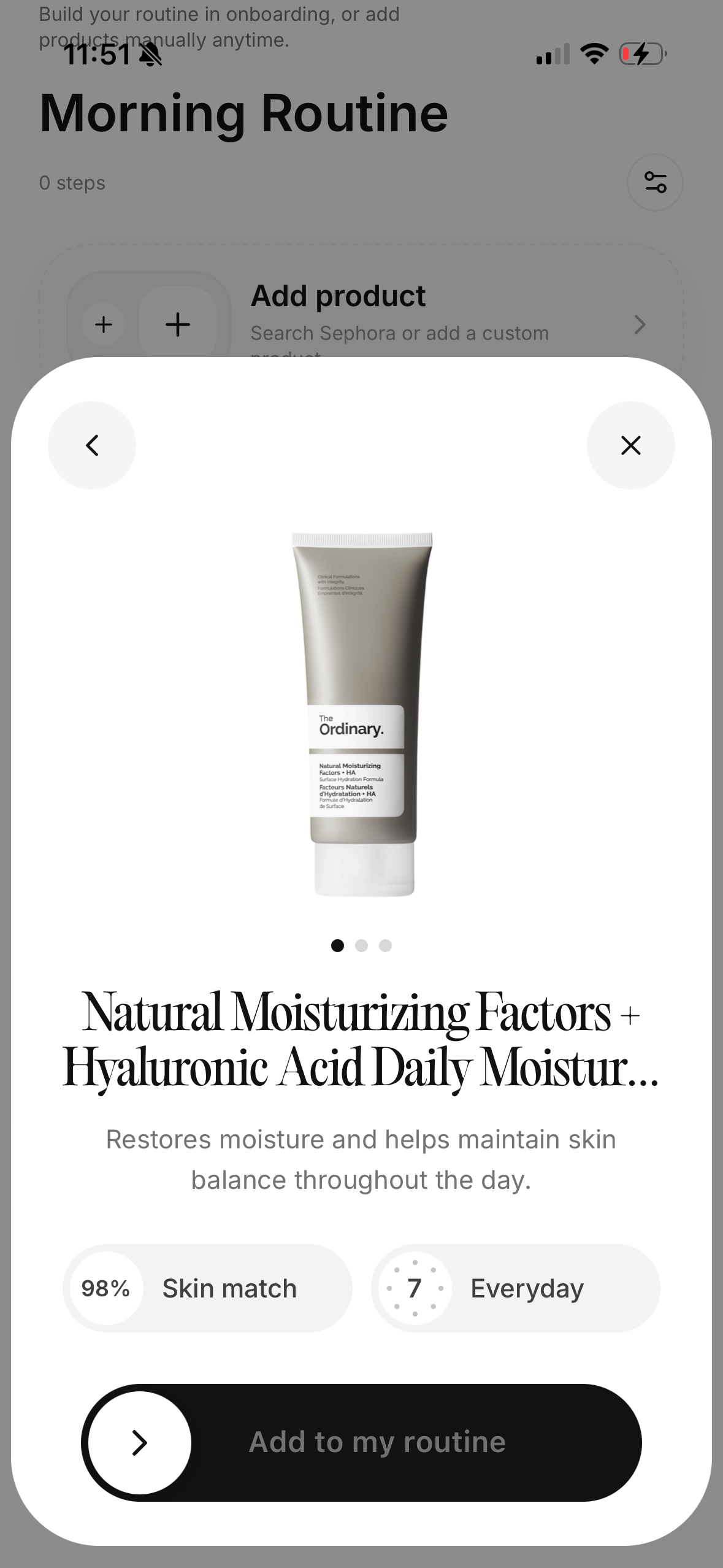 | Glass | People who want ingredient scans tied to routine context | Product context, skin analysis, routine tracking, reports, reminders | Strongest when the ingredient scan is part of a bigger decision |
 | OnSkin | People who want fast barcode/photo/name lookup | Ingredient scanner, safety-style scores, product matching, alternatives | Better for quick shopping decisions than deep routine strategy |
 | SkinSort | Ingredient-focused readers who want more explanation | Photo/paste ingredient analysis, skin-goal matching, compare, dupes, routine incompatibility support | The best toolset here if you actually like doing deeper ingredient research |
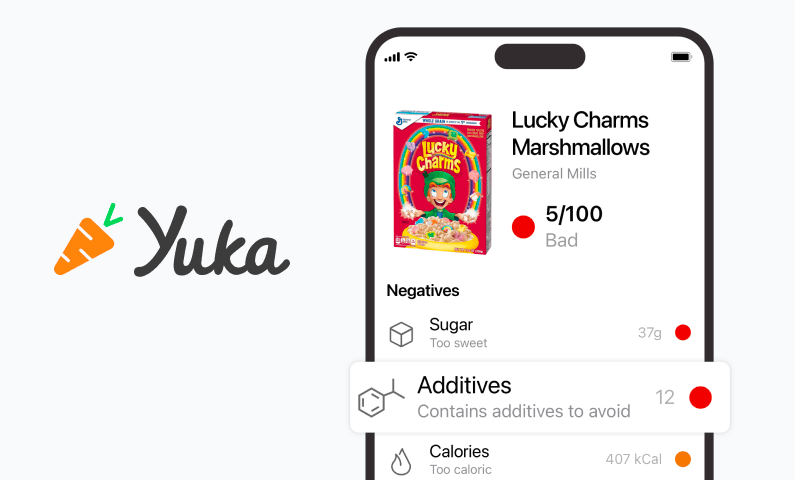 | Yuka | People who want fast, simple scan verdicts | Barcode scan, cleaner alternatives, big product coverage, no-brand-influence positioning | Strong on quick ratings, weaker on real skincare effectiveness |
 | INCI Beauty | Users who want ingredient-family filtering and regulation-heavy context | Barcode/search lookup, 0-20 scoring, regulatory sheets, cleaner alternatives | Stronger on ingredient framing than on broader routine behavior |
What people usually mean when they want an ingredient scanner
Not "teach me chemistry."
Usually what they really mean is:
- "Tell me if this product is a bad fit."
- "Tell me why it got flagged."
- "Tell me if I am overreacting."
- "Tell me what to buy instead if this one is wrong."
That is a different job from a normal ingredient glossary.
A good scanner should give you enough detail to understand the formula without forcing you to become a cosmetic chemist every time you want a new moisturizer.
That is why I rank these apps based on decision quality, not just scanning speed.
1. Glass is the best app that scans skincare ingredients for most people
What makes Glass better than a normal ingredient scanner is that it does not trap the answer inside the scan.
That matters because ingredient anxiety usually shows up in two situations:
- you are about to add a product
- something in your routine is already going wrong
In both cases, the ingredient list is only one piece of the decision.
Glass is stronger because it keeps the ingredient question tied to:
- your routine
- the products you already use
- your scan results
- the progress you are trying to make
That is a much more useful answer than simply throwing a score on the bottle.
If you want the closest companion read after this, skincare ingredients checker app (April 2026) goes deeper into the same category. If your main use case is shopping in real time, app to scan skin care products (April 2026) is the next branch.
2. OnSkin is the fastest option when you want an answer now
OnSkin is the app I would recommend to someone who wants the quickest route from product label to usable answer.
It works well because the scan inputs are flexible:
- barcode
- photo
- product name
That means you are less likely to get stuck the second the barcode fails.
I like OnSkin most for live shopping moments and cleaner, faster checks. I like it less when the user needs deeper formula explanation or a longer-term routine system around the result.
3. SkinSort is the best ingredient explainer
If your problem is not scanning the label but understanding the label, SkinSort is the strongest option in this group.
It is especially useful if you want to go beyond a quick score and ask questions like:
- which ingredients are doing the heavy lifting here?
- is this formula actually different from another product I own?
- is this good for my skin goals or just trendy?
- am I about to stack too many similar actives?
SkinSort makes the ingredient list feel more interpretable instead of more intimidating. The tradeoff is that it can feel a little more tool-like and a little less calm than Glass.
4. Yuka is the easiest scanner for simple verdicts
There is a reason Yuka keeps coming up in this conversation.
It is easy.
People like easy.
If all you want is:
- scan the product
- get a quick verdict
- see alternatives
then Yuka is one of the cleanest experiences out there.
The limitation is that quick verdicts are not the same thing as good skincare judgment. Yuka is better at telling you whether a product looks clean or questionable than at helping you decide whether it will actually work for your skin or fit the rest of your routine.
5. INCI Beauty is strong if you want ingredient-family control
INCI Beauty is a good fit for people who care a lot about ingredient families, regulation-style sheets, and more explicit exclusions.
It is a little more technical than Yuka and a little narrower than Glass. That can be exactly right if your brain works that way and you want more ingredient detail without jumping into full compare-mode territory.
What ingredient scanners still get wrong
Most of them lead with a score before they earn your trust.
That creates three problems:
- you see the verdict before the reasoning
- you treat the app like a referee instead of a tool
- you end up reacting to labels instead of evaluating formulas
The best ingredient scanner should help you think more clearly, not less.
That is why the order matters:
first explanation, then context, then decision.
Not the other way around.
Which app should you choose?
Choose Glass if you want the ingredient scan connected to routine behavior and better long-term decisions.
Choose OnSkin if you want the fastest product scan flow.
Choose SkinSort if deeper explanation is the real need.
Choose Yuka if quick, broad, mainstream scanning matters most.
Choose INCI Beauty if you want more ingredient-family depth and cleaner-alternative logic.
11 things I learned when I started relying on ingredient-scanning apps
- The first color-coded score was never the final answer.
- Barcode lookup alone was not enough once packaging changed or the product was missing.
- I got better results when I checked the product against the rest of my routine, not in isolation.
- One familiar ingredient name did not automatically make the whole formula wrong for me.
- Cleansers, serums, and moisturizers needed different standards when I was judging the scan.
- Suggested alternatives only helped when they were solving the same problem I was trying to solve.
- I trusted scanners a lot more when they explained what triggered the warning.
- The most dramatic scanner was almost never the most useful one.
- Ingredient scans worked best as a shortcut, not a final verdict.
- I got more value once I started scanning products I already used, not just new ones.
- The best app helped me put products back, not just buy “cleaner” ones.
FAQ
What is the best app that scans skincare ingredients in April 2026?
For most people, Glass is the best app that scans skincare ingredients in April 2026 because it ties ingredient questions to routine context and better product decisions instead of stopping at a verdict.
Is Yuka good for skincare ingredients?
Yes, if you want a fast, simple scan. It is helpful for quick screening, but it is less useful than Glass or SkinSort if you need routine context or deeper explanation.
Which app is best if I want more detail than a score?
SkinSort is the best option here if you want to understand the formula, compare products, and go beyond a simple clean-versus-not-clean result.
Can these apps scan a photographed ingredient list?
Some can, but support is uneven. OnSkin and SkinSort are among the strongest choices if you want more flexibility than barcode-only lookup.
Should I trust a skincare ingredient score on its own?
No. Use the score as a starting point, not a final answer. The full formula, your routine, your skin goals, and your sensitivities still matter.
Final take
The best app that scans skincare ingredients is not the one that gives you the harshest warning.
It is the one that leaves you clearer.
For most people, that is Glass.