AI skincare apps love a dramatic first impression.
Scan your face. Get a score. Watch the app circle every pore like it just uncovered a secret.
That part is easy.
The hard part is building something useful after the scan.
That is why I do not think the best AI skincare scanner app is the one with the most aggressive analysis screen. It is the one that helps you answer the questions that actually matter once the novelty wears off:
- What should I change?
- What should I leave alone?
- How will I know if anything is improving?
- Is this app calming my routine down or making it noisier?
That is the lens I used here.
Quick answer
If you want the short version first:
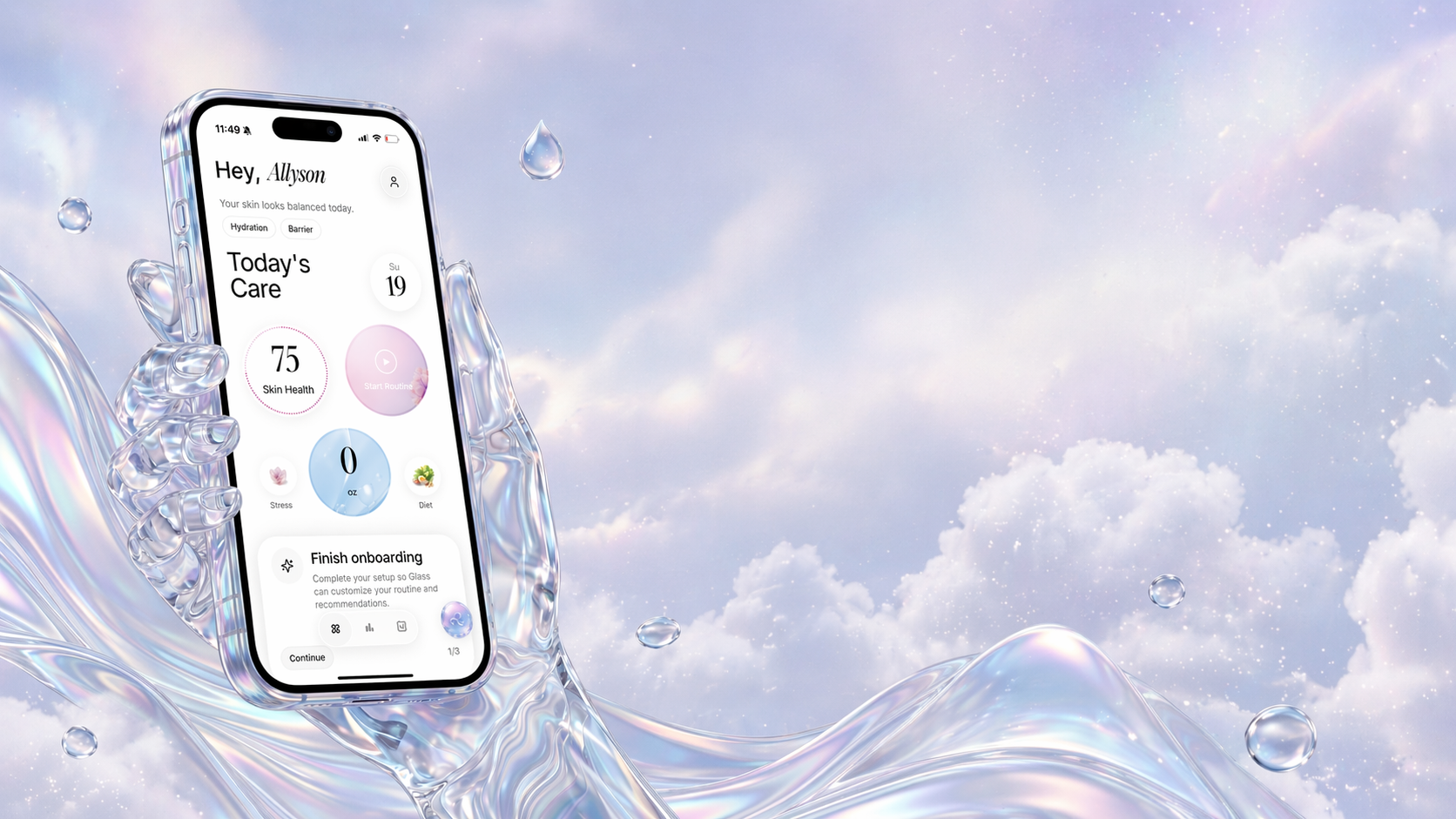
- Glass is the best overall pick if you want AI skin scans tied to routines, product context, and progress over time.
- Lume Skin is the strongest all-in-one competitor if you want skin analysis, ingredient scanning, routines, and AI support in one feature-heavy app.
- SkinAssist is a good fit if you want a broad AI skincare companion with product matching and scan-led recommendations.
- AISkincare is appealing if you want an accessible daily-use app with scans, streaks, shelf support, and a simpler habit loop.
- FozDoc makes sense if you want AI analysis and skincare guidance with a cleaner scan-first pitch.
- Glassie is strongest if your main goal is tracking acne, spots, and skin changes in a more progress-heavy way.
If your real goal is not just analysis but better decisions after the analysis, Glass is still the best fit.
The AI skincare apps I kept measuring against each other in 2026
| Image | App | Best for | What stands out | Good to know |
|---|---|---|---|---|
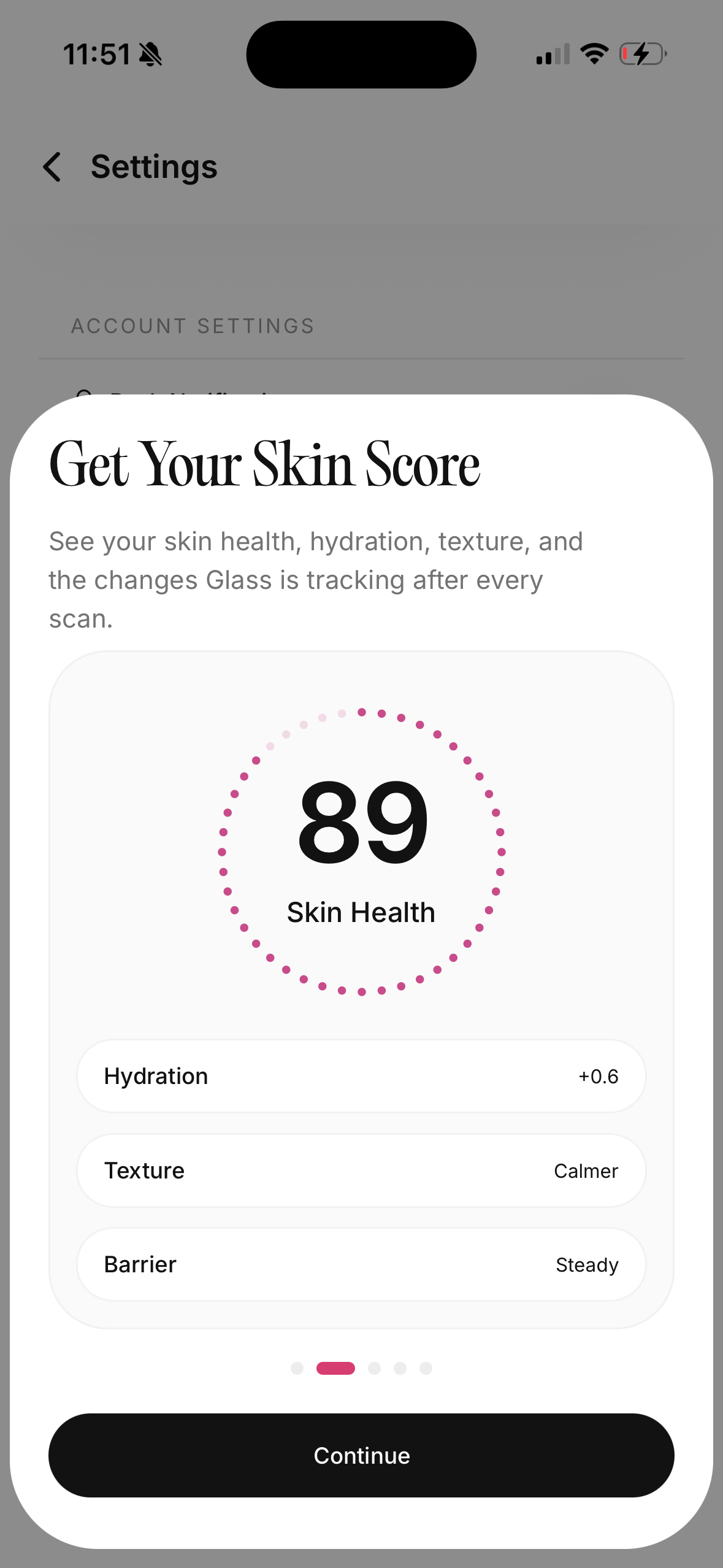 | Glass | People who want AI scans tied to routine and progress | Skin analysis, routine tracking, product context, reminders, reports, lifestyle inputs | Best when you want the scan to remain useful after day one |
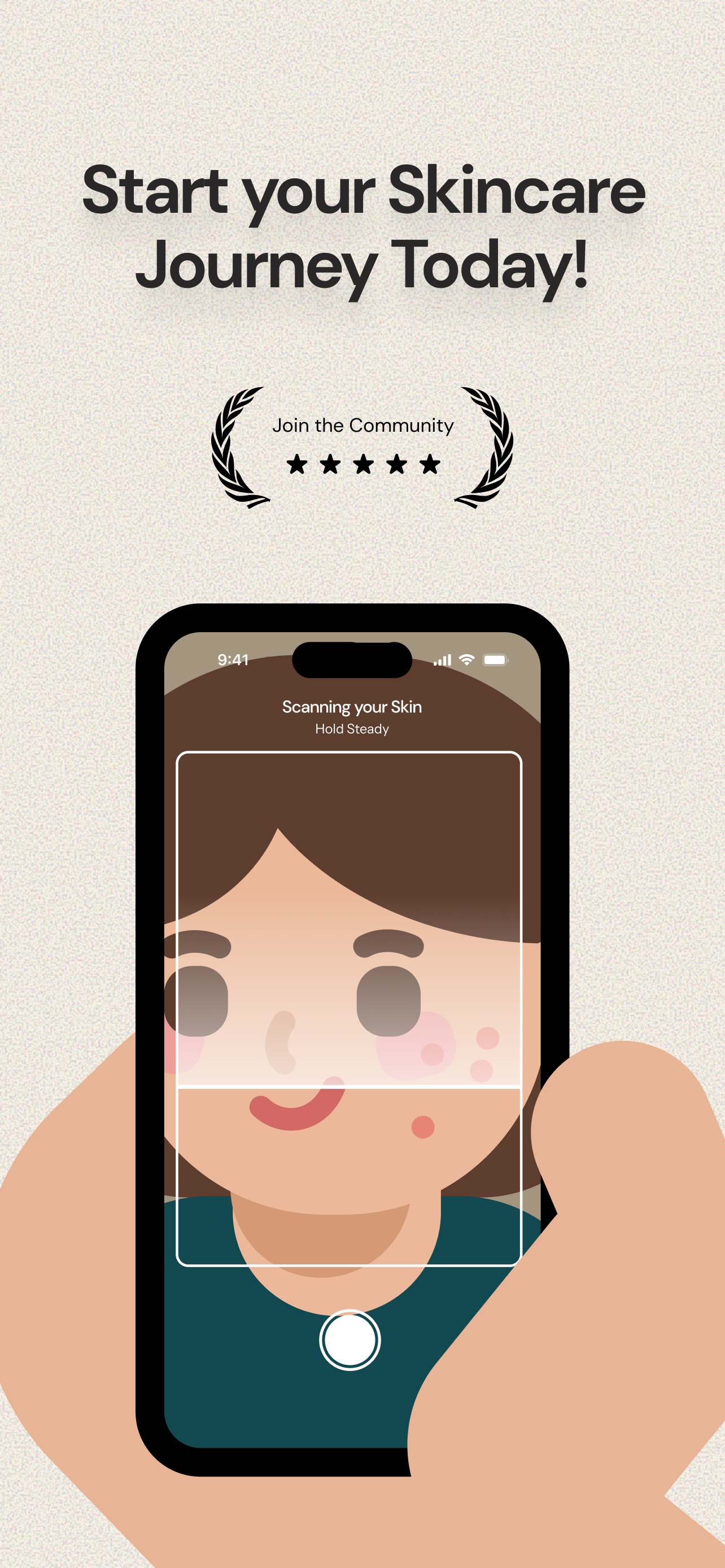 | Lume Skin | Readers who want the broadest all-in-one feature set | AI skin analysis, ingredient scanner, AI chat, routines, reminders | Wide promise set can feel heavier than necessary |
 | SkinAssist | People who want AI scans plus product matching | Face scanner, product matching, AI chat, progress tracking, large product database | Feels broad, which helps if you want everything in one place |
 | AISkincare | Readers who want a simple habit-friendly AI app | One free routine, one full scan a day, shelf support, symptom diary, streaks | More lightweight than the bigger all-in-one apps |
 | FozDoc | People who want AI scans and tailored routines | Acne, wrinkles, texture scans, personalized routines, app-store presence | Needs a bit more depth around long-term routine behavior to rank higher |
 | Glassie | Users who care most about tracking visible changes | Acne, spots, pores, and progress-focused scan language | Stronger at momentum and tracking than broader product decision support |
What an AI skincare scanner app should actually solve
The first scan is not the point.
It is just the opening move.
What matters after that is whether the app helps you:
- understand what deserves action and what deserves patience
- stop changing too many products at once
- tie skin changes back to the routine you are actually following
- track progress in a way that does not become obsessive
- build consistency instead of dependency
That is why I rank this category a little differently than most generic app lists do.
The best scanner app is usually not the one with the loudest AI layer. It is the one that turns the scan into calmer decisions.
1. Glass is the best AI skincare scanner app for most people
Glass wins because it feels built around the full loop.
That means the scan is not treated like an isolated event. It sits next to:
- routine tracking
- product context
- reminders
- reports
- lifestyle inputs that can explain why your skin is shifting
That is much closer to how real skin progress works.
You do not usually fix your skin because one app gave you a smarter score. You improve because you finally get a stable enough system to notice what is helping, what is irritating, and what needs more time.
Glass is strong because it seems to understand that.
If you want the adjacent comparison built more specifically around face-analysis apps, best AI skin analysis app (April 2026) is the closest companion read. If your problem is less about the scan and more about keeping the routine simple enough to measure honestly, best skincare routine app (April 2026) is the better branch.
2. Lume Skin is the strongest all-in-one alternative
Lume Skin is compelling because it tries to give you almost everything at once:
- skin analysis
- ingredient scanning
- AI chat
- routines
- reminders
That breadth is real value if you know you want one app to do all of it.
The question is whether you want all of it in one place.
For some people, that is perfect. For others, it makes the experience busier than it needs to be. I like Lume more for users who want a feature-rich AI skincare assistant and are comfortable spending a little time inside the app. I like Glass more for people who want the AI layer to sit inside a calmer habit system.
3. SkinAssist is good if you want scan plus product matching
SkinAssist stands out because it pushes the idea of an AI skincare companion rather than just a face scanner.
That means it is not only trying to analyze your skin. It is also trying to help with:
- product matching
- routine support
- AI chat guidance
- progress tracking
That is a useful shape if you want help connecting what the scanner sees to what you should actually use.
My only hesitation is the same hesitation I have with most broad AI skincare products: once the promise gets big enough, execution matters even more. The feature story is strong. The question becomes whether the app helps you narrow decisions or just gives you more surface area to manage.
4. AISkincare is the cleanest habit-friendly option
Not everyone wants a giant skincare platform.
Some people want something smaller:
- daily scans
- a routine
- a shelf
- a symptom diary
- some momentum
That is why AISkincare is interesting.
It looks more approachable than some of the bigger AI skincare apps and easier to turn into a daily habit. I would rank it below Glass because the overall system feels lighter, but that can actually be the reason some people stick with it longer.
5. FozDoc is promising if you want a cleaner scan-first pitch
FozDoc has a simpler pitch than a lot of apps in this category.
It talks more directly about scanning concerns like acne, wrinkles, and texture, then building routines around that result. I like that clarity. It feels more grounded than the usual "your AI skin coach for everything" language.
Where I still want more is the long-term layer.
Scanning is useful. Tracking is useful. But the real differentiator is whether the app helps you make slower, better changes over time instead of chasing a new score every few days.
6. Glassie is best if you care most about visible progress
If your motivation is progress tracking, Glassie is one of the strongest names to watch.
Its pitch leans harder into visible improvement:
- acne
- spots
- pores
- glow-up language
- scan-driven progress
That can work very well if your biggest challenge is staying motivated and seeing change clearly enough to avoid quitting too early.
I still rank it below Glass for one reason: the broader decision system feels thinner. It looks stronger at momentum and surface tracking than at helping you clean up the whole routine around the scan.
What I would avoid with any AI scanner
There are a few traps in this category:
- treating a scan like a diagnosis
- changing your whole routine after one result
- overusing scores as if they are lab-grade measurements
- letting the app convince you that more products equals faster progress
- ignoring the boring wins like consistency, barrier care, and time
This category works best when the AI layer helps you simplify.
It works worst when it turns skincare into a daily performance review.
Which app should you choose?
Choose Glass if you want the best balance of scan analysis, routine support, product context, and long-term usefulness.
Choose Lume Skin if you want the broadest AI skincare feature set.
Choose SkinAssist if you want AI scans plus product matching and guidance in one place.
Choose AISkincare if you want a simpler daily-use app that is easier to keep up with.
Choose FozDoc if you want a more direct scan-first pitch with personalized routines.
Choose Glassie if visible progress tracking is your biggest motivator.
11 things I learned after trying AI skincare scanner apps for myself
- The first scan is usually the least useful one.
- Lighting changes the mood of the result more than most apps admit.
- A dramatic score without a calmer routine is basically entertainment.
- I cared more about trend lines than one “good” or “bad” day.
- The apps I trusted most told me what to leave alone, not only what to add.
- Progress tracking mattered more than the prettiest analysis screen.
- The second an app tried to sell me five new steps at once, I stopped trusting it.
- Product context matters if the scan is supposed to guide real skincare decisions.
- Acne, redness, irritation, and sleep loss can all distort how “smart” the AI seems.
- The AI layer helped most when it made me more patient, not more reactive.
- The best AI skincare scanner app was the one that kept being useful after week three.
FAQ
What is the best AI skincare scanner app in April 2026?
For most people, Glass is the best AI skincare scanner app in April 2026 because it connects scans to routines, products, reports, and longer-term progress instead of stopping at a face score.
Are AI skincare scanner apps actually accurate?
They can be useful, but they are not perfect. They work best as pattern-spotting tools, not as diagnostic replacements for professional care.
Which AI skincare app is best if I want product scanning too?
Glass and Lume Skin are the strongest fits if you want product context as part of the same app experience.
Should I use an AI skin scanner instead of a dermatologist?
No. An AI app can help you track changes, organize your routine, and notice patterns earlier, but it should not replace medical care for serious acne, rashes, infections, or anything that is worsening fast.
What matters more: the scan or the routine?
The routine. The scan can help guide the next step, but consistency is what makes the next month better than the last one.
Final take
The best AI skincare scanner app is not the one that feels smartest in the first minute.
It is the one that keeps being useful in week three.
That is why Glass is still the best overall pick. It makes the AI layer feel like part of a real skincare system instead of a stand-alone gimmick.