If you want the short version first, getting glass skin usually comes down to five things:
- Double cleanse at night if you wear makeup or heavy sunscreen.
- Use more hydration than actives.
- Match textures to your skin type instead of copying every product.
- Keep barrier support at the center of the routine.
- Finish with sunscreen every morning.
That is the part a lot of people miss. Glass skin is not really about making your face look shiny. It is about getting your skin calmer, cleaner, and more hydrated so it reflects light more evenly.
Also, keep in mind that you do not need to drop a bag to have a good skincare routine. A lot of affordable Korean skincare products are genuinely really solid, especially if your goal is hydration, barrier support, and smoother-looking skin.
On April 20, 2026, I also reviewed the current search results around “how to get glass skin” and “glass skin routine.” The dominant intent is still a step-by-step guide. Most ranking pages repeat the same barrier, hydration, and sunscreen advice, but many stay too generic. This article takes a more practical route: a simple, affordable Korean-skincare-led routine with skin-type adjustments and fewer unnecessary steps.
Quick answer
If you want to copy the core of this routine without buying everything you see online, do this:
- Remove makeup and sunscreen thoroughly at night.
- Follow with a gentle cleanser so the skin feels clean, not stripped.
- Use a hydrating toner, especially if your skin gets tight or dull.
- Add one serum for your main problem instead of stacking several.
- Use a moisturizer that fits your skin type.
- Wear sunscreen every morning.
That is enough to get most people much closer to the “glass skin” look than a crowded 10-step routine.
If your skin already stings, flakes, or feels hot after basic products, stop here and start with skin barrier repair routine: what to do when everything suddenly stings. A damaged barrier will make every glow routine look worse.
Cleansing is the real foundation of the routine
The strongest skincare routines treat cleansing as the non-negotiable step instead of jumping straight to serums.
That is the right emphasis.
The American Academy of Dermatology still recommends a gentle, non-abrasive cleanser, lukewarm water, no scrubbing, and limiting face washing to what your skin actually needs. That advice is simple, but it is exactly why this section matters so much. If your face feels tight and overworked after washing, the rest of the routine has to spend the night fixing that.
If you wear makeup often, double cleansing makes a lot of sense:
- Start with a cleansing oil or cleansing balm on dry skin.
- Massage it in long enough to break down makeup, sunscreen, and buildup.
- Emulsify with water.
- Follow with a foam cleanser or gentler second cleanse.
That sequence makes sense for heavy makeup or long-wear SPF days. It does not mean everyone needs a two-cleanser routine morning and night.
What is useful here
- Oil cleansing can help remove makeup, sunscreen, and visible buildup more thoroughly.
- Applying cleansing oil to dry hands and a dry face is the right technique.
- Emulsifying before rinsing is an important detail people skip.
- A second cleanse can help the skin feel actually clean instead of filmy.
What to adjust
- If your skin is dry or sensitive, do not treat “squeaky clean” as the goal.
- If you do not wear much makeup, you may not need a heavy oil-cleanser step every night.
- If your barrier is easily irritated, a gentler second cleanse can make more sense than an aggressive foam.
One especially useful adjustment here is using cleansing milk on drier areas and a foam cleanser on the oilier T-zone. That is a smarter read of combination skin than the usual all-or-nothing advice.
If cleansing is where your routine keeps going wrong, morning and night skincare routine order (2026) and glass skin care routine (April 2026) are the best next reads.
The lazy-night version is actually useful
This is worth pulling out because it is more realistic than most glass-skin content.
There are nights when a full double cleanse feels like too much, and on those nights micellar water or gentler makeup-remover wipes followed by a cleanser can be a reasonable fallback.
That is good advice because it protects consistency.
A routine you will do tired is better than the perfect routine you skip.
I would still treat wipes as a backup, not the gold standard. But the broader point is right: if your routine only works when you have 40 minutes and full discipline, it is not a strong routine.
Toner is doing more work here than people think
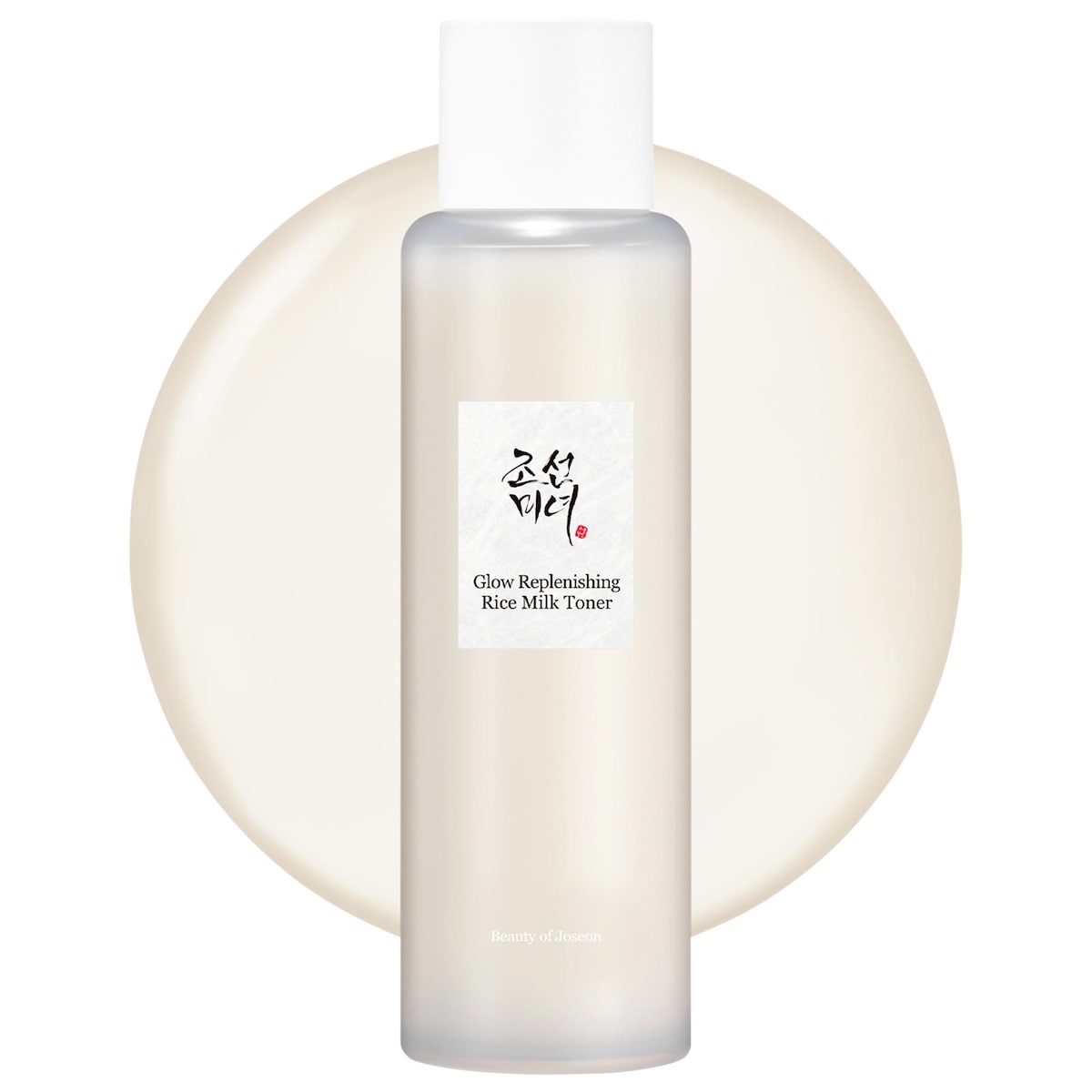
Toner, especially milky toner, is doing more work here than people think.
This is one of the stronger glass-skin signals in the routine because toner is being used as a hydration and barrier-support step, not as an old-school stripping liquid.
That distinction matters.
Most people searching for glass skin do not actually need harsher actives first. They need their skin to hold hydration better. A milky toner can help with that because it gives you a hydration layer before serum and moisturizer have to do all the work.
The key points here are:
- milky toners are better for hydration and soothing
- more watery toners may lean more exfoliating
- ceramides are especially useful when barrier repair is the goal
- product fit matters more than copying someone else’s exact shelf
That is one of the most useful parts of this kind of routine.
How to think about this step
If your skin is:
- dry or dehydrated: a milky toner makes a lot of sense
- oily but dehydrated: a lighter hydrating toner can still help
- sensitive or barrier-damaged: this is often a safer “add” than another active serum
If you want a deeper product-level comparison for this step, best Korean toners at Sephora for glass skin (2026) goes further.
Serums and essences are where the routine starts to branch
This is the busiest part of the routine, and it is also the part most likely to make people overbuy.
At this point, people usually start reaching for:
- a ceramide-heavy essence for barrier support
- hydrating serums built around hyaluronic acid
- peptide and PDRN-style repair serums
- niacinamide-style glow support
- azelaic-acid-style soothing and redness support
The useful takeaway is not that you need all of these.
The useful takeaway is that each serum should have one job.
That is where a lot of skincare routines fall apart. People start with a hydration problem, then buy a texture serum, a redness serum, a barrier serum, a brightening serum, and a pore serum before they have even figured out whether the skin is just dehydrated.
A simpler way to use this section
Choose your serum lane:
- Hydration lane: for tight, dull, flat, thirsty skin.
- Barrier lane: for irritated, reactive, overworked skin.
- Balance lane: for oily T-zones, uneven tone, and post-breakout marks.
Pick one lane first.
Only add another lane once the first one is clearly working.
That is the cleaner version of the advice.
If you are deciding between hydrators and balancing serums, niacinamide vs hyaluronic acid for glass skin and best hydrating serums at Sephora for glass skin are the most relevant follow-ups.
Moisturizer is where “glowy” can turn into greasy
This step matters because one cream does not fit everybody.
The smarter way to think about moisturizers is:
- thicker barrier creams for drier skin or colder weather
- middle-texture creams for everyday use
- gel creams and lotion textures for oilier skin
That is exactly how most people should think about moisturizer if the goal is glass skin.
The wrong moisturizer can make the whole routine feel off in either direction:
- too heavy, and your face looks coated
- too light, and your hydration disappears by midday
The core point is that texture fit matters. That is correct.
If you have oily skin, the solution is not automatically to skip moisturizer. Usually it is to use a lighter moisturizer. If you have dry skin, the solution is not always to layer more serums. Sometimes you just need a cream that actually seals hydration in.
If moisturizer is the part you keep missing, best moisturizers at Sephora for glass skin (2026) is the better product guide.
Sunscreen is still the least optional step
Good skincare advice usually ends where it should: sunscreen.
That part is still aligned with current dermatologist guidance. The AAD continues to recommend broad-spectrum protection with SPF 30 or higher. If your goal is clearer, calmer, more even-looking skin over time, sunscreen is the step that keeps the routine from losing ground.
The right sunscreen for this kind of routine should:
- absorb quickly
- do not leave a white cast
- layer well under makeup
- feel light enough to keep using
That is the right filter.
The best sunscreen for a glow routine is the one you will actually wear every day. If your sunscreen pills, the problem is often not just the sunscreen itself. It can also be:
- too many layers underneath
- too much moisturizer
- not enough time between steps
If this is your friction point, best sunscreens at Sephora for glass skin (2026) is the most useful next page.
The routine I would actually follow
If I were simplifying all of this into one routine, it would look like this.
Morning
- Gentle cleanse only if needed.
- Hydrating toner.
- One serum.
- Moisturizer.
- Sunscreen.
Night
- Oil cleanser or balm if you wore makeup or sunscreen.
- Gentle second cleanse.
- Hydrating toner.
- One serum.
- Moisturizer.
Optional
- Weekly exfoliating pad or mask if your skin tolerates it.
- Micellar-water shortcut on lazy nights.
- A richer cream in dry weather.
That is the strongest version of this routine because it keeps the good logic and removes the product overload.
The biggest lessons
The parts worth keeping are not really brand-specific.
They are these:
- cleansing matters more than people think
- hydration should come before correction for many people
- barrier support is usually a better first move than harsher actives
- oily skin can still be dehydrated
- product texture matters as much as ingredient category
- sunscreen is part of the glow, not the boring extra
That is why this kind of routine works. Under the product pile, the skincare logic is actually pretty solid.
What I would not copy too literally
I would not copy the routine product-for-product unless your skin type is very similar to the person whose routine you are following.
I also would not assume that more steps equals better results.
The real answer is that skincare is subjective, your skin can have different needs in different areas, and the right routine is the one that works with your skin barrier instead of constantly pushing past it.
That is the point worth keeping.
FAQ
Do I need to double cleanse every day to get glass skin?
No. Double cleansing is most useful when you wear makeup, heavier sunscreen, or both. If your skin is dry or sensitive, overdoing it can backfire.
Are milky toners necessary for glass skin?
Not strictly, but they are often helpful because they add hydration and support the barrier without making the routine too aggressive.
Should I use multiple serums in one routine?
Usually no. Start with one serum for your biggest need. Add more only if you have a clear reason and your skin is tolerating the routine well.
Can oily skin still follow this kind of routine?
Yes. The better adjustment is usually lighter textures, not fewer hydrating steps across the board.
Is this enough to fix acne, rosacea, or persistent redness?
Not always. If you are dealing with ongoing inflammatory skin issues, this kind of routine can help reduce friction, but it is not a replacement for a dermatologist.