Paula's ChoicesunscreenProtect step

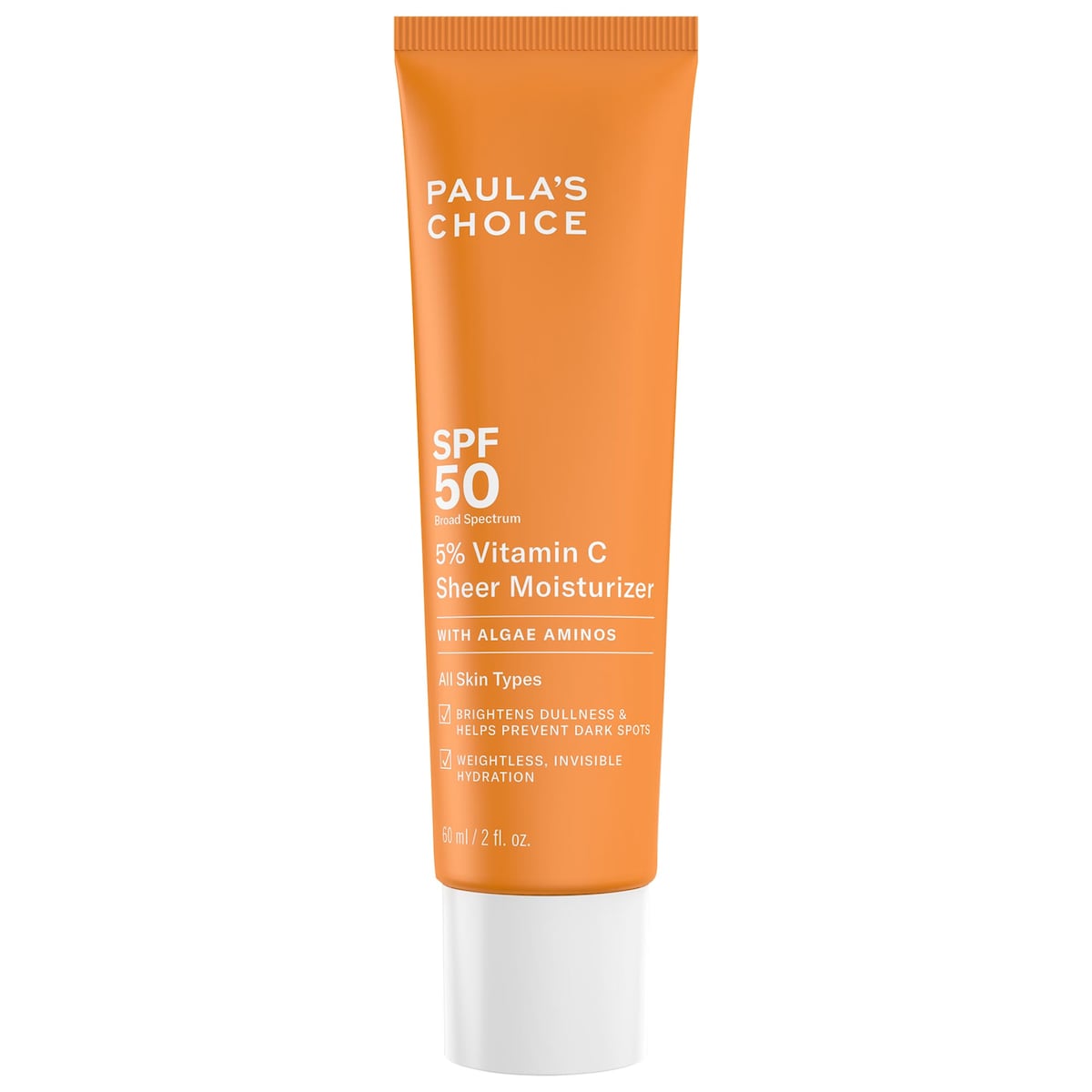
Paula's Choice 5% Vitamin C Sheer Facial Moisturizer SPF 50

This moisturizer offers broad-spectrum SPF 50 protection along with a dose of vitamin C. It's designed to be lightweight and sheer, making it suitable for daily wear without leaving a white cast.

Sephora price

$45.00

Price matters most when you are trying to learn whether this lane belongs in your routine without turning the test into a luxury gamble.

Sephora reviews

4.7 / 5

About 516 reviews on the current Sephora source, so there is real volume behind the reputation.

Shoppers keep mentioning

Good for: Anti-AgingSPFGood for: Uneven TextureGood for: Dark spotsFragrance FreeVitamin CVitamin C 5%: Visibly brightens dullness, evens tone, and boosts sun protection.Broad-Spectrum SPF 50: Defends against damaging UV rays and prevents visible signs of aging.Algae-Derived Amino Acids: Enhance UV protection and visibly strengthen skin.Fine Lines and WrinklesDullnessand Loss of Firmness and Elasticity

These are the shopper themes that keep showing up around this listing and shape why people open it in the first place.

Glass take

4.7 / 5 overall fit

A solid daily SPF that also brightens and protects with vitamin C. It's a great option for those looking to simplify their morning routine.

Paula's Choice 5% Vitamin C Sheer Facial Moisturizer SPF 50

Sephora snapshot refreshed April 23, 2026

Price, rating, review count, and source status come from Sephora. Glass adds the routine fit, overlap risk, and what to compare next.

View Sephora

What Sephora says

What this product is supposed to do

A sheer, multi-active SPF supercharged with the bioactive power of five percent vitamin C to protect, moisturize, and visibly brighten skin all day.

NormalDryCombinationand OilyFine Lines and WrinklesDullnessand Loss of Firmness and Elasticity

Use as the last step in your AM routine.

Apply liberally to face and neck 15 mins before sun exposure.

Reapply as needed throughout the day.

Recycling Instructions:

Check your local recycling authority's guidelines.

What Glass adds

What actually matters before you buy it

This is a smart 2-in-1 for your AM routine. It delivers essential sun protection and the brightening benefits of vitamin C in one step. If you're looking to streamline your routine without sacrificing efficacy, this is a strong contender.

Morning Routine Simplifier

Many users appreciate combining their SPF and vitamin C serum into one product, saving time and counter space.

Effective Protection and Brightening

Reviewers consistently praise its ability to protect from the sun while visibly improving skin tone and brightness.

Best for

When this is a smart buy

  • All skin types, especially those seeking anti-aging benefits
  • Anyone looking to simplify their morning routine
  • People concerned with dullness, dark spots, and fine lines

Skip if

When this is the wrong lane

  • You prefer a separate moisturizer and SPF
  • You are sensitive to chemical sunscreens

Routine Fit

Your AM Essential

Apply this as the very last step of your morning skincare routine, after all serums and treatments, but before makeup. Ensure you apply it generously to cover your face and neck 15 minutes before sun exposure. Reapply as needed throughout the day, especially if you're spending extended time outdoors.

Why it works

Where it earns the slot and where it does not

The useful question is not whether this product is good in a vacuum. It is whether it makes your routine easier to run or just adds one more bottle with a familiar ingredient on it.

What it actually does well

  • Dual-action: SPF and Vitamin C
  • Sheer, non-greasy formula
  • Fragrance-free
  • Broad-spectrum SPF 50 protection

Where it starts to feel redundant

  • Higher price point
  • May not be suitable for extremely sensitive skin due to chemical filters

Routine fit

Where it belongs in the stack

Morning Routine

This product is designed for daytime use. It should be applied as the final step in your morning skincare routine to ensure maximum sun protection.

Glass rating

How this formula scores in real life

4.7/ 5 overall

A solid daily SPF that also brightens and protects with vitamin C. It's a great option for those looking to simplify their morning routine.

Sun Protection

4.8 / 5

Broad-spectrum SPF 50 offers reliable defense against UV damage.

Brightening

4.5 / 5

The 5% vitamin C blend visibly improves dullness and uneven tone over time.

Full ingredient breakdown

Every ingredient, what it does, and whether I care

UV Filter

Avobenzone

Badness

3.0 / 10

A chemical sunscreen agent that absorbs UVA rays. It's often combined with other filters for broad-spectrum protection.

Usually helps with

UVA protection

Watch for

Can degrade with sun exposure if not stabilized

UV Filter

Octinoxate

Badness

4.0 / 10

A chemical sunscreen agent that absorbs UVB rays. It's effective but has raised some environmental and health concerns.

Usually helps with

UVB protection

Watch for

Potential endocrine disruptor concerns; can be irritating for some

UV Filter

Octisalate

Badness

3.0 / 10

A chemical sunscreen agent that absorbs UVB rays. It helps to stabilize other filters.

Usually helps with

UVB protection

Watch for

Can be a skin irritant for some

UV Filter

Octocrylene

Badness

4.0 / 10

A chemical sunscreen agent that absorbs UVB rays and some UVA rays. It also helps to stabilize other filters like Avobenzone.

Usually helps with

UVB protection, stabilization

Watch for

Can cause allergic reactions in some individuals; potential environmental concerns

Solvent

Water

Badness

0.0 / 10

The base for many skincare formulations.

Usually helps with

Hydration

Watch for

Humectant

Glycerin

Badness

0.0 / 10

A popular humectant that draws moisture to the skin, keeping it hydrated and soft.

Usually helps with

Hydration, softening

Watch for

Absorbent

Silica

Badness

1.0 / 10

Can help absorb excess oil and provide a matte finish.

Usually helps with

Oil control, texture improvement

Watch for

Antioxidant

3-O-Ethyl Ascorbic Acid

Badness

1.0 / 10

A stable and effective derivative of Vitamin C that helps brighten skin, fade dark spots, and boost collagen.

Usually helps with

Brightening, antioxidant protection, collagen support

Watch for

Can be potent; introduce slowly if new to Vitamin C

Antioxidant

Ascorbyl Glucoside

Badness

2.0 / 10

A water-soluble derivative of Vitamin C that is converted to L-Ascorbic Acid in the skin. It offers antioxidant benefits and helps with brightening.

Usually helps with

Brightening, antioxidant protection

Watch for

Less potent than L-Ascorbic Acid but gentler

Emollient

Dimethicone

Badness

1.0 / 10

A silicone that provides a smooth, silky feel and helps to lock in moisture. It can create a barrier on the skin.

Usually helps with

Smoothing, barrier function

Watch for

Can feel heavy for very oily skin; some prefer to avoid silicones

Humectant

Propanediol

Badness

0.0 / 10

A solvent and humectant that helps improve the absorption of other ingredients and adds hydration.

Usually helps with

Hydration, ingredient penetration

Watch for

Antioxidant

Tetrahexyldecyl Ascorbate

Badness

1.0 / 10

A fat-soluble form of Vitamin C that penetrates the skin well. It offers antioxidant protection and helps with brightening and collagen production.

Usually helps with

Brightening, antioxidant protection, collagen support

Watch for

Stable and gentle

Antioxidant

Acetyl Zingerone

Badness

1.0 / 10

A derivative of ginger that acts as an antioxidant, helping to protect the skin from environmental damage.

Usually helps with

Antioxidant protection

Watch for

Thickener

Acrylates/C10-30 Alkyl Acrylate Crosspolymer

Badness

1.0 / 10

A polymer used to thicken formulations and improve texture.

Usually helps with

Texture enhancement

Watch for

Emollient

Diethylhexyl Syringylidenemalonate

Badness

1.0 / 10

A skin-conditioning agent that also helps to stabilize UV filters.

Usually helps with

Emollience, UV filter stabilization

Watch for

Emollient

Dimethicone/Vinyl Dimethicone Crosspolymer

Badness

1.0 / 10

A silicone elastomer that provides a smooth, velvety feel and can help to mattify the skin.

Usually helps with

Texture improvement, mattifying

Watch for

Silicone-based

Antioxidant

Porphyra Umbilicalis Extract

Badness

1.0 / 10

An extract from red algae that provides antioxidant benefits and can help protect the skin from UV-induced damage.

Usually helps with

Antioxidant protection, UV defense

Watch for

Emulsifier

Hydrogenated Lecithin

Badness

0.0 / 10

A modified form of lecithin that acts as an emulsifier, helping to blend oil and water ingredients.

Usually helps with

Emulsification

Watch for

Emollient

Ricinus Communis (Castor) Seed Oil

Badness

1.0 / 10

A plant-derived oil that can help to soften and moisturize the skin.

Usually helps with

Emollience, moisturization

Watch for

pH Adjuster

Sodium Hydroxide

Badness

2.0 / 10

Used to adjust the pH of the formula to be compatible with the skin.

Usually helps with

Formulation stability

Watch for

Can be irritating in high concentrations

Antioxidant

Tocopherol

Badness

1.0 / 10

A form of Vitamin E that acts as an antioxidant, protecting the skin from free radical damage.

Usually helps with

Antioxidant protection

Watch for

Thickener

Xanthan Gum

Badness

0.0 / 10

A common thickening agent that improves the texture and stability of formulations.

Usually helps with

Texture enhancement

Watch for

Preservative

Ethylhexylglycerin

Badness

1.0 / 10

A preservative that also has skin-conditioning properties.

Usually helps with

Preservation, skin conditioning

Watch for

Emulsifier

Laureth-4

Badness

3.0 / 10

An ethoxylated ingredient that can act as an emulsifier. Some concerns exist regarding ethoxylated ingredients.

Usually helps with

Emulsification

Watch for

Potential for irritation; concerns about 1,4-dioxane contamination

Preservative

Phenoxyethanol

Badness

2.0 / 10

A common preservative used to prevent microbial growth in cosmetics.

Usually helps with

Preservation

Watch for

Can be irritating for some sensitive skin types

Preservative

Potassium Sorbate

Badness

1.0 / 10

A preservative used to inhibit the growth of mold and yeast.

Usually helps with

Preservation

Watch for

Preservative

Sodium Benzoate

Badness

1.0 / 10

A preservative that works well in acidic conditions to prevent bacterial growth.

Usually helps with

Preservation

Watch for

UV Filter

Titanium Dioxide

Badness

1.0 / 10

A mineral sunscreen agent that physically blocks UV rays. It's generally considered safe and effective.

Usually helps with

Broad-spectrum UV protection

Watch for

Can leave a white cast if not formulated properly; nanoparticle concerns (though generally considered safe in cosmetics)

Colorant

Iron Oxides (CI 77492)

Badness

0.0 / 10

Mineral pigments used to provide color. In sunscreens, they can help with broad-spectrum protection and tinting.

Usually helps with

Coloring

Watch for

Colorant

Iron Oxides (CI 77491)

Badness

0.0 / 10

Mineral pigments used to provide color.

Usually helps with

Coloring

Watch for

Colorant

Iron Oxides (CI 77499)

Badness

0.0 / 10

Mineral pigments used to provide color.

Usually helps with

Coloring
Watch for

Compare before you buy

The next pages that make this product more useful

A good product page should push you into the next decision, not trap you inside one product page forever. These are the cleaner next clicks.

FAQ

The fast answers people actually need

Is this sunscreen good for sensitive skin?

It is fragrance-free and contains some gentle ingredients. However, it uses chemical filters and some individuals with very sensitive skin might find it irritating. Patch testing is always recommended.

Can I use this with other vitamin C products?

While it contains vitamin C, using it with another vitamin C serum might be too much for some skin types. Consider your skin's tolerance and the concentration of vitamin C in your other products.

Does this leave a white cast?

The product is described as 'sheer' and formulated with chemical filters and colorants (iron oxides), so it should not leave a noticeable white cast on most skin tones.