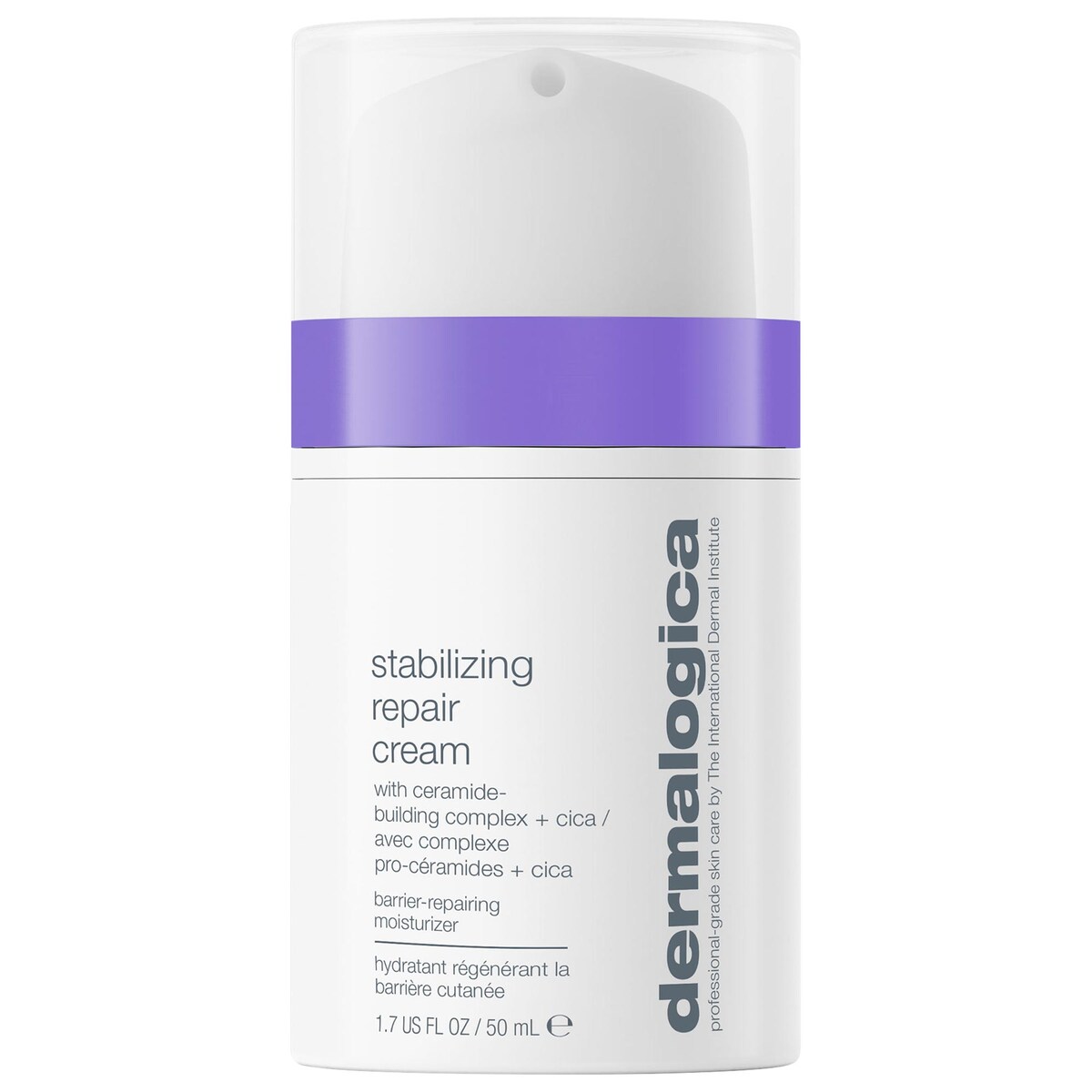
DermalogicamoisturizerMoisturize step

Dermalogica Stabilizing Repair Cream Moisturizer with Squalane and Cica

This moisturizer is formulated to calm and strengthen compromised skin. Its rich texture melts into the skin, delivering key ingredients that help reduce redness and improve resilience. It’s a solid choice for those dealing with dryness, irritation, or a weakened skin barrier.

Sephora price

$25.00 - $69.00

Price matters most when you are trying to learn whether this lane belongs in your routine without turning the test into a luxury gamble.

Sephora reviews

4.7 / 5

About 336 reviews on the current Sephora source, so there is real volume behind the reputation.

Shoppers keep mentioning

Good for: Skin BarrierBest for Dry, Combo, Normal SkinFragrance FreeVeganGood for: DrynessHydratingProprietary Ceramide-Building Complex: Provides nourishing lipids, fortifying skin’s barrier.Centella asiatica : Supports the skin barrier and visibly increases resilience and firmness.Squalane: Hydrates and smooths while supporting a balanced skin microbiome.DrynessRednessand Uneven Texture

These are the shopper themes that keep showing up around this listing and shape why people open it in the first place.

Glass take

4.7 / 5 overall fit

A rich, fragrance-free moisturizer that excels at soothing redness and supporting the skin barrier. It’s a great option for dry, combination, and normal skin types looking for hydration and resilience.

Dermalogica Stabilizing Repair Cream Moisturizer with Squalane and Cica

Sephora snapshot refreshed April 23, 2026

Price, rating, review count, and source status come from Sephora. Glass adds the routine fit, overlap risk, and what to compare next.

View Sephora

What Sephora says

What this product is supposed to do

A balm-cream moisturizer, enriched with cica and squalane, that visibly reduces redness and supports a strong skin barrier.

NormalDryCombinationand OilyDrynessRednessand Uneven Texture

Rub cream between hands.

Apply to your face and neck with light, upward strokes.

Use once or twice daily.

Keep out of eyes.

What Glass adds

What actually matters before you buy it

This is a well-formulated moisturizer that delivers on its promises of barrier support and redness reduction. The ingredient list is thoughtful, focusing on soothing and hydrating components. It’s a good fit for anyone seeking a reliable, fragrance-free cream to calm and nourish their skin.

Barrier Repair Hero

Many users rave about how this cream helped restore their skin barrier, reducing sensitivity and improving overall skin health.

Calms Irritation

The soothing properties are frequently highlighted, with reviewers noting significant improvement in redness and irritation.

Best for

When this is a smart buy

  • Dry skin
  • Combination skin
  • Normal skin
  • Sensitive skin
  • Skin with redness
  • Compromised skin barrier

Skip if

When this is the wrong lane

  • You prefer very lightweight, gel-based moisturizers
  • Your skin is extremely oily and prone to breakouts from richer creams

Routine fit

How to integrate this moisturizer

Apply this cream as the last step in your skincare routine, after serums and treatments, to seal in hydration and active ingredients. Gently massage it into the skin until absorbed. It can be used both morning and night.

Why it works

Where it earns the slot and where it does not

The useful question is not whether this product is good in a vacuum. It is whether it makes your routine easier to run or just adds one more bottle with a familiar ingredient on it.

What it actually does well

  • Excellent for barrier repair
  • Visibly reduces redness
  • Deeply hydrating
  • Fragrance-free
  • Contains soothing ingredients like Cica and Bisabolol

Where it starts to feel redundant

  • May be too rich for very oily or acne-prone skin
  • The balm-cream texture requires a bit more effort to apply

Routine fit

Where it belongs in the stack

Morning and Night

This moisturizer is suitable for both morning and evening use. Its rich texture provides lasting comfort and protection throughout the day and night.

Glass rating

How this formula scores in real life

4.7/ 5 overall

A rich, fragrance-free moisturizer that excels at soothing redness and supporting the skin barrier. It’s a great option for dry, combination, and normal skin types looking for hydration and resilience.

Skin Barrier Support

4.8 / 5

The combination of Cica, Squalane, and a proprietary ceramide-building complex makes this cream highly effective at fortifying and repairing the skin barrier.

Redness Reduction

4.7 / 5

Users frequently mention a visible decrease in redness, making it ideal for sensitive or irritated skin.

Hydration and Texture

4.6 / 5

The balm-cream texture provides lasting hydration without feeling heavy, smoothing out dryness and uneven texture.

Full ingredient breakdown

Every ingredient, what it does, and whether I care

Solvent

Water/Aqua/Eau

Badness

0.0 / 10

The base for most skincare formulations, dissolving other ingredients.

Usually helps with

Hydration

Watch for

None

Humectant

Butylene Glycol

Badness

1.0 / 10

Attracts moisture to the skin, improving hydration and product texture.

Usually helps with

Hydration

Watch for

Can be a mild irritant for some

Humectant

Glycerin

Badness

0.0 / 10

A classic humectant that draws water into the skin, keeping it hydrated and supple.

Usually helps with

Hydration

Watch for

None

Emollient

Squalane

Badness

0.0 / 10

Mimics skin's natural oils, providing excellent hydration and improving skin's softness and suppleness without greasiness.

Usually helps with

Hydration, barrier support

Watch for

None

Emollient

Butyrospermum Parkii (Shea) Butter

Badness

1.0 / 10

A rich emollient that moisturizes and softens the skin, rich in fatty acids and vitamins.

Usually helps with

Dryness, barrier support

Watch for

Can be comedogenic for some acne-prone skin types

Emollient

Caprylic/Capric Triglyceride

Badness

0.0 / 10

Derived from coconut oil and glycerin, it's an excellent emollient that replenishes skin.

Usually helps with

Hydration, softening

Watch for

None

Emollient

Palmitic Acid

Badness

2.0 / 10

A fatty acid that helps to smooth and soften skin, but can be comedogenic in higher concentrations.

Usually helps with

Softening

Watch for

Can clog pores for some

Emollient

Simmondsia Chinensis (Jojoba) Seed Oil

Badness

0.0 / 10

A liquid wax that closely resembles skin's natural sebum, providing excellent moisturization and balancing properties.

Usually helps with

Hydration, balancing

Watch for

None

Emulsifier

Glyceryl Stearate SE

Badness

1.0 / 10

An emulsifier that helps blend oil and water ingredients, also providing some emollient properties.

Usually helps with

Texture, moisturizing

Watch for

None

Humectant

Propanediol

Badness

1.0 / 10

A solvent and humectant that enhances the absorption of other ingredients and provides hydration.

Usually helps with

Hydration, absorption

Watch for

None

Emollient

Hexyldecanol

Badness

1.0 / 10

A fatty alcohol that softens and smooths the skin.

Usually helps with

Softening

Watch for

None

Emulsifier

Polyglyceryl-3 Methylglucose Distearate

Badness

1.0 / 10

A plant-derived emulsifier that helps create stable emulsions and provides a smooth skin feel.

Usually helps with

Texture

Watch for

None

Antioxidant

Hydroxyacetophenone

Badness

2.0 / 10

A synthetic antioxidant that can help protect the skin from environmental damage and stabilize the formula.

Usually helps with

Antioxidant protection

Watch for

None

Soothing Agent

Dipotassium Glycyrrhizate

Badness

1.0 / 10

Derived from licorice root, it has anti-inflammatory and soothing properties, helping to calm redness.

Usually helps with

Soothing, anti-inflammatory

Watch for

None

Soothing Agent

Centella Asiatica Extract

Badness

0.0 / 10

Also known as Cica or Gotu Kola, it's renowned for its healing, soothing, and anti-inflammatory properties, aiding in barrier repair.

Usually helps with

Soothing, barrier repair, redness reduction

Watch for

None

Soothing Agent

Boerhavia Diffusa Root Extract

Badness

2.0 / 10

A botanical extract known for its anti-inflammatory and antioxidant benefits, helping to calm skin.

Usually helps with

Soothing, antioxidant

Watch for

Limited research on widespread use

Antioxidant

Myrothamnus Flabellifolia Leaf/Stem Extract

Badness

3.0 / 10

A resurrection plant extract known for its potent antioxidant and hydrating properties, helping skin recover from dryness.

Usually helps with

Antioxidant, hydration

Watch for

Less common ingredient

Soothing Agent

Tasmannia Lanceolata Leaf Extract

Badness

3.0 / 10

A Tasmanian pepperberry extract with potent anti-inflammatory and antioxidant properties, known to reduce redness and irritation.

Usually helps with

Soothing, anti-inflammatory

Watch for

Can cause mild irritation in sensitive individuals

Emollient

Brassica Campestris (Rapeseed) Sterols

Badness

1.0 / 10

Plant-derived sterols that help to condition and soften the skin, supporting the lipid barrier.

Usually helps with

Emollient, barrier support

Watch for

None

Antioxidant

Zingiber Officinale (Ginger) Root Extract

Badness

3.0 / 10

Contains antioxidants that can help protect skin from damage, though it can be a potential irritant for some.

Usually helps with

Antioxidant

Watch for

Can cause irritation or stinging for sensitive skin

Antioxidant

Tocopherol

Badness

1.0 / 10

A form of Vitamin E, it's a well-known antioxidant that protects skin from free radical damage.

Usually helps with

Antioxidant protection

Watch for

None

Preservative Booster

Lactobacillus Ferment

Badness

2.0 / 10

A probiotic-derived ingredient that can help support the skin's microbiome and act as a preservative booster.

Usually helps with

Microbiome support

Watch for

None

Skin-Conditioning Agent

Cetylhydroxyproline Palmitamide

Badness

2.0 / 10

A synthetic lipid that helps to condition and moisturize the skin, supporting barrier function.

Usually helps with

Conditioning, barrier support

Watch for

None

Humectant

Caprylyl Glycol

Badness

1.0 / 10

A humectant that also acts as a preservative booster and skin-conditioning agent.

Usually helps with

Hydration, preservation

Watch for

None

Emollient

Triolein

Badness

1.0 / 10

A triglyceride that helps to soften and smooth the skin.

Usually helps with

Softening

Watch for

None

Viscosity Agent

Maltodextrin

Badness

0.0 / 10

A polysaccharide used to thicken formulations and provide a smooth feel.

Usually helps with

Texture

Watch for

None

Soothing Agent

Bisabolol

Badness

0.0 / 10

The active component of chamomile, it is highly effective at calming inflammation and reducing redness.

Usually helps with

Soothing, anti-inflammatory

Watch for

None

Thickener

Xanthan Gum

Badness

0.0 / 10

A common thickening agent derived from fermented sugar that improves product texture.

Usually helps with

Texture

Watch for

None

Emollient

Cetearyl Alcohol

Badness

1.0 / 10

A fatty alcohol that moisturizes, softens, and smooths skin. It is not drying like some other alcohols.

Usually helps with

Moisturizing, softening

Watch for

None

Emulsifier

Myristic Acid

Badness

2.0 / 10

A fatty acid that can act as an emulsifier and emollient, but can be comedogenic.

Usually helps with

Emollient

Watch for

Can clog pores for some

Chelating Agent

Tetrasodium Glutamate Diacetate

Badness

1.0 / 10

Helps to stabilize the formula by binding to metal ions.

Usually helps with

Formula stability

Watch for

None

Emollient

Hydroxystearic Acid

Badness

2.0 / 10

A fatty acid that helps to condition and soften the skin.

Usually helps with

Conditioning

Watch for

None

Humectant

1,2-Hexanediol

Badness

1.0 / 10

A solvent and humectant that also has antimicrobial properties, helping to preserve the formula.

Usually helps with

Hydration, preservation

Watch for

None

pH Adjuster

Sodium Hydroxide

Badness

1.0 / 10

Used to adjust the pH of the product to be compatible with skin.

Usually helps with

pH balance

Watch for

Can be irritating if pH is not properly adjusted

pH Adjuster

Citric Acid

Badness

1.0 / 10

An alpha-hydroxy acid (AHA) used to adjust pH and can offer mild exfoliation.

Usually helps with

pH balance, exfoliation

Watch for

Can cause irritation in high concentrations or on sensitive skin

Thickener

Sodium Polyacryloyldimethyl Taurate

Badness

1.0 / 10

A synthetic polymer used to thicken formulations and create a smooth texture.

Usually helps with

Texture

Watch for

None

Thickener

Ammonium Acryloyldimethyltaurate/VP Copolymer

Badness

1.0 / 10

A synthetic polymer used to thicken formulations and provide a pleasant skin feel.

Usually helps with

Texture

Watch for

None

Emulsifier

Stearic Acid

Badness

2.0 / 10

A fatty acid that acts as an emulsifier and emollient, helping to create a smooth texture.

Usually helps with

Emollient, texture

Watch for

Can be comedogenic for some

Thickener

Acacia Senegal Gum

Badness

0.0 / 10

A natural gum used to thicken formulations and provide a smooth finish.

Usually helps with

Texture

Watch for

None

Compare before you buy

The next pages that make this product more useful

A good product page should push you into the next decision, not trap you inside one product page forever. These are the cleaner next clicks.

FAQ

The fast answers people actually need

Is this moisturizer suitable for sensitive skin?

Yes, this moisturizer is fragrance-free and formulated with soothing ingredients like Centella Asiatica and Bisabolol, making it a good choice for sensitive skin prone to redness.

Can I use this if I have combination skin?

Absolutely. While it's rich, it's designed to balance and hydrate without feeling heavy, making it suitable for combination skin types, especially those experiencing dryness or irritation.

What is the texture of this cream?

It's a balm-cream texture, meaning it's rich and creamy but melts into the skin upon application, providing a comforting and hydrating feel.