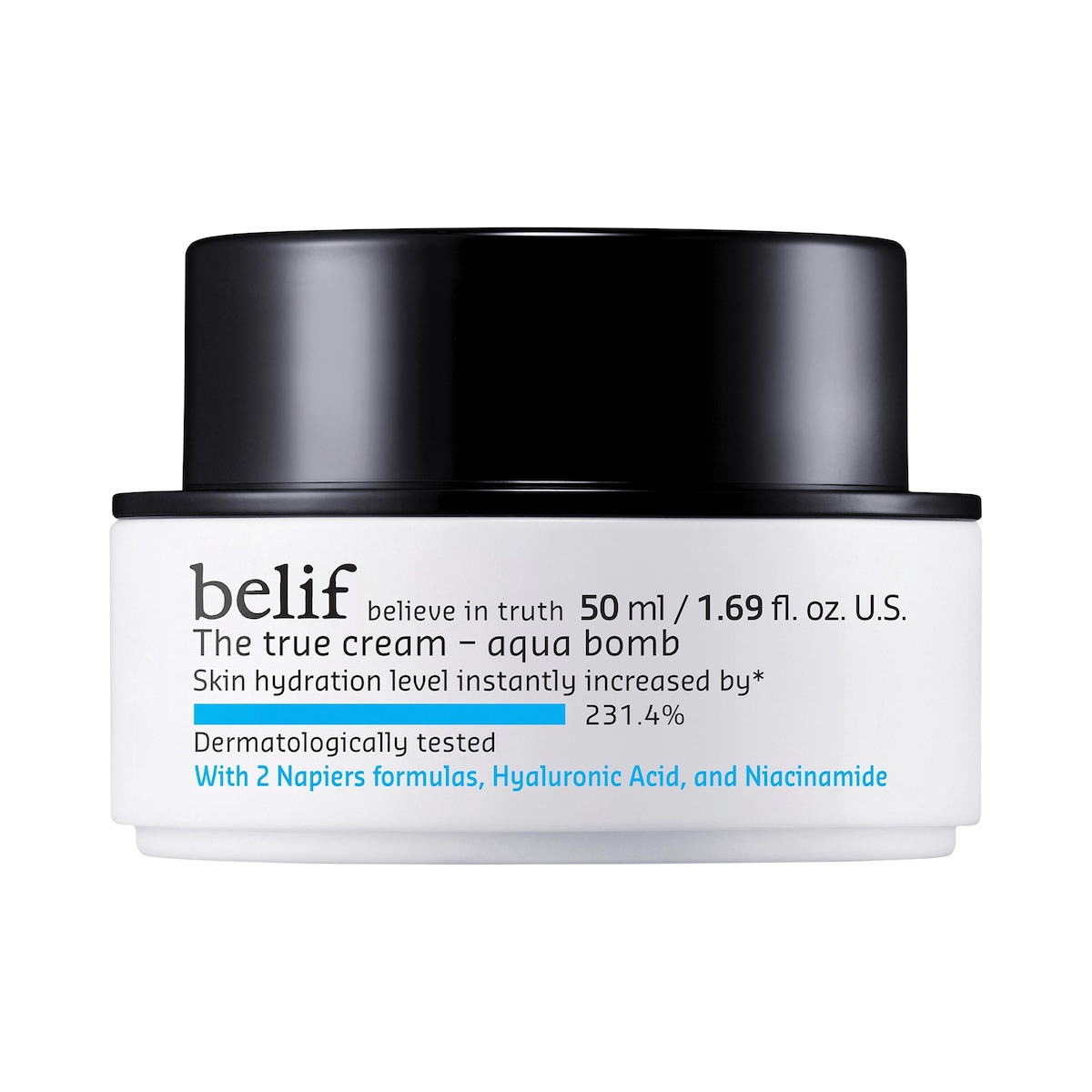
The base of the formula.
Usually helps with
Hydration
Humectant
Dipropylene Glycol
Helps to draw moisture into the skin and can act as a solvent.
Usually helps with
Hydration
Watch for
Can be a mild irritant for some.
A common and effective humectant that attracts water to the skin.
Usually helps with
Hydration
Emollient
Methyl Trimethicone
Provides a smooth, silky feel and helps to spread the product.
Usually helps with
Texture
Can help other ingredients penetrate the skin, but can also be drying and irritating for some.
Usually helps with
Texture
Watch for
Potential for dryness and irritation.
A silicone that creates a smooth feel and forms a protective barrier on the skin.
Usually helps with
Texture, Barrier
Emollient
Cyclopentasiloxane
A volatile silicone that provides a smooth, non-greasy feel and evaporates over time.
Usually helps with
Texture
A solvent and humectant that can also have antimicrobial properties.
Usually helps with
Hydration
Emollient
Caprylic/Capric Triglyceride
A skin-conditioning agent derived from coconut oil and glycerin, it helps to replenish the skin.
Usually helps with
Emollience
Emulsifier
PEG/PPG/Polybutylene Glycol-8/5/3 Glycerin
Helps to mix oil and water ingredients, and can also provide some hydration.
Usually helps with
Texture
Emollient
Pentaerythrityl Tetraethylhexanoate
A skin-conditioning agent that provides a smooth feel.
Usually helps with
Texture
Soothing Agent
Avena Sativa (Oat) Kernel Extract
Known for its anti-inflammatory and soothing properties.
Usually helps with
Soothing
Soothing Agent
Calendula Officinalis Flower Extract
A botanical extract with anti-inflammatory and wound-healing properties.
Usually helps with
Soothing
Antioxidant
Nepeta Cataria Extract
Also known as catnip extract, it has antioxidant properties.
Usually helps with
Antioxidant
Antioxidant
Rubus Idaeus (Raspberry) Leaf Extract
Rich in antioxidants and vitamins.
Usually helps with
Antioxidant
Antioxidant
Baptisia Tinctoria Root Extract
A plant extract with antioxidant properties.
Usually helps with
Antioxidant
Soothing Agent
Stellaria Media (Chickweed) Extract
Known for its soothing and anti-inflammatory benefits.
Usually helps with
Soothing
Antioxidant
Alchemilla Vulgaris Leaf Extract
A plant extract with antioxidant properties.
Usually helps with
Antioxidant
Antioxidant
Equisetum Arvense Leaf Extract
Also known as horsetail extract, it contains antioxidants.
Usually helps with
Antioxidant
Soothing Agent
Urtica Dioica (Nettle) Leaf Extract
Contains vitamins and minerals, known for its soothing properties.
Usually helps with
Soothing
Humectant
Sodium Hyaluronate
The salt form of hyaluronic acid, it attracts and holds moisture in the skin.
Usually helps with
Hydration
A form of Vitamin B3 that helps improve skin barrier function, reduce inflammation, and minimize the appearance of pores.
Usually helps with
Pores, Texture, Tone
Watch for
Can cause temporary flushing or redness in some individuals.
Emollient
Polymethylsilsesquioxane
A silicone derivative that gives a smooth, matte finish.
Usually helps with
Texture
A provitamin of B5 that moisturizes, soothes, and improves skin barrier function.
Usually helps with
Hydration, Soothing
Helps to stabilize the formula.
Usually helps with
Texture
Emollient
Pentaerythrityl Tetraisostearate
A skin-conditioning agent that provides a smooth feel.
Usually helps with
Texture
Emollient
Phenyl Trimethicone
A silicone that provides a smooth, non-greasy feel.
Usually helps with
Texture
Emulsifier
Hydroxyethyl Acrylate/Sodium Acryloyldimethyl Taurate Copolymer
Helps to bind oil and water ingredients together.
Usually helps with
Texture
A thickening agent that gives the product its gel-like consistency.
Usually helps with
Texture
Used to adjust the pH of the formula.
Usually helps with
Formula Stability
A stable, plant-derived emollient that mimics the skin's natural oils, providing hydration and improving suppleness.
Usually helps with
Hydration, Emollience
Emulsifier
PEG-40 Hydrogenated Castor Oil
Helps to solubilize fragrance and other oil-based ingredients.
Usually helps with
Texture
A silicone that provides a smooth feel and can help protect the skin.
Usually helps with
Texture
Thickener
Acrylates/C10-30 Alkyl Acrylate Crosspolymer
A thickening agent that helps create the product's texture.
Usually helps with
Texture
Emulsifier
C14-22 Alcohols
Helps to blend oil and water ingredients.
Usually helps with
Texture
Helps to mix oil and water ingredients.
Usually helps with
Texture
A solvent and humectant that helps ingredients penetrate the skin.
Usually helps with
Hydration
Emollient
Macadamia Ternifolia Seed Oil
A rich, nourishing oil that helps to soften and smooth the skin.
Usually helps with
Emollience
Antioxidant
Malachite Extract
A mineral extract believed to have antioxidant properties.
Usually helps with
Antioxidant
Emollient
Triethylhexanoin
A synthetic emollient that provides a smooth feel.
Usually helps with
Texture
Chelating Agent
Trisodium EDTA
Helps to improve the stability and performance of the formula.
Usually helps with
Formula Stability
Emulsifier
Arachidyl Glucoside
A plant-derived emulsifier.
Usually helps with
Texture
Emollient
Butyrospermum Parkii (Shea) Butter
A rich butter that moisturizes and conditions the skin.
Usually helps with
Emollience
Emulsifier
Hydrogenated Lecithin
A modified form of lecithin that helps to stabilize emulsions.
Usually helps with
Texture
Emulsifier
Sorbitan Isostearate
Helps to blend oil and water ingredients.
Usually helps with
Texture
Emulsifier
Glyceryl Stearate
An emulsifier and emollient that helps to soften and smooth the skin.
Usually helps with
Texture
A fatty acid that helps to thicken the formula and provides emollient properties.
Usually helps with
Texture
Skin-Replenishing
Ceramide NP
A type of ceramide that helps to restore and maintain the skin's natural barrier.
Usually helps with
Barrier Support
A fatty alcohol that helps to improve the skin's barrier function and hydration.
Usually helps with
Barrier Support, Hydration
Emulsifier
PEG-100 Stearate
A common emulsifier used in skincare.
Usually helps with
Texture
Fragrance
Rosmarinus Officinalis (Rosemary) Leaf Oil
Provides a natural scent, but can be a potential irritant for sensitive skin.
Watch for
Potential for irritation and photosensitivity.
Fragrance
Citrus Aurantifolia (Lime) Oil
Adds a citrus scent, but can be a photosensitizer and potential irritant.
Watch for
Photosensitivity and potential for irritation.
Fragrance
Pelargonium Graveolens Flower Oil
Provides a floral scent, but can be a potential irritant for sensitive skin.
Watch for
Potential for irritation.
Fragrance
Citrus Aurantium Dulcis (Orange) Peel Oil
Adds a citrus scent, but can be a photosensitizer and potential irritant.
Watch for
Photosensitivity and potential for irritation.
A component of natural fragrances, can be an allergen.
Watch for
Potential allergen.
A component of natural fragrances, can be an allergen.
Watch for
Potential allergen.
A common component of citrus oils, can be an irritant and allergen.
Watch for
Potential irritant and allergen.
A component of natural fragrances, can be an allergen.
Watch for
Potential allergen.
A component of natural fragrances, can be an allergen.
Watch for
Potential allergen.