I used to think oil-free meant weak.
Thin. Watery. Gone by lunch.
Then I watched what happens when acne-prone skin gets dehydrated under sunscreen, actives, weather, and stress. The skin looks shiny, but it feels tight. Makeup grabs. A spot treatment burns more than it should. You skip moisturizer because your face already looks oily, then the whole routine gets louder.
That is where oil-free moisturizers make sense.
Not because oil is evil. It is not. Not because every acne-prone face needs the same gel cream. It does not. An oil-free moisturizer is useful when your skin needs water, comfort, and a lighter finish without the cushion of a rich cream.
The mistake is treating the category like one product type. Skin Jelly, a water cream, a mattifying gel cream, and a weightless lotion can all say oil-free and behave very differently on the face.
The quick answer
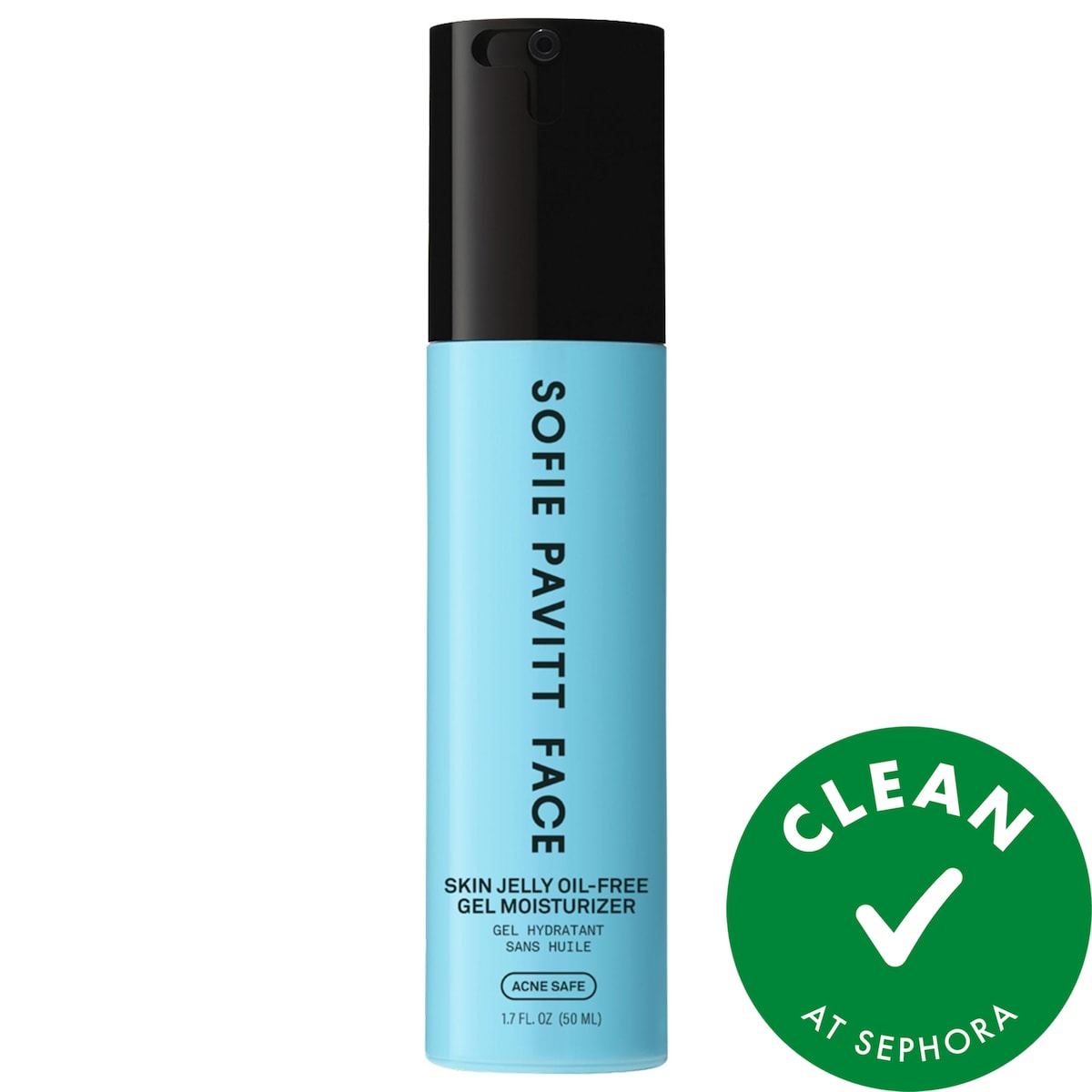
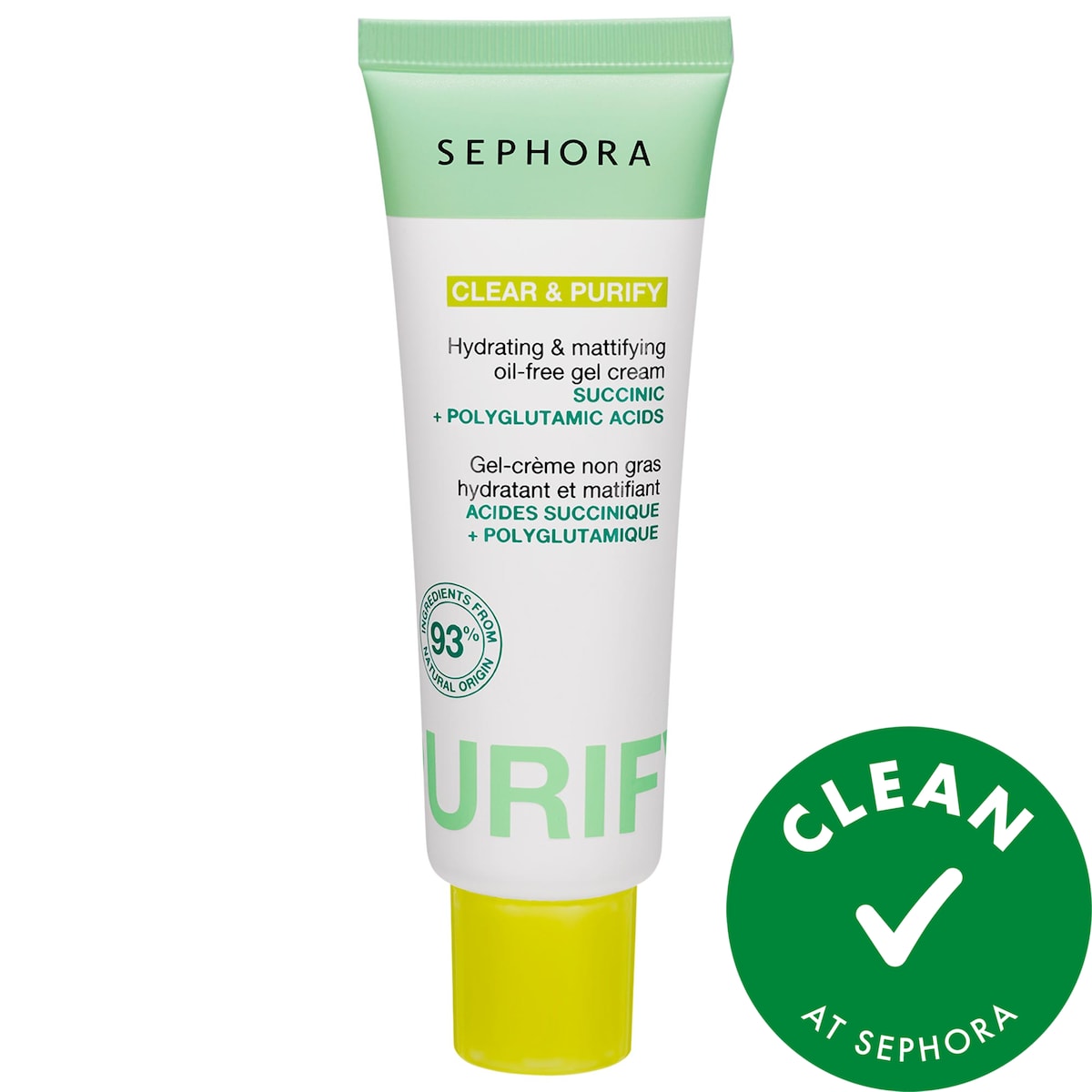
The best oil-free moisturizer in May 2026 depends on the problem you are trying to solve. For acne-prone skin that wants the lightest gel feel, I would start with Sofie Pavitt Face Skin Jelly. For shine plus irritation, I would look at Skinfix Skin Barrier Restoring Gel Cream. For budget hydration, The INKEY List Omega Water Cream is the cleanest first test. For a more matte daytime finish, Sephora Collection Hydrating & Mattifying Oil-Free Gel Cream makes more sense than a dewy water cream.
If your skin is dry, flaking, or burning, do not force the lightest product just because you break out. Acne-prone skin can still need a richer moisturizer in certain zones or seasons.
Why acne-prone skin still needs moisturizer
Acne-prone skin can feel greasy and dehydrated at the same time. That combination is annoying because the mirror says one thing and the skin says another.
The American Academy of Dermatology says moisturizer can help people tolerate acne treatments like benzoyl peroxide, salicylic acid, topical retinoids, and isotretinoin because those treatments can dry and irritate the skin. It also recommends looking for moisturizer labels such as oil-free, non-comedogenic, or won't clog pores when your skin breaks out easily.
That is the practical frame. Moisturizer is not a luxury step. It is part of making the rest of the routine tolerable enough to repeat.
If you use actives and your skin gets tight after cleansing, flakes around the mouth, stings under sunscreen, or produces more surface shine by midday, skipping moisturizer may be making the routine harder than it needs to be.
What oil-free actually tells you
Oil-free tells you the formula avoids oils. It does not tell you whether the product is weightless, matte, sticky, hydrating enough, acne-safe for you, fragrance-free, or good under sunscreen.
That distinction matters.
Some oil-free moisturizers still use silicones, fatty alcohols, polymers, butters, film-formers, or emollients that create slip and comfort. Some feel like water and disappear quickly. Some leave a satin film. Some are built around niacinamide, zinc, PCA, hyaluronic acid, glycerin, beta glucan, ceramides, or peptides.
The label starts the conversation. Your face finishes it.
I would judge an oil-free moisturizer by five things:
| Test | What I am looking for |
|---|---|
| First feel | Does it spread without dragging or pilling? |
| Ten-minute finish | Does it settle, stay tacky, or turn shiny? |
| Sunscreen stack | Does SPF sit smoothly over it? |
| Midday comfort | Does skin feel tight, greasy, calm, or coated? |
| Three-day pattern | Do new bumps, stinging, or clogged zones show up? |
The three-day pattern is the one people skip. A product can feel beautiful on night one and still make the routine worse by day three.
My May 2026 short list
I would not buy seven moisturizers at once. But if I were narrowing the shelf, these are the lanes I would compare first.
| Image | Product | Best fit | Watch-out |
|---|---|---|---|
 | Sofie Pavitt Face Skin Jelly Oil-Free Gel Moisturizer | Oily, combination, acne-prone skin that wants a very light gel | May be too light if the barrier is already stressed |
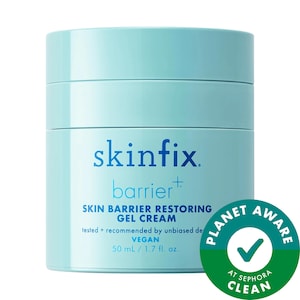 | Skinfix Skin Barrier Restoring Gel Cream | Shine, redness, active-product dryness, and pores | More expensive and more treatment-like than a basic gel |
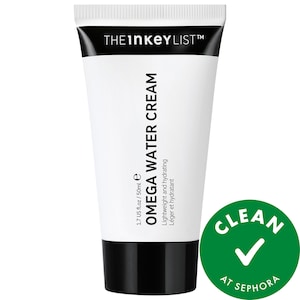 | The INKEY List Omega Water Cream | Budget oil-free hydration with a simple water-cream feel | Dewy finish may not satisfy someone who wants matte |
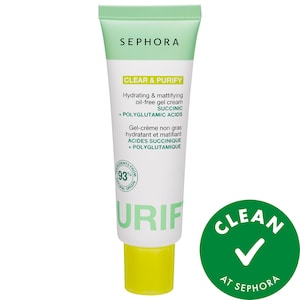 | Sephora Collection Hydrating & Mattifying Oil-Free Gel Cream | Oily T-zones, daytime shine, affordable routine testing | Not the one I would pick for damaged-feeling dry patches |
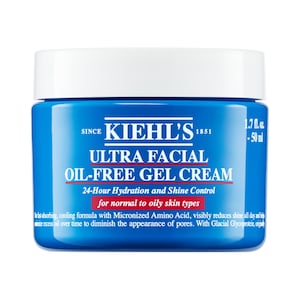 | Kiehl's Ultra Facial Oil-Free Gel Cream | Cooling gel feel and classic oily-skin hydration | Can feel too fresh or not cushioned enough for sensitive dryness |
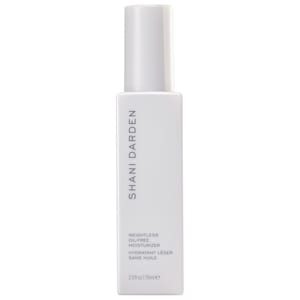 | Shani Darden Weightless Oil-Free Moisturizer | Lightweight cream feel without a heavy oil-rich finish | Higher price for a lane that some people can solve cheaper |
Where Skin Jelly makes sense
Sofie Pavitt Face Skin Jelly is the product I would test when the problem is simple: every moisturizer feels like too much.
It is positioned as a lightweight, oil-free moisturizer for acne-prone skin, with sodium PCA, zinc PCA, copper PCA, beta glucan, allantoin, glycerin, panthenol, and centella in the ingredient story. That is a very clear lane. It is not trying to be a rich winter cream. It is trying to hydrate, calm, and keep the finish breathable.
That makes it especially interesting for people who already use actives. If you have a mandelic acid serum, benzoyl peroxide wash, salicylic acid cleanser, adapalene, or prescription acne plan, the moisturizer has to help the routine sit down. It cannot compete with the treatment step.
I would use Skin Jelly in the morning under sunscreen or at night after a treatment serum when the skin wants comfort but not a blanket.
I would skip it as the only moisturizer if my cheeks were flaky, my mouth corners were cracked, or every product burned. In that case, the skin may need more barrier support than a featherweight gel can give.
The Skinfix split: pore-refining gel cream vs water cream
Skinfix has two different lanes that are easy to blur together.
Skin Barrier Restoring Gel Cream is the more targeted choice. It makes sense when the skin is oily but also irritated, red, or tired from active products. The product page positions it around barrier repair, excess oil, pores, niacinamide, and peptides. That is not a plain moisturizer lane. It is for the person who wants oil control and barrier support in one step.
Barrier Balancing Water Cream is the more weightless daily hydration lane. I would look there if the skin wants a fresher water-cream feel but still needs something more polished than a bare-bones gel.
The decision is not "which Skinfix is better." It is which problem you actually have.
If your skin is shiny and angry, I would rather calm the anger than chase the most matte finish. If your skin is shiny but otherwise stable, a lighter water cream may be enough.
The budget test
The INKEY List Omega Water Cream is the one I would test first if I wanted to learn what oil-free hydration does for my skin without making a $50 decision.
It is a lightweight, oil-free moisturizer with niacinamide and a dewy, balanced finish. That means it may be great for a simple morning routine, but not ideal if your only goal is a very matte T-zone.
Budget products are useful because they reveal the category fit. If your skin feels calmer with a water cream, you know the oil-free direction is worth exploring. If your skin still feels tight by lunch, the issue may not be oil. You may need more occlusive comfort, a gentler cleanser, less exfoliation, or a different sunscreen.
Cheap is not automatically basic. But cheap products are easiest to misuse because people keep adding more around them. Test one change at a time.
The matte daytime lane
Sephora Collection Hydrating & Mattifying Oil-Free Gel Cream is the more practical daytime pick if your routine has a shine problem.
I would not expect it to act like a full recovery cream. I would use it as a light, affordable morning moisturizer when sunscreen already adds some weight and the T-zone gets slick quickly.
This is the kind of product I would test on a normal workday, not a quiet night at home. The question is not just whether it feels good after cleansing. The question is whether it behaves after SPF, heat, walking, makeup, and a few hours of real life.
If your skin is tight and oily by midday, mattifying moisturizer alone may not solve it. Sometimes tight-and-shiny skin is over-cleansed or under-supported, not truly over-moisturized.
When a classic gel cream still wins
Kiehl's Ultra Facial Oil-Free Gel Cream sits in the familiar cooling gel-cream lane. It is not the newest idea, but that can be useful. Some people do not want a moisturizer that feels like an acne treatment, a serum, or a complicated barrier product. They want a gel cream that hydrates, feels fresh, and gets out of the way.
That is where this kind of formula can still win.
The watch-out is comfort. Cooling, fresh, oil-free textures can feel perfect on an oily forehead and underwhelming on drier cheeks. If your skin is combination, you may need to place moisturizer instead of applying the same amount everywhere.
Use more where skin feels tight. Use less where sunscreen already feels heavy. That sounds obvious, but most people apply moisturizer like paint.
The weightless cream lane
Shani Darden Weightless Oil-Free Moisturizer is for someone who wants oil-free without the most jelly-like gel feel.
That difference matters. Some people hate the bounce and slip of gel moisturizers. Others find water creams too dewy. A weightless cream can feel more familiar while still staying lighter than a rich moisturizer.
I would consider it if I wanted a more elegant texture, had combination skin, and did not need heavy barrier rescue. I would not make it my first experiment if I were unsure whether oil-free moisturizers even work for me. I would test a cheaper lane first, then upgrade for texture if the category makes sense.
How I would test one without wrecking my routine
Do not test an oil-free moisturizer the same week you start a new retinoid, acid toner, cleanser, sunscreen, foundation, and spot treatment.
That is not a test. That is noise.
I would do this:
- Keep cleanser, treatment, and sunscreen the same.
- Add the moisturizer once daily for three days.
- Use the same amount each time.
- Watch comfort, shine, stinging, pilling, and new clogged zones.
- Move to twice daily only if the first test is calm.
If you are acne-prone, you do not need to panic over one new bump. Skin has normal variation. But if the product lines up with a clear new pattern, especially in places you do not usually clog, respect the pattern.
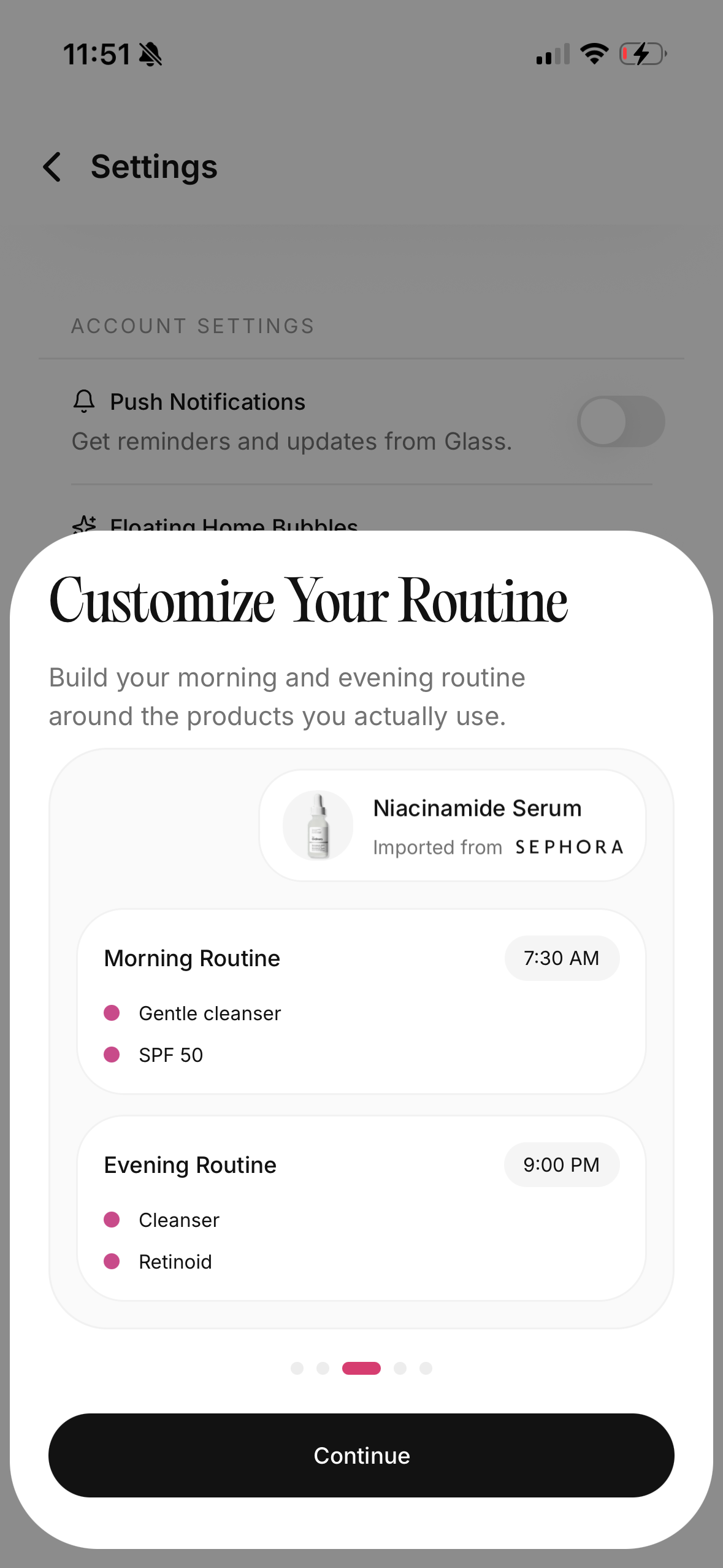
Glass helps here because you can log the exact product change and compare photos in the same lighting. The point is not to obsess over every pore. The point is to stop changing five variables and then guessing.
The biggest mistakes I would avoid
The first mistake is skipping moisturizer because skin is oily. That can work for a day. It usually does not work as a routine if you are using acne treatments or cleansing aggressively.
The second mistake is choosing the lightest possible gel when your actual issue is barrier damage. If skin burns, flakes, flushes, or feels raw, you may need a gentler routine before you need a more elegant gel.
The third mistake is judging a moisturizer alone. A face moisturizer almost never lives alone. It lives under sunscreen, over actives, beside makeup, in weather, through sweat, and after cleansing. A product that feels perfect in isolation can still fail the routine.
The fourth mistake is treating non-comedogenic like a guarantee. It is a useful label, not a promise from your face. Acne-prone skin is individual. You still have to test.
Which one I would pick by skin pattern
If your skin is oily everywhere and hates cream, I would start with Sofie Pavitt Face Skin Jelly or Kiehl's Ultra Facial Oil-Free Gel Cream.
If your skin is oily but red, reactive, or active-heavy, I would start with Skinfix Skin Barrier Restoring Gel Cream.
If you want the cheapest serious test, I would start with The INKEY List Omega Water Cream.
If you want an affordable daytime option for shine, I would start with Sephora Collection Hydrating & Mattifying Oil-Free Gel Cream.
If you want a more refined cream texture without oil-rich heaviness, I would consider Shani Darden Weightless Oil-Free Moisturizer.
If your skin is dry under the oil, I would stop chasing the most matte finish and ask whether your cleanser, actives, and sunscreen are making the barrier feel worse.
The routine I would build
Morning:
- gentle cleanser or water rinse
- oil-free moisturizer
- sunscreen
Night:
- cleanser
- acne treatment if your skin already tolerates it
- oil-free moisturizer
If your skin is tight by morning, add a richer moisturizer only to dry zones at night. If your sunscreen pills, use less moisturizer or wait longer before SPF. If your face gets greasy by lunch but feels comfortable, blotting or a different sunscreen may be the better fix. Do not make the moisturizer solve every problem.
The goal is not a perfectly matte face. The goal is calm skin that can repeat the routine.
When to stop testing and get help
Stop testing new moisturizers if your skin is swollen, burning, rashy, infected-looking, or suddenly breaking out in deep painful bumps. Stop if every product stings. Stop if acne is scarring or spreading.
That is not a shopping problem.
A dermatologist can help separate acne from irritation, rosacea-like bumps, perioral dermatitis, folliculitis, allergic contact dermatitis, or a medication-related flare. The wrong label leads to the wrong routine.
The bottom line
Oil-free moisturizer is not one thing.
Skin Jelly is the light acne-prone gel lane. Skinfix is the barrier-and-shine lane. The INKEY List is the budget water-cream test. Sephora Collection is the affordable matte daytime lane. Kiehl's is the classic cooling gel lane. Shani Darden is the weightless cream lane.
Pick the lane, not the hype.
If your skin is oily and comfortable, choose light. If it is oily and angry, choose calming. If it is oily and tight, choose support. If it is breaking out badly, stop trying to solve everything with moisturizer and get the acne plan named correctly.
Oil-free only matters if the whole routine gets easier to keep.
Useful references: AAD on moisturizer for acne-prone skin, Sofie Pavitt Face Skin Jelly, and Glass routine builder.