The name sounds simple.
Chemical peel.
Two words. One appointment. Brighter skin after.
That is how people get careless with it.
A peel is not one thing. A light lactic acid peel before an event is not the same decision as a medium-depth TCA peel for pigment or texture. A quick glow treatment at a facial studio is not the same risk level as a deeper medical peel. Your skin tone, retinoid use, acne activity, sun exposure, healing history, and schedule all change the answer.
If I were searching for a chemical peel near me in May 2026, I would not book the first place with a pretty treatment room and a discount. I would start with the questions that tell me whether the provider understands skin, not just the service menu.
The quick answer
I would book a chemical peel only after I know the peel depth, the acid being used, who performs it, what downtime is normal, what I need to stop before the appointment, and what the provider wants me to do if my skin reacts badly.
If my skin is actively irritated, sunburned, peeling from retinoids, covered in open acne lesions, or recently treated with another resurfacing procedure, I would slow down. A stronger peel is not a reset button for angry skin. Sometimes the smarter first appointment is a gentle facial, barrier consult, or dermatologist visit.
Here is the filter I would use before paying.
| Appointment lane | Image | Best for | I would pause if |
|---|---|---|---|
| Gentle facial |  | Congestion, dryness, mild dullness, routine help | You expect one facial to fix scars or deep pigment |
| Light chemical peel |  | Dullness, mild texture, some clogged pores, early post-breakout marks | Your skin is burning, cracked, freshly waxed, or over-exfoliated |
| Medium chemical peel |  | More stubborn pigment, texture, acne marks, sun damage | The provider skips skin tone, downtime, or aftercare questions |
| Dermatology consult |  | Melasma, deeper scars, severe acne, darker skin tone risk, medical history questions | You only want a relaxing spa appointment |
That table is not meant to scare you away from peels.
It is meant to keep the treatment in the right lane.
A chemical peel is controlled injury
That sentence keeps the decision honest.
A chemical peel uses an acid solution to create controlled exfoliation or resurfacing. The goal is to remove damaged outer layers of skin so the skin can look smoother, brighter, clearer, or more even as it heals. The depth matters because deeper injury can create stronger change, but it can also create more downtime and more risk.
Cleveland Clinic separates peels into light, medium, and deep categories. Mayo Clinic explains the same basic idea: a light peel removes the outer layer, while medium and deep peels reach deeper skin layers and require more serious recovery planning.
That is why "chemical peel near me" is too broad by itself.
You are not only choosing a location. You are choosing a depth, a provider, a plan, and a recovery week.
The first question is not price
Price matters.
It is just not the first question.
The first question is: what kind of peel is this?
I would want the provider to say the peel name, acid family, strength or depth category, and why they chose it for my skin. If the answer is only "it is a brightening peel" or "it is medical grade," I would keep asking.
"Medical grade" can sound comforting, but it is not a full explanation. I want to know what is touching my face, how deep the provider expects it to go, what my skin should look like that night, and what would make them choose a gentler option.
For a first peel, I usually trust restraint more than intensity.
Light, medium, and deep peels are different decisions
A light peel may use acids like glycolic, lactic, mandelic, or salicylic acid. It usually targets the outer layer of skin and may cause mild redness, tightness, flaking, or no visible peeling at all. It can be useful for dullness, mild clogged pores, and a fresher-looking surface.
A medium peel goes deeper. TCA peels often live in this conversation, though exact formulas vary. Medium peels can help with more stubborn discoloration, texture, and sun damage, but they can also bring more downtime, redness, peeling, pigment risk, and aftercare responsibility.
A deep peel is a much more serious medical procedure. It is not the casual "glow before dinner" lane. If a provider talks about dramatic resurfacing without carefully explaining risk, recovery, skin type, and supervision, I would not book.
The practical rule is simple: the deeper the peel, the more I care about medical judgment.
Skin tone changes the conversation
If your skin is prone to hyperpigmentation, you need a provider who takes that seriously.
I do not want vague reassurance. I want specifics. How often do they treat your skin tone? What peel do they prefer for pigment-prone skin? What pre-care do they recommend? Do they ever use pigment inhibitors before a peel? How strict are they about sunscreen after? What would make them avoid a peel that day?
Post-inflammatory hyperpigmentation can happen when skin gets inflamed and then heals darker. A peel can help some discoloration when chosen well. It can also worsen discoloration when chosen badly.
That tradeoff is the whole point.
If a provider makes every skin tone sound identical, I would keep looking.
I would not peel over an irritated barrier
This is where people lose weeks.
They overuse retinol, acids, scrubs, acne treatments, or vitamin C. Their face starts burning. Then they book a peel because they want the roughness gone.
That is backwards.
If moisturizer stings, your skin is already giving feedback. If cleanser leaves your face tight, if sunscreen burns, if your cheeks are hot, if you are flaking from tretinoin, if you have open picked spots, I would not add a peel first.
I would calm the routine.
Morning: rinse or gentle cleanse, moisturizer, sunscreen.
Night: gentle cleanser, moisturizer.
No scrub. No peel pads. No extra acid. No aggressive mask. No new active just because the skin feels ugly.
Once the skin is quiet enough to judge, then I would decide whether a peel still makes sense.
What I would stop before a peel
The provider should give instructions for your exact peel. I would not rely on a generic rule from a social post or a memory of what worked for someone else.
That said, these are the product categories I would ask about before booking:
- retinoids, including tretinoin, adapalene, retinal, and retinol
- exfoliating acids, including glycolic, lactic, mandelic, and salicylic acid
- benzoyl peroxide
- scrubs and cleansing brushes
- strong vitamin C
- waxing, dermaplaning, threading, or depilatory creams
- acne prescriptions
- recent laser, microneedling, or strong facial treatments
- isotretinoin history
Some providers ask people to pause certain products for several days. Some situations need longer. Some products may be allowed depending on the peel. The important part is not guessing.
If the provider does not ask what you use at home, they do not have enough information.
The consultation should ask boring questions
Boring questions are good.
They protect you.
Before a chemical peel, I would expect questions about medications, pregnancy status when relevant, allergies, cold sore history, recent sun exposure, tanning, waxing, retinoid use, acne medications, skin procedures, keloid tendency, pigment history, and how your skin usually heals.
If you are trying to treat acne marks, they should ask whether the acne is still active. If you are trying to treat melasma-like pigment, they should ask about sun, heat, hormones, and maintenance. If you are trying to smooth texture, they should ask whether the texture is clogged pores, scars, dehydration, or irritation.
A peel is not magic. It has to match the cause.
What downtime really means
Downtime is not only whether you can leave the house.
Downtime is whether your skin can tolerate sunscreen. Whether makeup will look strange. Whether you can exercise. Whether you can be outside. Whether your job requires face-to-face meetings. Whether you have a wedding, vacation, photo shoot, or beach day coming up.
For a light peel, downtime may be mild. For a stronger peel, you may deal with redness, tightness, flaking, visible peeling, sensitivity, and a few awkward skin days. Medium and deep peels can involve more serious healing.
I would ask:
| Question | Why I ask it |
|---|---|
| What will I look like tonight? | Helps plan work, errands, and social plans |
| What will I look like on day three? | Peeling often does not peak immediately |
| When can I wear makeup? | Hiding peeling too early can irritate skin |
| When can I work out? | Sweat and heat can annoy healing skin |
| When can I restart retinoids or acids? | Restarting too early can undo the recovery |
| What symptoms are not normal? | You need a clear line for calling the provider |
If a provider says there is "no downtime" but also says you may peel for a week, I would ask them to be more precise.
No peeling does not always mean no result
This is one of the most common misunderstandings.
People expect dramatic sheets of peeling because the word "peel" sounds visual. Then they panic when nothing flakes. Or they think they were scammed because the skin looked almost normal an hour later.
Visible peeling depends on the peel type, depth, prep, skin condition, and individual response. A mild peel may make your skin feel smoother or brighter without dramatic shedding. A deeper peel may not start visibly peeling right away.
I would judge the appointment by the plan and the skin's response over days, not by whether my face performs a dramatic peel on command.
What I would not do is chase visible peeling by scrubbing, picking, or adding more exfoliant at home.
That is how a controlled treatment becomes an irritated wound.
Aftercare is part of the treatment
A peel does not end when you leave the room.
The recovery is the treatment.
For most peels, I would expect some version of gentle cleansing, moisturizer, sun protection, no picking, no scrubs, no retinoids or acids until cleared, and no surprise active products while the skin is healing.
The American Academy of Dermatology warns that stronger peel products should be used under supervision from a licensed, trained provider. I take that seriously because aftercare is where people accidentally create problems. They peel, feel roughness, then exfoliate the roughness. They see flakes, then pull them. They feel dry, then try a new "repair" product with fragrance and actives. They go outside without enough sunscreen because the skin looks fine.
Healing skin is not the moment to experiment.
When a peel is the wrong first appointment
I would not make a chemical peel my first move for every concern.
For deep acne scars, I would want a dermatologist or experienced resurfacing provider to identify scar type first. Ice pick scars, rolling scars, boxcar scars, pigment marks, and active acne need different plans.
For melasma, I would be careful. Heat, sun, hormones, and inflammation matter. A peel may be part of a plan, but the maintenance plan matters more than one appointment.
For active cystic acne, I would not expect a spa peel to replace medical acne treatment.
For redness that might be rosacea, dermatitis, or irritation, I would want the condition named before exfoliating it.
For an event next week, I would not book a peel I have never tried before. I would choose the boring option that leaves fewer surprises.
How I would compare providers near me
I would not choose only by distance.
Distance matters for a series. It matters for follow-up. It matters if you need to return. But for anything that resurfaces skin, fit matters more.
I would look for:
- clear peel descriptions, not only glow language
- provider credentials or licensed staff information
- before-and-after photos that look consistent, not extreme
- instructions for pre-care and aftercare
- evidence they treat different skin tones thoughtfully
- a consult process before stronger treatments
- willingness to say no or start lighter
- a clear contact plan if something feels wrong
I would also check whether the provider seems like a peel-focused skin practice, a general med spa, a dermatology clinic, or a facial studio with light resurfacing. None of those categories is automatically wrong. They just answer different problems.
If you want to browse local options, start with skin care near me and treat the directory as a shortlist builder. The final decision should still happen in the consult.
The questions I would ask before booking
I would keep these in my notes app:
- What exact peel are you recommending?
- Is it light, medium, or deep?
- Why is this peel right for my skin tone and concern?
- Who performs it, and what is their training?
- What should I stop using before the appointment?
- What should I avoid after?
- How much peeling, redness, or downtime is normal?
- What symptoms mean I should call you?
- How many sessions are realistic for my goal?
- What would make you choose a gentler treatment instead?
The last question is my favorite.
Good providers know when not to peel.
How I would use Glass around a peel
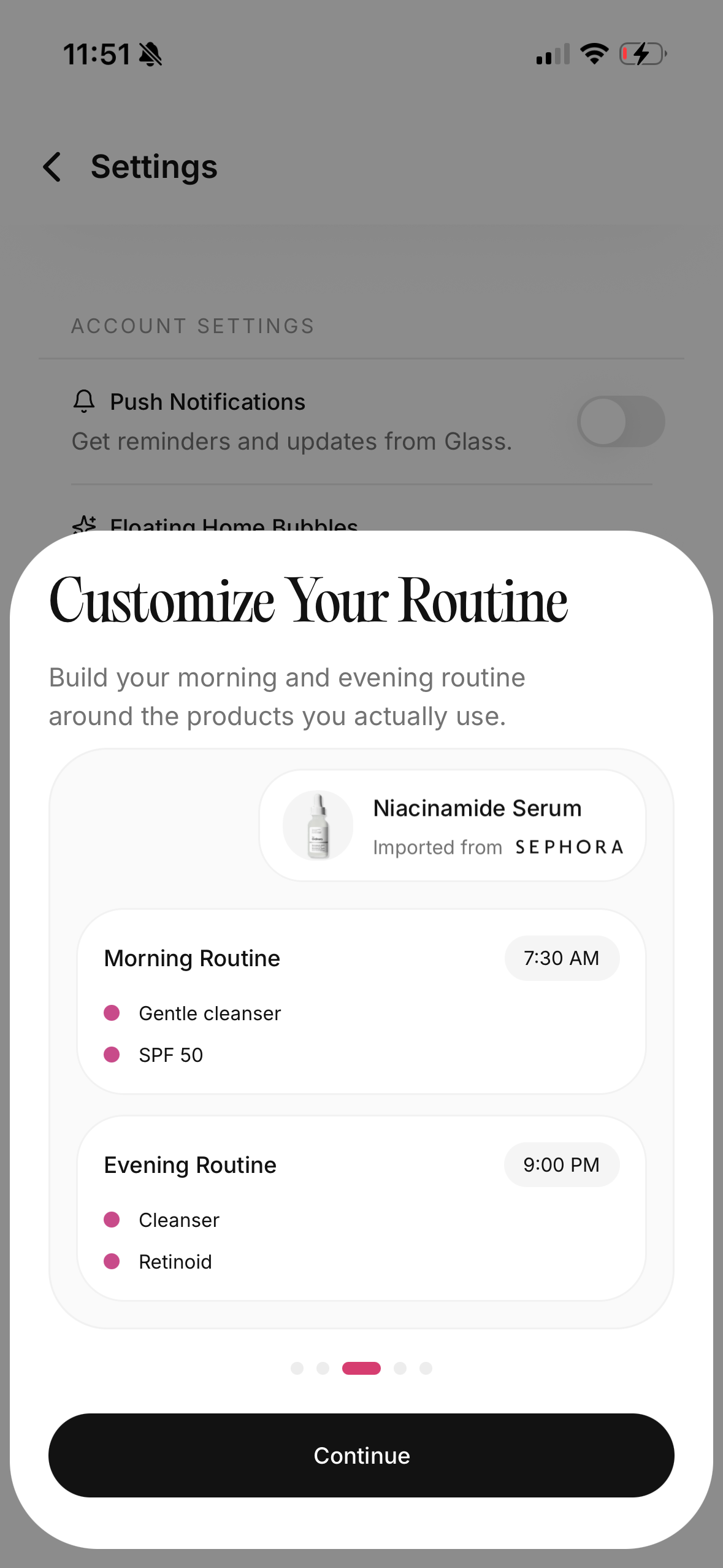
Before the appointment, I would log my current routine, especially retinoids, exfoliating acids, acne treatments, vitamin C, sunscreen, and anything that recently made my skin sting.
I would take a plain progress photo in normal lighting. No beauty light. No bathroom drama. Just the same angle I can repeat.
After the peel, I would track what happened by day:
- redness
- tightness
- flaking
- tenderness
- sunscreen tolerance
- products paused
- products restarted
- new dark marks
- whether the concern actually improved
That is where Glass is useful. It keeps routine notes, skin scans, product history, and progress photos together, so you are not trying to remember whether the peel helped or whether you also changed three products at the same time.
My bottom line
I would not book a chemical peel near me just because the menu promises glow.
I would book it when the provider can explain the depth, the acid, the reason, the downtime, the risk, the pre-care, and the aftercare in plain language.
A peel can be a smart treatment for dullness, texture, clogged pores, post-breakout marks, and some uneven tone. It can also be the wrong move when skin is irritated, acne is severe, pigment risk is high, or the provider treats every face like the same canvas.
Start with the question that protects you:
What does my skin need, and is this peel the safest way to get there?
If the answer is clear, book with confidence. If the answer feels vague, choose the gentler appointment or keep looking.
Useful medical references: American Academy of Dermatology on chemical peels, Cleveland Clinic on chemical peel types, Mayo Clinic on chemical peel risks and recovery, and American Society of Plastic Surgeons questions to ask.