Microdermabrasion sounds simple.
That is what makes it easy to book too casually.
You want smoother skin. You want the dull layer gone. You want makeup to sit better, pores to look cleaner, and the face to feel polished without signing up for a full laser or injectable consult. Around Pontotoc, Mississippi, that usually means comparing local facial studios, med spas, and nearby Tupelo options that may list microdermabrasion, dermaplaning, Hydrafacial-style treatments, peels, or custom facials in the same general menu.
I would not start by asking which one is "best."
I would start by asking what my skin can safely tolerate this month.
The short version: I would consider microdermabrasion near Pontotoc if my skin felt rough, dull, sturdy, and not inflamed. I would choose a Hydrafacial-style treatment if I wanted a softer glow with more hydration. I would ask about a chemical peel if the real issue was pigment, acne marks, or stubborn texture. I would skip aggressive exfoliation entirely if my barrier felt hot, tight, flaky, sunburned, rosacea-prone, or angry from actives.
That is the line that saves money. Treatment menus are tempting. Skin tolerance decides what is smart.
The Pontotoc decision map
Pontotoc is small enough that I would think in a local radius, not one single street. I would check Pontotoc providers first, then nearby Tupelo if I wanted more medical-aesthetic options or a broader treatment menu.
The local names I would compare first include Sunkissed by Sawyer Aesthetics, Lindsay Aesthetics LLC, The Dollhouse Beauty CO, VIBE Aesthetics and Wellness, Remedy Aesthetics and Wellness, and SkinCentric. I would also use the broader Pontotoc skin care directory if I wanted to widen the search without losing the local context.
Provider guide
VIBE Aesthetics and Wellness
Open the provider guide to compare services, site details, and fit before booking.
Provider guide
Remedy Aesthetics and Wellness
Open the provider guide to compare services, site details, and fit before booking.
Provider guide
SkinCentric
Open the provider guide to compare services, site details, and fit before booking.
Provider guide
SkinCentric Aesthetic Medicine Clinic
Open the provider guide to compare services, site details, and fit before booking.
Provider guide
Sunkissed by Sawyer Aesthetics
Open the provider guide to compare services, site details, and fit before booking.
Provider guide
Lindsay Aesthetics LLC
Open the provider guide to compare services, site details, and fit before booking.
I would compare them this way:
| If your main goal is... | I would ask about... | What I would be careful with |
|---|---|---|
| Dull, rough surface texture | Microdermabrasion or dermaplaning | Too much abrasion if the skin barrier is already stressed |
| Quick glow before an event | Hydrafacial-style or gentle custom facial | Paying for add-ons that do not match your skin |
| Dark spots or post-breakout marks | A light chemical peel plan | Pigment risk, especially on deeper skin tones |
| Clogged pores and congestion | A facial with careful extractions | Over-squeezing, broken capillaries, or irritation |
| Sensitive, reactive skin | A calming facial or barrier-focused plan | Any exfoliation that leaves skin burning |
That table is more useful than a menu screenshot because it makes you choose from the skin problem, not the treatment name.
What microdermabrasion actually does
Microdermabrasion is a physical exfoliation treatment. A provider uses a device to remove part of the outer dead-skin layer, usually with a diamond tip or crystal-based system. The American Academy of Dermatology describes it as a non-invasive treatment that can help skin look smoother, brighter, and more even after a series of treatments.
The word to notice is surface.
Microdermabrasion can help when the skin looks dull, dry, uneven, or rough on top. It can make the face feel cleaner and more polished. It may help products spread more smoothly afterward because there is less dead surface buildup in the way.
But it is not magic for every concern.
It is not my first pick for inflamed acne. It is not my first pick for a damaged barrier. It is not my first pick if the skin already feels raw from retinoids, benzoyl peroxide, exfoliating acids, or too much cleansing. It is also not the same as a deep acne-scar procedure, even if the word sounds intense.
If I were booking microdermabrasion near Pontotoc, I would want the provider to say exactly what they are treating: roughness, dullness, clogged surface buildup, uneven texture, or product absorption. If the answer is vague, I would slow down.
The skin types I would be cautious with
Some skin should not be rushed into abrasion.
I would be extra careful if you have active rosacea, a fresh sunburn, eczema flare-ups, open blemishes, irritated acne, a recent peel, recent laser, recent waxing, or a retinoid routine that already makes your skin flake. The AAD also cautions people to talk with a dermatologist before spa microdermabrasion if they scar easily, have a changing mole or spot, or have recently used isotretinoin.
That does not mean microdermabrasion is unsafe for everyone. It means the consultation matters.
I would tell the provider:
- what prescription acne products I use
- whether I use retinoids, exfoliating acids, or benzoyl peroxide
- whether I have melasma or dark marks after irritation
- whether I scar or get post-inflammatory hyperpigmentation easily
- whether I have had peels, laser, waxing, or injectables recently
- whether my skin is currently burning, stinging, or peeling
If that list feels annoying, that is a sign the treatment deserves respect. Surface treatments can still create problems when the skin is not ready.
Microdermabrasion vs Hydrafacial
This is the comparison I would expect a lot of people to make.
Microdermabrasion is more physical-exfoliation coded. Hydrafacial-style treatments are more cleanse, exfoliate, extract, and hydrate coded. Hydrafacial's own materials position the treatment as a broader, more customizable option that combines exfoliation with hydration, extraction, and serum delivery.
That does not automatically make Hydrafacial better. It makes it different.
If my skin felt thick, rough, and resilient, microdermabrasion could make sense. If my skin felt dull but also dehydrated, I would lean toward Hydrafacial or a gentler custom facial because the hydration piece matters. If I had sensitive cheeks and an oily T-zone, I would ask whether the provider can adjust pressure and exfoliation by zone instead of treating the whole face the same way.
Here is the simple version:
| Treatment | Better fit | I would skip or delay if... |
|---|---|---|
| Microdermabrasion | Sturdy skin with surface roughness, dullness, or dry buildup | Skin is inflamed, fragile, actively breaking out, or barrier-damaged |
| Hydrafacial-style treatment | Dull skin that also wants hydration, extractions, and a softer glow | You expect it to fix deep scars, melasma, or severe acne alone |
| Light chemical peel | Dark spots, acne marks, uneven tone, and texture goals | You cannot commit to sun protection or have high pigment-risk concerns without guidance |
| Custom calming facial | Sensitive skin that needs support, not a big exfoliation moment | You want dramatic resurfacing from one gentle session |
I would rather book the slightly less dramatic treatment I can recover from cleanly than the stronger treatment that makes my skin look worse for two weeks.
Microdermabrasion vs a chemical peel
This is where the goal matters.
If the issue is rough texture on the surface, microdermabrasion can be logical. If the issue is discoloration, acne marks, melasma-like patches, or stubborn uneven tone, a provider may discuss a light chemical peel instead.
Peels are not automatically harsher. A light peel can be controlled and appropriate for the right person. But peels require more careful screening around skin tone, sun exposure, medications, active irritation, and aftercare. I would never book a peel from a provider who treats it like a casual add-on.
The question I would ask is:
"Are we trying to polish the surface, or are we trying to change pigment and texture over time?"
If the answer is surface polish, microdermabrasion may fit. If the answer is pigment, acne marks, or longer-term texture, a peel series may make more sense. If the answer is "all of it," I would ask them to prioritize. One appointment cannot responsibly solve every skin concern.
What I would ask before booking
I would not ask only about price.
Price matters, but the cheaper facial is not cheaper if it leaves your skin irritated and sends you into a product-buying spiral afterward. I would ask questions that reveal whether the provider is thinking clearly.
These are the questions I would bring:
- Is my skin a good candidate for microdermabrasion right now?
- Would Hydrafacial, dermaplaning, a light peel, or a custom facial be safer for my goal?
- How do you adjust the treatment for sensitive skin or darker marks after irritation?
- What should I stop using before the appointment?
- What should I avoid for 48 to 72 hours afterward?
- Do you change pressure or technique around active breakouts?
- How much redness should I expect?
- How many sessions would you recommend before judging results?
- What result should I not expect from this treatment?
- Who performs the treatment, and what training do they have?
- When should someone skip microdermabrasion completely?
The best answer is not always the most confident one. I trust the provider who can explain limits.
What I would stop before the appointment
I would simplify the routine before any exfoliating facial.
Not forever. Just long enough to avoid stacking irritation on top of irritation. If your provider gives different instructions, follow their plan, especially if prescription products are involved.
For many people, the safer pre-appointment routine looks like this:
| Timing | What I would do |
|---|---|
| 5 to 7 days before | Avoid at-home peels, strong exfoliating acids, scrubs, and new retinoid experiments |
| 2 to 3 days before | Keep cleanser, moisturizer, and sunscreen boring |
| Appointment day | Arrive with clean skin if requested, and disclose actives or prescriptions |
| Same night | Skip strong actives unless the provider says otherwise |
| Next 2 to 3 days | Use gentle cleanser, moisturizer, and sunscreen |
The point is not to be precious. The point is to make the treatment easier to read. If you exfoliate at home, switch moisturizers, start a new serum, and then get microdermabrasion, you will not know what caused the redness.
How I would judge the result
I would not judge microdermabrasion by the first mirror check alone.
Right after treatment, skin can look smoother because the surface is freshly exfoliated. That is nice, but the more useful question is how the skin behaves over the next week.
I would track:
- redness that settles versus redness that lingers
- stinging when applying moisturizer
- unusual tightness
- new breakouts in the usual clog zones
- makeup sitting smoother or catching less
- sunscreen feeling easier or harder to wear
- whether the skin looks calmer after three days, not only shiny after three hours
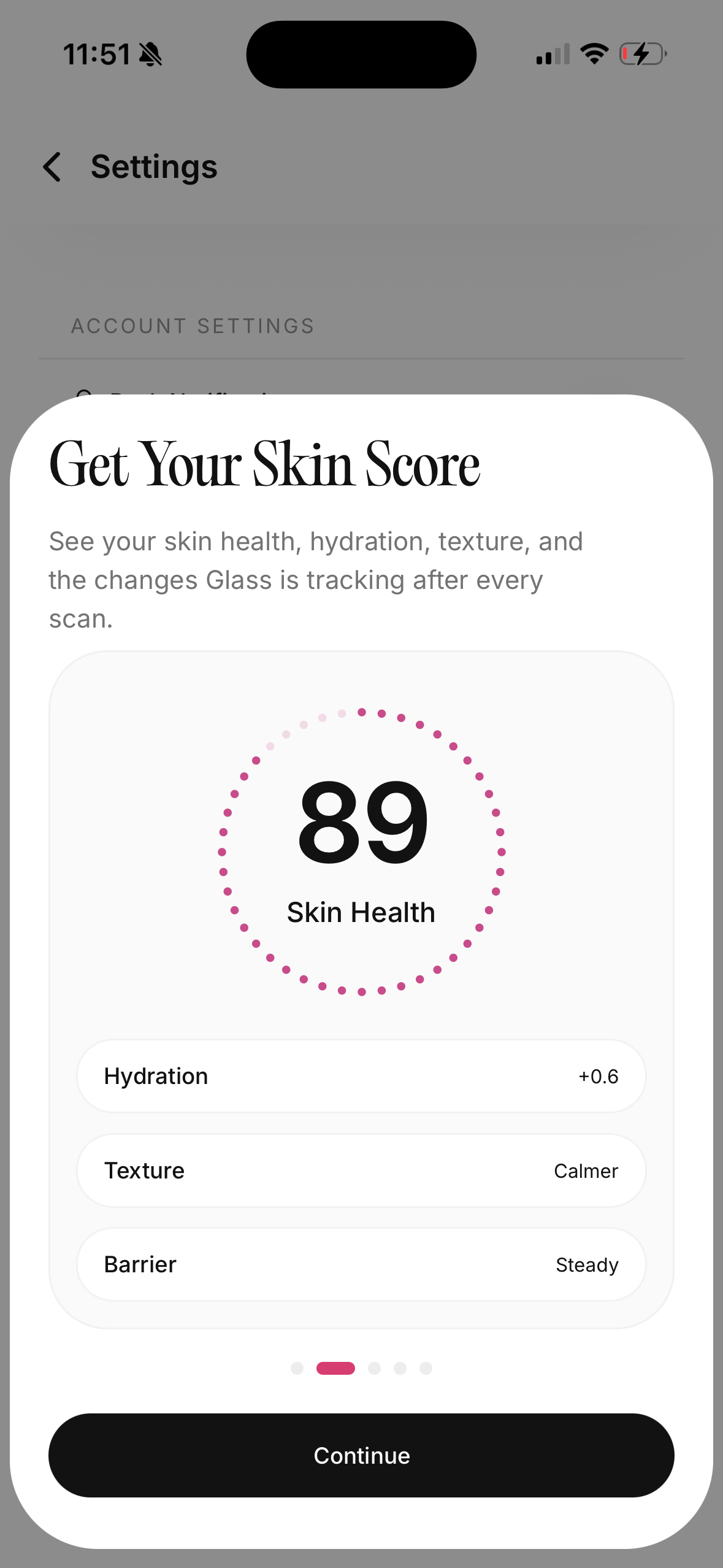
This is where Glass helps. A simple progress log makes the appointment less emotional. Instead of trying to remember whether your skin was "better," you can note the date, treatment, routine changes, photos, irritation level, and what happened next.
One facial should not turn into ten guesses.
When I would choose a gentler facial instead
Sometimes the smartest facial is the least exciting one.
If my skin felt tight, hot, flaky, or reactive, I would not book microdermabrasion just because I wanted a reset. I would book a calming facial, barrier-focused treatment, or no treatment at all until the skin settled.
That can feel disappointing. It is also usually cheaper than repairing avoidable irritation.
A gentler custom facial may be the better move if:
- your cheeks sting after normal moisturizer
- sunscreen burns
- you recently overdid retinoids or acids
- you have active inflamed acne
- your skin gets dark marks after irritation
- you are preparing for an event and cannot risk redness
- you do not know what your skin tolerates yet
The better provider will not make you feel boring for choosing gentle. They will understand that a calm barrier is what makes future treatments work better.
How I would compare Pontotoc and Tupelo options
I would start close, then widen.
For Pontotoc, I would look at local beauty and aesthetics providers first because convenience matters. If a facial requires follow-up, it is easier to return when the drive is realistic. For more advanced treatment menus, I would compare nearby Tupelo providers too.
I would use this filter:
| Provider signal | Why it matters |
|---|---|
| Clear treatment menu | You can tell whether they offer microdermabrasion, facials, peels, injectables, or device treatments |
| Consultation language | They screen your skin instead of pushing the same service to everyone |
| Aftercare instructions | They understand the recovery window |
| Skin tone awareness | They discuss pigment risk and irritation risk honestly |
| Photos that look realistic | You can see the kind of result they usually show |
| Willingness to say no | They protect your skin when a treatment is not right |
I would rather drive a little farther for a provider who asks better questions than book the closest appointment with someone who treats every face like the same canvas.
| Provider | botox | fillers | laser | wellness | facials | microneedling | Guide |
|---|---|---|---|---|---|---|---|
VIBE Aesthetics and Wellness vibe-aesthetics.com | Open | ||||||
Remedy Aesthetics and Wellness remedytupelo.com | Open | ||||||
SkinCentric skincentricclinic.com | Open | ||||||
SkinCentric Aesthetic Medicine Clinic Pontotoc, MS | Open | ||||||
Sunkissed by Sawyer Aesthetics Pontotoc, MS | Open | ||||||
Lindsay Aesthetics LLC Pontotoc, MS | Open | ||||||
Premier Aesthetics Pontotoc, MS | Open | ||||||
The Dollhouse Beauty CO Pontotoc, MS | Open |
The aftercare I would keep boring
After microdermabrasion, I would treat the face like it just had a controlled exfoliation moment.
That means no "while I am at it" routine.
For a few days, I would keep it simple:
- gentle cleanser
- plain moisturizer
- sunscreen every morning
- no scrubs
- no at-home peels
- no new retinoid experiments
- no picking
- no harsh acne spot treatment unless approved
If the skin feels tight, I would moisturize. If it feels hot, I would stop trying to make it glow harder. If it feels unusually painful, swollen, blistered, or irritated in a way that does not match the provider's instructions, I would contact the provider or a dermatologist.
The goal after a facial is not to prove how much your skin can take. The goal is to let the treatment settle without adding noise.
The bottom line
If I were comparing microdermabrasion facials near Pontotoc in May 2026, I would not book from the treatment name alone. I would choose based on skin tolerance, goal, provider judgment, and aftercare clarity. I would also compare the broader treatment choice against my skin’s real problem: chemical peels, HydraFacial, and microdermabrasion can all make sense, but they are not interchangeable.
Microdermabrasion can make sense for rough, dull, resilient skin that wants surface polish. Hydrafacial-style treatments can make more sense when hydration and comfort matter. Chemical peels can be more relevant for pigment and acne marks, but they deserve careful screening. A calming facial can be the smartest choice when your barrier is already tired.
The best appointment is the one your skin can recover from cleanly.
Start there.
Useful treatment references: AAD microdermabrasion FAQs, AAD microdermabrasion overview, AAD microdermabrasion preparation, and Hydrafacial on Hydrafacial vs microdermabrasion.