Hydrafacial sounds simple.
Cleanse. Exfoliate. Extract. Hydrate. Glow.
That is the appeal. It feels less intimidating than a peel, less clinical than a laser, and more specific than a regular spa facial. You search for one nearby because your skin looks dull, congested, flaky, tired, oily, or just not as smooth as you want it to look before an event.
I would still slow down before booking.
Not because Hydrafacial is scary. It usually is not. The bigger issue is that the same name can hide very different experiences. One appointment is a careful skin reset with a good provider, realistic suction, sensible add-ons, and clear aftercare. Another is a rushed machine pass with a premium price and a glow that disappears before the weekend is over.
If I were booking a Hydrafacial near me in May 2026, I would not start with the prettiest before-and-after photo. I would start with the questions that tell me whether the provider understands skin, not just the device.
The quick answer
A Hydrafacial is usually worth considering if you want a low-downtime treatment for dullness, light congestion, rough texture, oily buildup, or a smoother pre-event glow. I would be more cautious if your skin is actively irritated, sunburned, rashy, highly sensitive, recently treated with strong actives, or dealing with acne, rosacea, pigment risk, or a medical skin condition that needs clinician guidance.
The best local provider is not automatically the cheapest one or the one with the most dramatic menu. I would choose the place that can explain:
- what version of the treatment you are getting
- who performs it
- how much it costs before add-ons
- whether your skin is a good fit that day
- what they will avoid because of your skin history
- what aftercare looks like for the next 48 hours
That last part matters. A good Hydrafacial should leave you clearer on what to do after, not just shiny in the lobby mirror.
What a Hydrafacial is actually trying to do
Hydrafacial is a device-based facial treatment. The official brand describes it as a treatment that cleanses, exfoliates, extracts, and infuses the skin with hydrating or targeted serums. In normal person language, it is trying to combine several facial steps into one controlled appointment.
The attraction is the balance. It can feel more effective than a basic cleanse-and-mask facial, but it usually does not come with the visible shedding or downtime people associate with stronger chemical peels. It can help skin look cleaner, smoother, and more hydrated quickly, especially when the main issue is surface dullness or congestion.
But it is not magic.
It does not replace acne treatment. It does not erase deep scars. It does not tighten skin like surgery. It does not fix melasma by itself. It does not mean every blackhead will vanish in one session. It is a maintenance-style skin treatment, and that is how I would judge it.
The question I would ask before price
Before I asked, "How much is it?" I would ask, "What exactly is included?"
Hydrafacial pricing can be confusing because providers package it differently. A basic version may be mostly cleanse, exfoliation, extraction, and hydration. A higher tier may include lymphatic drainage, booster serums, LED, dermaplaning, neck treatment, hands, or a longer appointment. Some med spas use the official Hydrafacial device. Some advertise similar water-facial treatments that are not the branded version.
That distinction is not automatically bad. A non-branded hydradermabrasion facial can still be useful. But you should know what you are buying.
I would ask:
| Question | Why it matters |
|---|---|
| Is this the branded Hydrafacial treatment or a similar hydrodermabrasion facial? | The name affects expectations and price. |
| How long is the actual treatment time? | A rushed appointment can feel disappointing. |
| What steps are included in the base price? | Add-ons can change the real cost fast. |
| Who performs it? | Training and skin judgment matter. |
| Do you adjust suction and peel strength? | Sensitive skin may need a lighter touch. |
| What should I stop before the appointment? | Retinoids and exfoliants can make skin more reactive. |
If the answers are vague, I would keep looking.
What it should cost in 2026
I would expect many Hydrafacial appointments to land somewhere around the mid-hundreds, with the final number depending on city, provider type, treatment tier, and add-ons. Some markets advertise lower entry prices. Some medical aesthetic offices charge more, especially when boosters, dermaplaning, LED, neck treatment, or membership plans are involved.
The price should make sense on paper.
If a place quotes a low number, I would ask whether it is a short intro treatment, a membership price, a first-visit special, or a non-branded version. If a place quotes a high number, I would ask what makes it high: more time, better customization, medical oversight, premium boosters, or bundled services.
I would not pay a premium just because the word "glow" appears six times.
I would pay more for a provider who knows when to turn suction down, when to skip aggressive steps, when to avoid treating irritated skin, and when to tell me that a different appointment makes more sense.
Who Hydrafacial is best for
The best fit is usually someone whose skin needs a clean reset more than a dramatic correction.
I would consider it for:
- dull skin before an event
- light congestion
- visible oil buildup
- rough surface texture
- makeup that has been sitting unevenly
- skin that feels dehydrated but not inflamed
- a maintenance facial between stronger treatments
- someone who wants low downtime
It is especially appealing when you want your skin to look better quickly without planning around peeling. That is why people book it before photos, trips, weddings, birthdays, and weeks where they do not want visible recovery.
The right expectation is a cleaner, fresher, more hydrated look. Not a new face.
Who should be careful
I would pause before booking if my skin were already angry.
That includes sunburn, open skin, active rash, severe irritation, recently waxed areas, a fresh laser treatment, a strong peel, a flare of rosacea, painful cystic acne, or a skin condition that has not been diagnosed. I would also be careful if I had a history of hyperpigmentation after irritation, because even "gentle" treatments can be too much if the provider treats every face the same.
The American Academy of Dermatology gives similar caution around cosmetic exfoliation procedures like microdermabrasion and chemical peels: your skin history, medicines, recent treatments, and pigment risk matter. That does not mean Hydrafacial is the same as a peel or microdermabrasion. It means surface treatments still deserve judgment.
If you use prescription retinoids, strong exfoliating acids, acne medication, or recently had injectables or laser, ask for timing instructions before booking. Do not guess.
Hydrafacial vs regular facial
I would choose a regular facial when I mostly want relaxation, massage, gentle cleansing, extractions by hand, or a provider's product-based skin care.
I would choose Hydrafacial when I want a more device-driven cleanse, exfoliation, suction, and hydration session with predictable steps.
Neither is automatically better.
| If you want... | I would lean toward... |
|---|---|
| Relaxation and massage | Regular facial |
| Quick glow before an event | Hydrafacial |
| Manual extractions with judgment | Experienced esthetician facial |
| Low-downtime surface refresh | Hydrafacial |
| Strong pigment or scar correction | Dermatology consult |
| A plan for acne or rosacea | Medical guidance first |
The provider matters more than the category. A thoughtful regular facial can beat a careless Hydrafacial. A careful Hydrafacial can beat a generic spa facial. The name is only the starting point.
Hydrafacial vs chemical peel
I would think of Hydrafacial as the lower-drama option.
A chemical peel can go further for certain concerns like pigment, post-acne marks, uneven texture, and dullness, but the tradeoff is that peels can involve more irritation, more prep, more aftercare, and more pigment-risk conversation. The AAD notes that people with skin of color can safely have chemical peels, but should see a dermatologist with expertise because pigment problems can happen when peels are not chosen carefully.
That point shapes how I would decide.
If I needed a light refresh before an event next week, I would not book a strong peel. If I were serious about stubborn dark spots or acne marks, I would not expect a Hydrafacial series to do everything a peel plan might do. Different tools. Different risk. Different payoff.
Hydrafacial vs microdermabrasion
Microdermabrasion is more of a physical exfoliation treatment. Hydrafacial is usually positioned as a more fluid, serum-infusing, suction-based treatment with exfoliation and hydration built into the same session.
The official Hydrafacial comparison frames it as a broader treatment than traditional microdermabrasion because it combines cleansing, exfoliation, extraction, and infusion. That is the marketing version, but the practical version is simple: microdermabrasion is more dry-exfoliation-coded; Hydrafacial is more cleanse-extract-hydrate-coded.
If your skin hates friction, I would ask a provider whether either treatment is appropriate. If your skin is thick, oily, congested, and tolerant, you may have more options. If your skin is reactive, thin-feeling, or pigment-prone, I would want a conservative plan.
What I would ask during booking
I would call or message with specific questions instead of asking, "Do you do Hydrafacial?"
Ask this:
- What is included in the base Hydrafacial?
- Is the price different with boosters, LED, dermaplaning, neck, or lymphatic drainage?
- Who performs the treatment and what licenses or training do they have?
- Should I stop retinoids, exfoliating acids, benzoyl peroxide, or vitamin C before coming in?
- Do you treat sensitive skin, rosacea-prone skin, acne-prone skin, or darker skin tones differently?
- What would make you postpone the appointment once you see my skin?
- What should I avoid for 24 to 48 hours after?
The best answer is not always "yes, we can do everything." Sometimes the best answer is, "Send us your current routine and recent treatments first."
What I would do before the appointment
I would keep the routine boring for a few days.
No new exfoliating toner. No new retinoid schedule. No at-home peel. No scrub. No picking. No waxing the same area right before. No testing a new vitamin C serum because you want to look extra bright after.
The goal is to arrive with skin that can tolerate the appointment. If your face is already irritated, the provider has less room to work.
I would also write down:
- current cleanser, moisturizer, sunscreen, and treatments
- prescriptions or acne medication
- recent peels, lasers, waxing, injectables, or microneedling
- history of cold sores, pigment issues, rosacea, eczema, or reactions
- pregnancy or breastfeeding status if relevant
- what you want fixed most
That sounds like a lot. It takes three minutes. It can prevent a bad appointment.
What I would watch during the treatment
Hydrafacial should not feel like punishment.
Some pressure, suction, wetness, and tingling can be normal. Sharp burning, escalating pain, aggressive scraping, or a provider ignoring discomfort is not something I would push through quietly.
I would pay attention to whether they adjust the treatment to the face in front of them. Do they turn down suction on sensitive areas? Do they avoid broken skin? Do they explain the booster instead of upselling it vaguely? Do they talk about aftercare before the appointment ends?
Small things tell you whether the place is thoughtful.
What to do after
After a Hydrafacial, I would keep the next 24 to 48 hours simple.
Cleanser. Moisturizer. Sunscreen.
That is the base.
I would avoid strong retinoids, exfoliating acids, scrubs, peel pads, aggressive masks, heavy heat, and picking at anything that comes up. If the provider gives specific instructions, follow those over generic advice. If you get unusual swelling, severe pain, rash, blistering, or symptoms that feel wrong, contact the provider or a clinician.
The skin may look glowy right away. It may also look a little pink. I would not judge the full appointment only by the first hour. I would judge whether the skin feels comfortable the next day and whether the result was worth the cost by day three.
How to tell if it was worth it
I would not measure success by whether every pore disappeared.
That sets the treatment up to fail.
I would ask:
- Did the skin look smoother in normal light?
- Did congestion look softer?
- Did makeup sit better?
- Did I avoid irritation?
- Did the provider answer my questions well?
- Did the glow last long enough to justify the price?
- Did I learn anything useful about my skin?
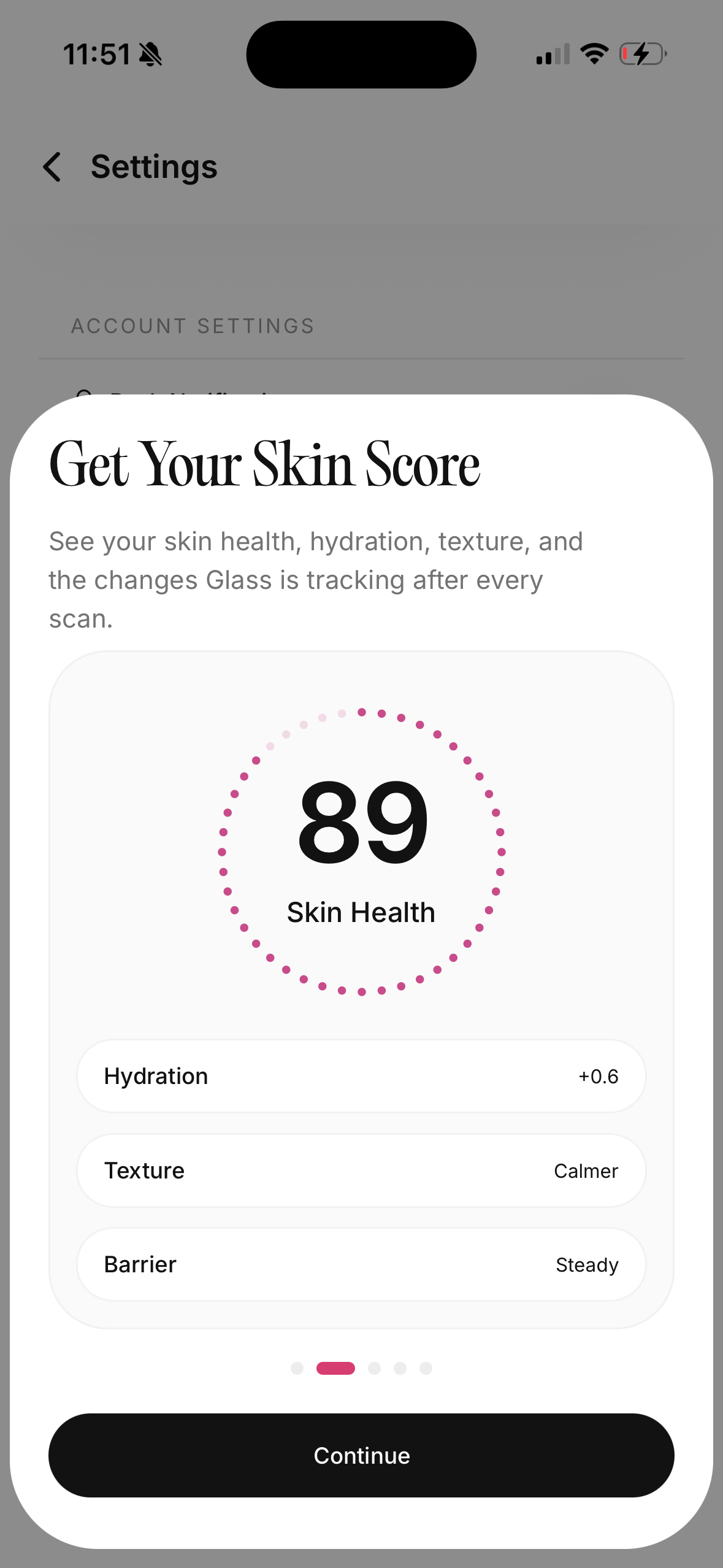
Use Glass to log the appointment date, provider, cost, add-ons, before-and-after photos, and how your skin felt for the next week. One Hydrafacial can feel great in the mirror and still be a poor value if the result is gone in 24 hours. Another can be worth repeating if it keeps your skin calmer between stronger treatments.
The red flags I would not ignore
I would be cautious if a provider:
- cannot explain what is included
- refuses to discuss contraindications
- treats every skin type the same
- pushes boosters before asking about your skin
- promises acne clearing, scar removal, or pigment correction from one visit
- will not discuss aftercare
- advertises a suspiciously cheap "Hydrafacial" without clarifying whether it is branded
- brushes off pain or burning during the appointment
A facial should make your skin easier to live with. It should not make you feel rushed, confused, or pressured.
My bottom line
I would book a Hydrafacial near me if I wanted a low-downtime skin reset and found a provider who could explain the treatment clearly, adjust it to my skin, and keep the price transparent.
I would not book it as a miracle fix. I would not book it on irritated skin. I would not book it before asking what is included. And I would not judge it by the glow alone.
The best Hydrafacial is not the most dramatic one. It is the one that fits your skin that day, leaves your barrier intact, and gives you enough visible improvement to feel worth repeating.
Useful treatment references: Hydrafacial FAQ, Hydrafacial vs microdermabrasion, AAD microdermabrasion FAQs, and AAD chemical peel FAQs.