Med spa menus look simple until you are the one booking.
Botox sounds quick.
HydraFacial sounds safe.
Laser sounds serious.
Microneedling sounds like something that should either change your skin or ruin your week.
That is the real problem. Most menus list treatments like they are all the same kind of decision. They are not. A glow facial, a neuromodulator appointment, a laser session, and a filler consult do not carry the same risk, recovery, cost, timing, or provider requirements.
If I were booking my first med spa treatment in May 2026, I would not start with the trendiest service. I would start with the lowest-regret choice for the skin problem I actually have.
The short answer
If you are new to med spas, I would usually start with a consultation or a gentle skin-quality treatment before booking anything that changes movement, volume, pigment, or texture in a major way.
For a low-drama first appointment, a basic facial, HydraFacial-style treatment, dermaplaning, or a very light peel may make sense if your skin is calm and the provider clears you. For lines from facial movement, Botox or another neuromodulator can be reasonable, but only with a licensed, trained injector using approved product from a legitimate source. For acne scars, deeper texture, pigmentation, redness, or sun damage, lasers, microneedling, and stronger peels usually deserve a more careful plan.
The best first treatment is not the one with the most dramatic promise. It is the one where the provider can explain why it fits, what could go wrong, what recovery looks like, and what you should not do before or after.

I would choose by problem, not by treatment name
This is the mistake I see people make.
They ask, "Should I get Botox?" when the real issue is tired-looking skin. They ask, "Should I get a chemical peel?" when the real issue is clogged pores plus a damaged barrier. They ask, "Should I do laser?" when the real issue is one brown mark that might need diagnosis before cosmetic treatment.
Start with the problem:
| If your main concern is... | I would ask about... | I would be careful with... |
|---|---|---|
| Dullness before an event | Gentle facial, HydraFacial-style treatment, dermaplaning if appropriate | Strong peels or lasers right before photos |
| Fine lines from movement | Botox, Dysport, Xeomin, Jeuveau, or Daxxify consult | Cheap injections, unclear product source, rushed mapping |
| Volume loss or lip shape | Filler consult with an experienced injector | Trend-driven filler, pressure to buy more syringes |
| Acne scars or texture | Microneedling, RF microneedling, fractional laser, peel series | One-off promises, aggressive treatment on active irritation |
| Brown spots or sun damage | IPL, pigment lasers, peel options, daily sunscreen plan | Treating unknown spots without medical review |
| Redness or broken capillaries | Vascular laser or IPL consult | Treating rosacea-like skin without a diagnosis |
| Hair reduction | Laser hair removal series | Expecting one session to solve it |
The treatment should answer the concern. If the provider starts selling before they understand the concern, I would slow down.
The consultation tells you more than the menu
A good consultation feels boring in the best way.
They ask about your medical history. They ask about medications. They ask about pregnancy or breastfeeding when relevant. They ask about cold sores before certain resurfacing treatments. They ask about isotretinoin history, recent tanning, active rashes, scarring history, allergies, autoimmune conditions, and what you have done before.
They look at your skin in normal light. They explain options. They tell you what they would not do.
That last part matters.
I trust a provider more when they can say no. No filler today because the anatomy does not need it. No laser this month because you have sun exposure planned. No peel because your barrier is already angry. No treatment on a suspicious lesion until a dermatologist checks it. No same-day stack of treatments just because the calendar has an opening.
A med spa should feel polished. It should not feel like a checkout aisle.
What I would book first if I wanted glow
For glow, I would start conservative.
A gentle facial or HydraFacial-style treatment can be a reasonable first med spa experience because the goal is usually temporary smoothness, hydration, and cleaner-looking skin rather than a major structural change. It is not magic. It will not erase acne scars, fix deep pigmentation, or replace a routine. But it can be a good way to learn how the provider handles your skin without committing to downtime.
I would ask:
- What products will touch my skin?
- Should I stop retinoids, exfoliating acids, or acne actives before the appointment?
- How long should I wait before using actives again?
- Can I wear makeup after?
- What should I do if my skin feels hot, itchy, or unusually irritated?
If you are acne-prone or reactive, do not assume "facial" means harmless. Extractions, fragrance, strong enzymes, aggressive steam, and over-exfoliation can all irritate the wrong skin on the wrong day.
I would want the provider to customize down, not perform up.
What I would book first if I wanted smoother forehead lines
For forehead lines, frown lines, or crow's feet caused by repeated movement, I would ask about neuromodulators. Most people call this Botox, but Botox is only one brand name. Other products can be used too.
This is where I would raise my standards immediately.
The CDC says people should ask whether botulinum toxin product was purchased from an authorized source and whether the provider has a valid healthcare license and proper training. The FDA has also warned about illegally marketed botulinum toxin products and notes that approved products carry serious warnings.
That does not mean every injection appointment is scary. It means this is a medical treatment, not a casual beauty add-on.
Questions I would ask before injection:
- What product are you using?
- How many units do you recommend and why?
- Who is injecting me, and what is their license?
- What should I expect at two weeks?
- What are the red flags after treatment?
- What happens if the result is uneven?
- How often do you recommend returning?
I would not chase the lowest price per unit. A cheap injection is not cheap if the product source, mapping, dilution, or provider experience is questionable.
What I would book first if I wanted lips or volume
Filler is a different level of decision.
It can look beautiful when it is done well and chosen for the right reason. It can also look obvious, migrate, create lumps, distort proportions, or cause rare but serious vascular complications. The FDA tells consumers not to buy dermal fillers online and to work with licensed healthcare providers in appropriate settings.
I would treat filler like a relationship with an injector, not a single appointment.
Before booking, I would look for:
- natural-looking before and afters on people with similar features
- a provider who discusses anatomy, not just volume
- a clear plan for conservative dosing
- willingness to say when filler is not the right answer
- emergency protocol and access to reversal when applicable
- aftercare instructions that are specific, not vague
The question is not "How many syringes do I need?" The better question is "What are we trying to restore or balance, and what is the least amount of product that can do that safely?"
If the answer is mostly about a package deal, I would leave.
What I would book first for acne scars or texture
Acne scars are where patience matters.
Texture usually does not change from one perfect appointment. It often needs a plan: maybe microneedling, RF microneedling, fractional laser, chemical peels, subcision, TCA CROSS, or a combination depending on scar type and skin tone. Some treatments help shallow texture. Some help pigment. Some help rolling scars. Some are not ideal for active acne or certain skin tones without extra care.
I would not book "microneedling plus peel plus laser" because it sounds intense. I would ask why each part is needed.
For texture treatments, I would ask:
- What type of scars or texture do I have?
- Is my acne controlled enough to treat scars?
- What device or peel depth are you using?
- How many sessions are realistic?
- What downtime should I expect?
- What skin tones do you treat often?
- What is the risk of hyperpigmentation?
- What should I stop before and after?
The best provider will talk about tradeoffs. A more aggressive treatment may create more change, but it can also create more downtime and more risk. A gentler treatment may be easier to tolerate, but it may need more sessions and expectations should stay realistic.
What I would book first for dark spots
Dark spots need a name before they need a laser.
Post-acne marks, melasma, sun spots, freckles, irritated patches, and changing lesions are not the same thing. Some can improve with topical care and sunscreen. Some need a dermatologist. Some can worsen with the wrong heat-based treatment. Some should not be treated cosmetically until they are checked.
If a med spa treats every brown spot the same, I would be cautious.
I would ask:
- What do you think this pigmentation is?
- Should a dermatologist evaluate it first?
- Is this treatment safe for my skin tone?
- Could heat make this worse?
- What is the plan for sunscreen and maintenance?
- What happens if it darkens before it improves?
For pigmentation, the aftercare is not optional. Sunscreen, sun avoidance, gentle skincare, and realistic timing are part of the treatment. If you want a laser but refuse daily sunscreen, you are asking the procedure to fight your routine.
What I would book first for hair reduction
Laser hair removal is one of the easier treatments to understand and one of the easiest to underestimate.
It usually takes a series. Timing matters. Hair color, skin tone, device choice, hormones, body area, and consistency all change the result. It is not the same as waxing with a fancier machine.
I would ask:
- Which laser or device do you use?
- Is it appropriate for my skin tone and hair color?
- How many sessions do people usually need for this area?
- How far apart should appointments be?
- Should I shave before coming in?
- What hair removal methods should I avoid between sessions?
- What does maintenance look like?
I would also avoid tanning before treatment and follow the provider's prep instructions closely. Laser works through controlled energy. The skin conditions around that energy matter.
The treatment timing I would respect
Timing can make a good treatment feel bad.
Do not book your first peel, laser, filler appointment, or aggressive facial right before a wedding, vacation, work event, photo shoot, or beach trip. Skin can bruise, peel, purge, swell, flake, darken, or just look temporarily weird.
This is how I would think about timing:
| Goal | Safer booking mindset |
|---|---|
| Glow before a small event | Gentle facial at least several days before, not the morning of |
| Botox before photos | Plan weeks ahead so the result can settle |
| Filler before a major event | Give swelling and bruising real buffer time |
| Peel or laser | Avoid tight event windows and sun-heavy plans |
| Acne scar work | Think in months, not one appointment |
| Laser hair removal | Think in a series, not one visit |
Ask your provider for exact timing. Different treatments, devices, depths, and bodies heal differently.
The red flags I would not ignore
I would walk away from a med spa if I saw any of this:
- no clear medical oversight
- vague answers about who performs the treatment
- pressure to buy same day
- extreme discounts on injectables
- unwillingness to name the product being injected
- no consent form or aftercare instructions
- no discussion of risks
- dirty treatment rooms
- before and after photos that look filtered or unrealistic
- promises that sound permanent, painless, risk-free, or instant
- dismissal of your medical history
The best med spa experience is not the one that makes everything sound easy. It is the one that makes the decision clear enough that you can consent without guessing.
What I would track after a treatment
I would track more than the final photo.
For the first week, I would note:
- swelling
- redness
- tenderness
- bruising
- flaking
- itching
- breakouts
- products used
- sunscreen consistency
- exercise, heat, or sun exposure
- anything that felt unusual
This is not about spiraling. It is about giving yourself and your provider useful context if something changes.
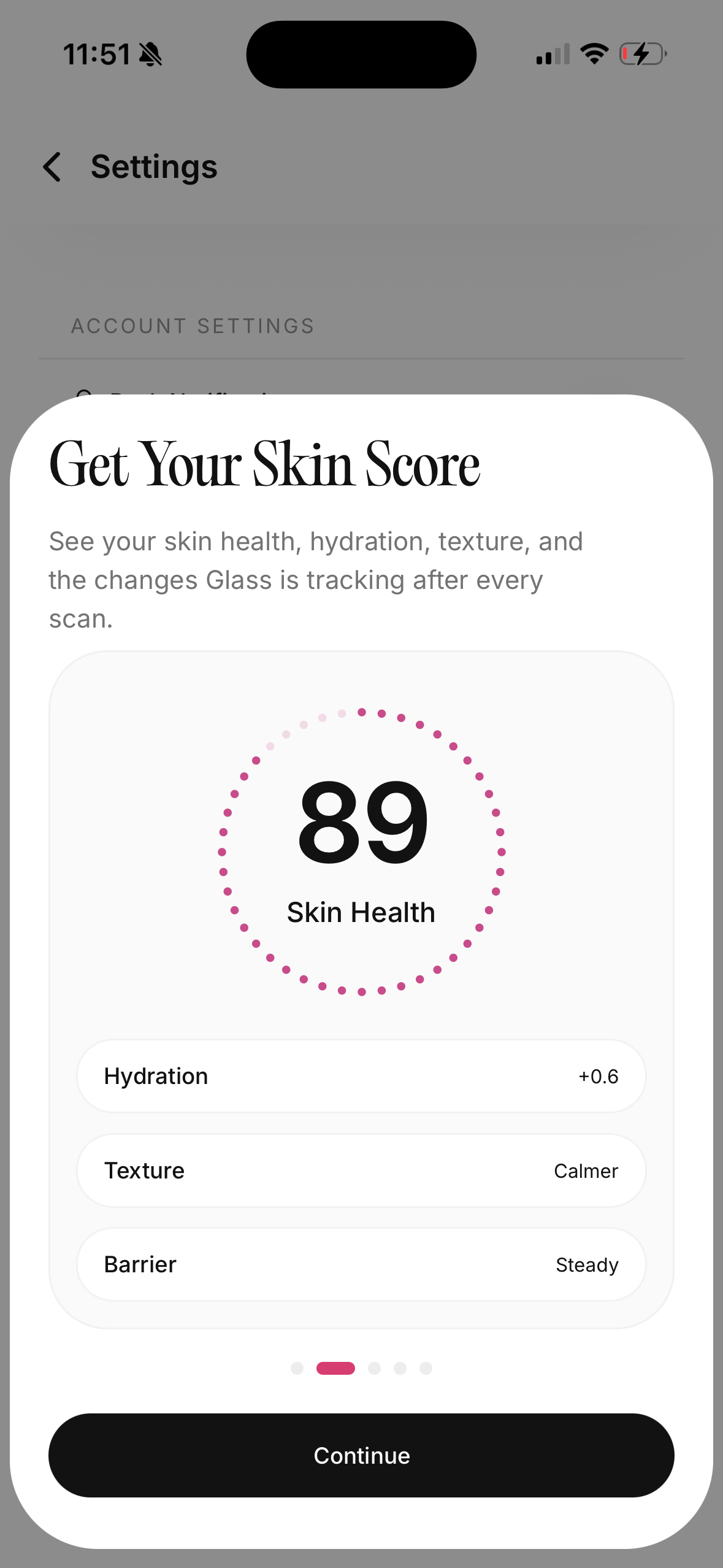
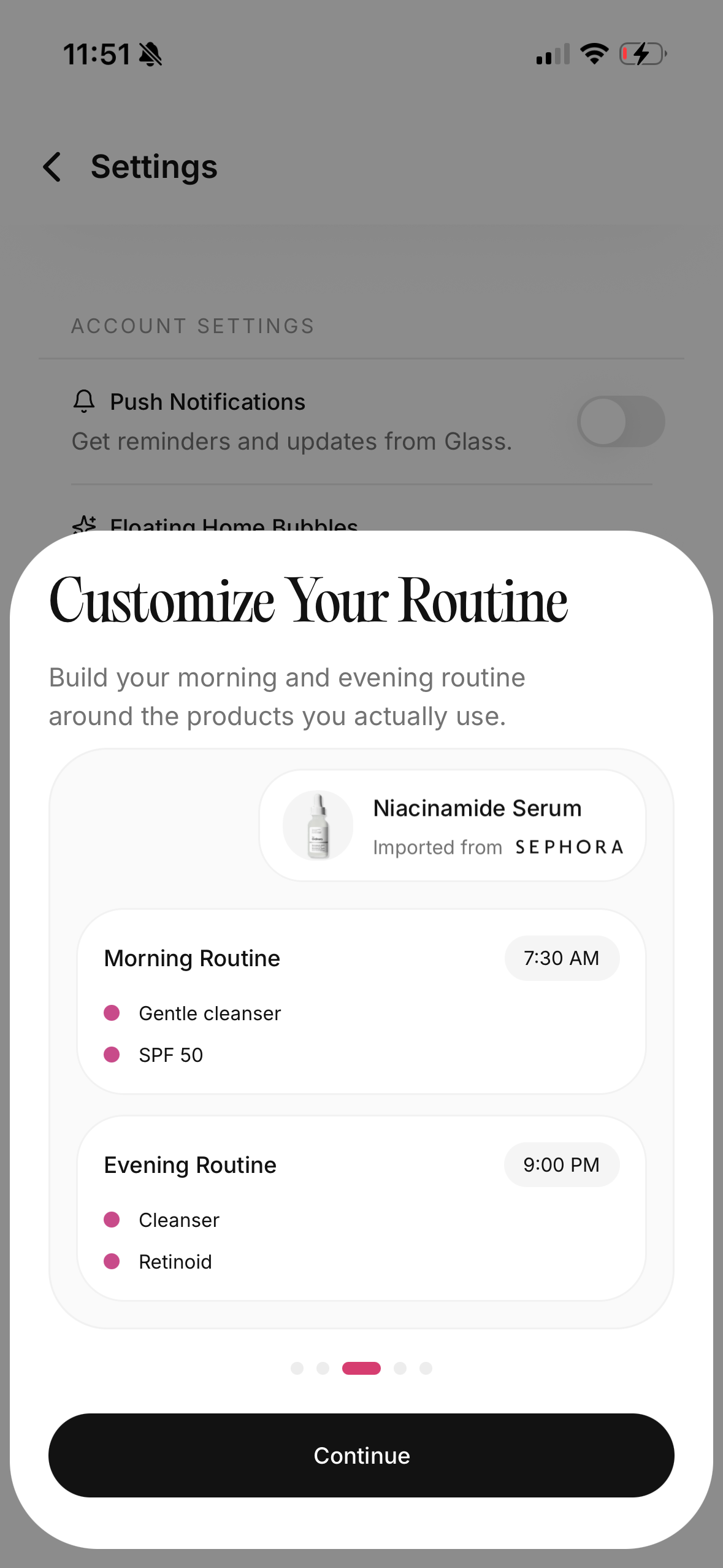
Glass is helpful here because you can keep treatment notes, routine changes, and progress photos in one place instead of trying to reconstruct everything from memory. If your skin looks better two weeks later, you know what happened. If it looks worse, you have a clearer record of what touched your face.
The routine I would keep after most med spa treatments
Most post-treatment routines should get simpler, not more impressive.
Unless your provider tells you otherwise, I would expect some version of:
- gentle cleansing
- bland moisturizer
- sunscreen every morning
- no picking
- no scrubs
- no random acids
- no retinoid restart until cleared
- no heat-heavy choices if the treatment instructions warn against them
That boring routine is not a downgrade. It is how you let the treatment settle without adding extra irritation.
The fastest way to ruin a good appointment is to go home and test three new products because your skin "needs support." Support usually means fewer variables.
How I would find a med spa near me
I would not pick only by star rating.
Reviews are useful, but they are not enough. I would look for the specific treatment I want, the provider credentials, the before and after style, the tone of the consultation, and whether the med spa explains risks without burying them.
For local research, I would start broad, then narrow:
- Search for treatment-specific providers near you.
- Compare several clinics, not one.
- Check who performs the treatment.
- Look for real examples of similar skin concerns.
- Call and ask one or two credential questions before booking.
- Book a consultation if the treatment carries meaningful risk.
You can also browse the Glass skin care near me directory to compare local skin care and med spa options by area, then use the questions above before committing to a treatment.
If you are comparing larger markets, start here:
My first-booking rule
If I cannot explain the treatment in one plain sentence, I would not book it yet.
"I am getting a gentle facial to clean up dullness before an event" is clear.
"I am getting a small amount of neuromodulator for frown lines from a licensed injector who explained the product and follow-up" is clear.
"I am getting whatever package they recommended because it was discounted" is not clear.
Neither is "I am doing laser because my skin looks bad."
Name the concern. Name the treatment. Name the provider. Name the recovery. Name the thing that would make you call for help.
That is the minimum.
When I would skip the med spa
I would skip the med spa and see a dermatologist or clinician first for:
- changing moles or unusual lesions
- spreading rash
- infection signs
- severe acne
- painful cysts
- unexplained pigmentation
- active cold sores near the treatment area
- scarring conditions
- burns or open wounds
- pregnancy or breastfeeding questions around injectables or devices
- any symptom that feels medical, not cosmetic
Med spas can be useful. They are not a substitute for diagnosis.
Bottom line
The best med spa treatment in May 2026 is the one that matches your actual concern, your skin, your timing, and a provider who can explain the risk without making you feel dramatic for asking.
Start with a consultation if you are unsure. Choose gentle treatments first if your goal is simple glow. Treat injectables, lasers, microneedling, and stronger peels like real medical-aesthetic decisions. Track what happens after, keep your routine boring while skin settles, and do not let a discount make the decision for you.
Useful references: CDC on botulinum toxin injection safety, FDA on dermal filler do's and don'ts, Mayo Clinic on chemical peels, and American Academy of Dermatology on chemical peels.