I would be careful with the phrase "glass facial" around Albuquerque and Corrales in May 2026.
Not because the goal is wrong. Smooth, clear, hydrated, light-reflective skin is a reasonable thing to want. The problem is that "glass facial" can mean several different appointments depending on who is saying it.
One place may mean a Hydrafacial-style cleanse, exfoliation, extraction, and serum infusion. Another may mean dermaplaning plus a brightening mask. Another may mean a light peel. Another may mean LED, oxygen, barrier repair, or a soft event-prep facial that is mostly hydration and polish. A med spa may use the phrase to make a resurfacing treatment sound gentler than it is.
That difference matters in central New Mexico.
Albuquerque and Corrales have dry air, strong sun, wind, altitude, and a lot of everyday outdoor exposure. A facial that makes sense before dinner in a humid coastal city can be too much if your skin is already tight, peeling, sun-sensitive, or retinoid-irritated in May. If I were choosing a glass facial near Albuquerque or Corrales, I would not start with the shiniest after photo. I would start by separating glow, exfoliation, hydration, pigment risk, and recovery into different lanes.
The safer question is not "which facial sounds most glassy?"
It is: what would make my skin look smoother without making the barrier angry by next week?
What I think someone means by a glass facial here
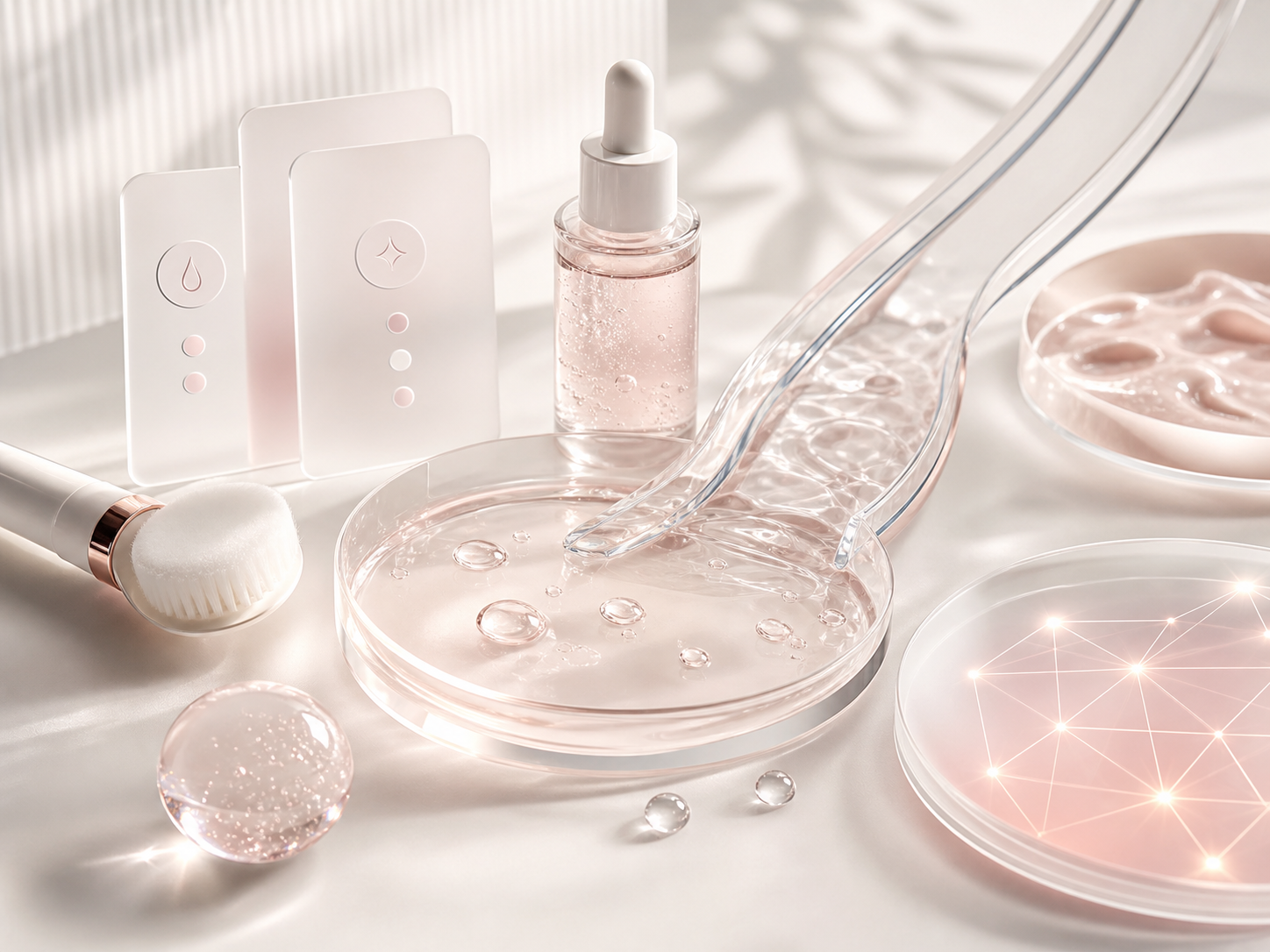
When I hear "glass facial" in a local spa or med-spa context, I assume the person wants skin that looks fresh, reflective, even, and hydrated without heavy makeup.
That can come from several routes:
| If the skin looks... | The likely facial lane |
|---|---|
| Dull and dusty | Gentle exfoliation, enzyme polish, or Hydrafacial-style service |
| Flaky and tight | Barrier repair, calming mask, humectants, and moisturizer support |
| Congested but not inflamed | Careful extractions, salicylic acid discussion, or a mild peel |
| Uneven or sun-marked | Conservative peel plan, pigment-safe topicals, and strict SPF |
| Peach-fuzzy or makeup-grabby | Dermaplaning if the skin is calm enough |
| Red or reactive | LED, calming facial, barrier care, and fewer active steps |
| Fine-lined from dehydration | Hydration, occlusive support, and a slower routine reset |
The same word can point to very different work. That is why I would ask what the appointment actually includes before I book it.
If the provider cannot explain whether the appointment uses suction, acids, blades, heat, light, extractions, or active ingredients, I would slow down. "Glow" is a finish. It is not a treatment plan.
My Albuquerque and Corrales filter
I would treat Albuquerque, Corrales, Los Ranchos, and the west-side suburbs as one practical facial market because a lot of people will drive across town for the right provider. I would still think about convenience if the plan requires a series, but for the first appointment I care more about judgment.
Glass has local provider cards for the broader Albuquerque metro, which is useful for opening the first shortlist without turning the decision into a camera-roll mess.
Provider guide
Pink Mountain Wellness
Pink Mountain Wellness is a leading medical spa in Albuquerque, NM offering Botox, fillers, RF microneedling, laser treatments, body contouring, and wellness services. Book your consultation today.
Provider guide
SkinSpa Albuquerque
Discover Albuquerque’s premier med spa for body contouring, Botox, facials, fillers & laser treatments. Schedule your consultation today!
Provider guide
K-Aesthetics
K Aesthetics is a modern medical spa in Albuquerque, New Mexico offering advanced aesthetic and wellness treatments in a patient-focused setting. Services include Botox, dermal fillers, laser treatments, CO2 resurfacing, microneedling, chemical peels, and…
Provider guide
NM Aesthetics Wellness
NM Aesthetics | Wellness is a modern aesthetic medicine practice, where natural results and celebrating individual unique beauty is prioritized. We utilize the latest technologies and evidence based practice, to provide our patients with the highest quality…
I would use that list to find local options, then I would call or book a consultation with a narrow question:
"I want a hydrated, smooth, glass-skin finish, but I live in dry New Mexico sun and I do not want to over-exfoliate. What would you do first, and what would you avoid?"
That one question tells me a lot. A careful provider should not jump straight to the strongest peel or most aggressive resurfacing just because I used the word glass. They should ask about retinoids, acne medications, recent sun exposure, melasma, rosacea, eczema, allergies, pregnancy, photosensitizing medications, prior peels, recent waxing, and how my skin usually handles acids.
If the answer is only "we have a package for that," I would keep looking.
Hydrafacial-style services: good when the goal is clean, plump, and low drama
A Hydrafacial-style appointment is often the most literal "glass facial" people imagine: cleanse, light exfoliation, suction-assisted extraction, and serum delivery. It can make skin look cleaner and more hydrated quickly, especially if the main issue is dullness, surface debris, makeup texture, or mild congestion.
I like this lane when someone wants a visible refresh without committing to peel downtime.
I would still ask practical questions:
- Which acids or exfoliating steps are used?
- How strong is the suction?
- Do you adjust passes for redness, rosacea, or broken capillaries?
- Are extractions included, and how aggressive are they?
- What serum or booster are you using?
- Should I stop retinoids, exfoliating acids, benzoyl peroxide, or acne treatments before the visit?
- What should I avoid for the next 48 hours?
The suction part matters. Skin can look nice immediately and still feel irritated later if the provider goes too hard around the nose, cheeks, or chin. In dry Albuquerque air, I would rather leave a little congestion behind than walk out polished and wake up stinging.
For an event, I would not book a first-ever Hydrafacial-style service the day before. I would test it two to three weeks earlier, see how my skin behaves, then repeat closer to the event only if the first visit was calm.
Chemical peels: useful, but not automatically glassier
Chemical peels can be excellent. They can help with dullness, clogged pores, uneven tone, rough texture, acne marks, and sun damage depending on the acid, strength, layers, prep, and aftercare.
They can also be the wrong first move.
In New Mexico, I would be extra careful with peel timing because the sun is not a small aftercare detail. If someone spends time driving, hiking, gardening, watching sports, commuting during bright hours, or walking around Old Town, Nob Hill, Corrales, or the Bosque, the recovery plan needs to be realistic.
The question is not only "can I get a peel?"
It is "can I protect healing skin well enough after the peel?"
I would ask:
- Is this a superficial, medium, or deeper peel?
- What acid or blend are you using?
- How much visible peeling should I expect?
- How many days should I avoid direct sun, workouts, heat, scrubs, retinoids, and acids?
- Is this a good idea if I have melasma, deeper skin tone, recent tanning, or post-inflammatory hyperpigmentation?
- What should I use if my skin gets tight or itchy?
- What would make you stop the peel early?
If I wanted glow more than correction, I would usually choose the lightest effective option. A mild peel that leaves the barrier intact is more useful than a dramatic peel that forces me into two weeks of irritation and sunscreen anxiety.
Dermaplaning: great for texture, not great for angry skin
Dermaplaning can make skin look instantly smoother because it removes vellus hair and some surface buildup. Makeup can sit better. Light can reflect more evenly. For a glassy finish, that can be satisfying.
But dermaplaning is still physical exfoliation with a blade.
I would consider it if my skin were calm, not actively breaking out, not sunburned, not recently peeled, not sensitized from retinoids, and not covered in inflamed acne. I would be more cautious if I had eczema flares, open spots, active cold sores, fresh waxing, or a history of irritation after facial shaving.
The combination question is important. Dermaplaning plus a peel can be too much for some people. Dermaplaning plus a strong active serum can also sting. Around Albuquerque and Corrales, where dryness already makes the barrier more fragile, I would not stack every glow tactic in one visit just because the menu allows it.
My safer version would be dermaplaning plus hydration and calming care, not dermaplaning plus the strongest resurfacing option available.
Gentle exfoliation: the underrated middle lane
If I could rename half of the "glass facial" menu, I would make the first category "gentle exfoliation plus barrier support."
That sounds less exciting, but it is often the better fit.
Gentle exfoliation can mean an enzyme mask, low-strength lactic acid, a soft polish, a very mild peel, or a careful Hydrafacial-style pass. The goal is not to strip the face until it squeaks. The goal is to remove enough surface dullness that hydration can sit better and skin can reflect light without feeling raw.
This lane makes sense when the skin is:
- Dull but not deeply damaged
- Slightly rough from dryness
- Mildly congested but not inflamed
- Makeup-grabby
- Sensitive to stronger acids
- New to professional facials
It is also the lane I would choose if I were trying a new provider. I want to see whether they respect skin feedback before I trust them with stronger work.
I would ask them to keep the first appointment conservative. If my skin looks better for a week and does not sting, I can always build from there. If the first appointment wrecks my barrier, I lose time.
LED: supportive, not a magic glass switch
LED can be a useful add-on, especially when the goal is calming, redness support, or recovery. It is usually not the whole answer for rough texture or clogged pores, but it can fit nicely after a gentle facial when the skin needs less irritation, not more.
I would not expect LED alone to transform skin in one session. I would think of it as a low-drama support step, especially if the provider uses it after extractions, a mild exfoliation, or a calming mask.
The questions I would ask are simple:
- What kind of LED are you using?
- Is eye protection included?
- Is this safe with my medications or skin condition?
- How many sessions would you expect before judging it?
- Is this an add-on or the main point of the appointment?
If my skin were red, overworked, or reactive, I would rather hear a provider suggest LED and barrier repair than watch them push acid, suction, and dermaplaning all in the same visit.
Barrier repair: the least glamorous part that makes the glow believable
Barrier repair is not a boring afterthought. It is the part that decides whether a facial glow lasts or turns into tightness.
In dry New Mexico conditions, I would look for a provider who talks about water loss, moisturizer, ceramides, calming ingredients, sunscreen, and what to pause at home. I would be suspicious of any glass facial that treats moisture as a final mask instead of a full recovery plan.
The barrier-support version of the appointment may include:
- Gentle cleansing
- Minimal or no exfoliation
- Humectants like glycerin or hyaluronic acid
- Calming ingredients
- Ceramide-rich moisturizer
- A bland finishing cream
- No fragrance-heavy finishing step if the skin is reactive
- Clear instructions for the next few nights
At home, I would simplify. Cleanser, moisturizer, sunscreen in the morning. Cleanser and moisturizer at night. No scrub. No retinoid. No acid toner. No benzoyl peroxide unless a clinician specifically told me to continue. No new vitamin C serum right after a peel or aggressive facial.
If I were trying to keep the routine organized, I would use Glass to log the appointment date, what was used, what I paused, and how my skin looked on day one, day three, and day seven. I would also pair the appointment with a calmer routine like the skin barrier repair routine or a simple morning and night skincare routine order instead of adding more actives because the facial made me excited.
When I would avoid aggressive treatments
I would avoid aggressive exfoliation, strong peels, hard suction, dermaplaning, and stacked resurfacing if my skin were already giving warning signs.
Those signs include:
- Burning when applying moisturizer
- New flaking around the mouth, nose, or cheeks
- A tight shiny look that is not healthy glow
- Recent sunburn or windburn
- Active eczema or dermatitis
- Inflamed acne that hurts
- Open picked spots
- Recent waxing, threading, laser, or strong retinoid use
- Melasma flare or pigment that darkens easily
- A big outdoor week coming up
- A history of post-treatment hyperpigmentation
May can be a tricky month because people start spending more time outside. If I had graduation events, weddings, trail days, patio dinners, or travel coming up, I would choose the boring safe facial over the dramatic one.
The more my calendar involves sun and heat, the more conservative I get.
How I would choose between the main options
If I wanted a quick glow before plans, I would choose a Hydrafacial-style or gentle exfoliation facial with hydration, not a strong peel.
If my skin felt dry, tight, or reactive, I would choose barrier repair, LED, and calming care. I would skip the "glass" language entirely and tell the provider I want comfort first.
If my skin looked dull but calm, I would consider gentle exfoliation, enzyme work, or light dermaplaning if I had no active irritation.
If I had clogged pores and blackheads, I would ask about extractions and a mild salicylic direction, but I would not let suction or picking become the whole appointment.
If I had pigment, sun spots, melasma, or deeper acne marks, I would ask for a longer plan. One facial may make the skin look brighter for a few days, but pigment work needs more caution, better sunscreen habits, and often a slower topical or peel strategy.
If I had an event in less than a week, I would not try a new peel, new dermaplaning provider, or new aggressive treatment. I would choose hydration and calming.
The consult questions I would bring
I would keep the questions plain:
- What exactly happens during this glass facial?
- Which step does the exfoliating?
- Is there suction, dermaplaning, acid, heat, or extractions?
- What would you change because I live in dry, high-sun New Mexico?
- What should I stop before the appointment?
- What should I avoid after?
- How red should I expect to be that day?
- What would be a bad reaction?
- What skin types or situations should skip this?
- If my skin is already dry, would you still do the same service?
The answer I want is specific. Not scary, not salesy, just specific.
If the provider says they would reduce suction, skip dermaplaning, choose a milder acid, add LED, or turn the appointment into barrier repair because my skin looks irritated, I trust that more than a provider who treats every face the same.
My practical May 2026 answer
If I were booking near Albuquerque or Corrales in May 2026, my first-choice glass facial would be conservative: gentle cleanse, controlled exfoliation, maybe Hydrafacial-style work if my skin tolerates suction, no unnecessary stacking, LED or calming support if redness is an issue, and a barrier-focused finish.
I would avoid the strongest peel unless I had a clear correction goal, time to recover, and a provider who could explain pigment risk and sun avoidance without hand-waving.
I would avoid dermaplaning if I were inflamed, picked, windburned, recently waxed, or already peeling.
I would avoid any appointment that made the glow sound instant but could not explain aftercare.
The best version of a glass facial here is not the most aggressive one. It is the one that leaves skin smoother, calmer, more hydrated, and easier to maintain in real Albuquerque-Corrales weather.
That is the finish I would pay for.