Some cleansers should not be used on autopilot.
This is one of them.
Youth To The People Superfruit Gentle Exfoliating Cleanser with Vitamin C + Papaya looks like a bright, juicy daily face wash at first. The bottle is cheerful. The name sounds soft. Papaya makes it feel more friendly than clinical.
But the formula is not just fruit and foam.
It has glycolic acid, lactic acid, salicylic acid, capryloyl salicylic acid, phytic acid, niacinamide, papaya extract, ginger root, ascorbyl glucoside, caffeine, fragrance, and a gel-cleanser base. That is a lot of personality for a rinse-off step.
In May 2026, my read is simple: I would treat this as an exfoliating cleanser, not a regular gentle cleanser. I would use it a few times a week first. I would not start it twice a day on skin that is dry, peeling, irritated, using retinoids heavily, or already tired from too many actives.
That does not make it bad.
It makes it specific.

The quick answer
Youth To The People Superfruit Cleanser is most interesting if your skin is normal, combination, oily-leaning, dull, rough, or clogged-looking, and you want a rinse-off exfoliating step that feels cleaner and brighter than a plain gel cleanser.
I would be careful if your skin is dry, sensitive, fragrance-reactive, rosacea-prone, freshly over-exfoliated, or already using a strong acne or retinoid routine.
The buying line is not complicated:
| If your skin feels like... | My read on Superfruit Cleanser |
|---|---|
| Dull, uneven, a little congested | Worth testing carefully |
| Oily by midday but not sensitive | Possible good fit |
| Combination with dry cheeks | Use only a few times a week at first |
| Tight after most gel cleansers | Probably not my first pick |
| Already peeling from tretinoin or retinol | Skip for now |
| Fragrance-reactive | Patch test or skip |
| Looking for a daily boring cleanser | Choose the Superfood Cleanser lane instead |
The product data I have for Sephora lists it at $19.00 - $68.00, with a rating around 4.25 from roughly 606 reviews. That is a decent review signal, but I would not buy it because the stars look good. I would buy it only if the formula's job matches the skin problem.
What it is actually trying to do
This is a cleanser with a treatment mood.
Youth To The People describes it as a gentle exfoliating cleanser with fruit enzymes and acids that helps brighten the look of skin and support surface renewal. The suggested use also gives away the real role: use it as a treatment at least three times a week, either beside the brand's Superfood Cleanser or more often if your routine can handle it.
That is the key.
The brand is not quietly saying, "Use this exactly like every basic cleanser." It is positioning it as a more active cleansing step. I like that, because it keeps expectations more honest.
A cleanser can help with texture and dullness, but it is still rinsed off. It does not sit on the skin like a leave-on acid toner or serum. I would not expect the same kind of resurfacing you might get from a dedicated exfoliant. I would expect a fresher cleanse, smoother feel, and maybe better-looking texture over time if your skin tolerates the formula.
The problem starts when people treat every cleanser as harmless because it rinses away.
Rinse-off does not mean irrelevant.
If a cleanser has acids, fragrance, surfactants, and a 30-second massage instruction, it can still change how your skin feels that week.
The ingredient story in plain English
The formula is built around three ideas: cleansing, exfoliating, and brightening.
The cleansing base includes ingredients like coco-glucoside and sodium methyl cocoyl taurate. Those help the product behave like a gel cleanser instead of a straight acid treatment.
The exfoliating side is where the product gets more active. The ingredient list includes glycolic acid, lactic acid, salicylic acid, capryloyl salicylic acid, and phytic acid. Mayo Clinic notes that salicylic acid is available in both wash-off and leave-on acne products, and that nonprescription acne products can cause dryness, irritation, burning, or stinging, especially for sensitive skin. That is the exact kind of caution I would bring to this cleanser.
The brightening and skin-feel story comes from papaya extract, ginger root, ascorbyl glucoside, niacinamide, yerba mate, caffeine, bisabolol, and supporting ingredients. On paper, it is a polished modern exfoliating cleanser: not just "scrub harder," but a blend of acids, plant extracts, and a gel texture.
The friction point is fragrance.
The ingredient list includes parfum/fragrance plus limonene and linalool. Many people tolerate that without a problem. Some do not. If your skin gets red or itchy from scented skincare, I would not ignore that just because the bottle looks clean and fresh.
Here is the formula read I would keep in my head:
| Formula lane | What it means in real life |
|---|---|
| Glycolic and lactic acids | Surface-smoothing exfoliation potential |
| Salicylic acid and capryloyl salicylic acid | More interesting for pores and oily-feeling congestion |
| Papaya and ginger root | Bright, fresh, radiance-focused product identity |
| Glycerin and bisabolol | Some comfort built into the formula |
| Fragrance, limonene, linalool | Watch closely if your skin is reactive |
That mix can be useful.
It can also be too much if the rest of your routine is already loud.
Why I would not start with twice a day
Twice a day is a lot for an exfoliating cleanser.
Some skin can handle it. I would not assume mine can.
If your routine is already simple, your barrier is comfortable, and your skin tends to get oily or dull quickly, you may eventually use it more often. But I would earn that frequency. I would not start there.
My starting plan would be:
- Use it at night.
- Use it two or three times the first week.
- Keep every other step boring.
- Do not add a new retinoid, peel pad, acne serum, or vitamin C serum the same week.
- Watch the skin ten minutes after cleansing, not just during the cleanse.
That last part matters.
A cleanser can feel amazing while you use it. The slip, scent, foam, and rinse can all feel like a clean reset. Then ten minutes later, the mouth area feels tight, the cheeks look shiny in a bad way, and moisturizer starts to sting.
That is not a glow.
That is your skin asking you to slow down.
The texture question
I would expect this to feel more like a gel treatment cleanser than a soft cream cleanser.
That makes sense for the product. A cream cleanser would make the exfoliating identity feel confused. A gel texture gives the product a cleaner, brighter, more active feel. It probably feels satisfying when skin is oily, sweaty, sunscreen-coated, or a little rough.
But texture preference can trick you.
People who love a fresh cleanse often overuse active cleansers because the skin feels cleaner right away. People with dry skin often keep using them because the first few washes feel smoother, then the tightness shows up later.
I would judge it by the after-feel:
| Signal | Good sign | Bad sign |
|---|---|---|
| Ten minutes after cleansing | Skin feels clean but normal | Skin feels pulled or shiny-tight |
| Moisturizer application | Moisturizer feels comfortable | Moisturizer burns or disappears instantly |
| Next morning | Skin looks smoother and calmer | New flakes around mouth, nose, or chin |
| Breakout areas | Less greasy congestion over time | More redness and tender bumps |
The goal is not to feel the cleanser working.
The goal is to have skin that behaves better after you rinse.
Who I think will like it
I would put this in front of someone who wants a brighter cleanse but does not want to commit to a leave-on exfoliating acid yet.
That person may have rough texture on the forehead, visible dullness, oil buildup around the nose, clogged-looking pores, or that heavy feeling where a normal cleanser never seems to make the face look fresh.
They may also be someone who uses the classic Youth To The People Superfood Cleanser and wants a more active partner a few nights a week. That pairing makes more sense than replacing every cleanse with the Superfruit version immediately.
The best fit is probably:
- normal skin that gets dull
- combination skin with oily zones
- oily-leaning skin that wants smoother texture
- sunscreen users who want a more polished second cleanse
- people who tolerate fragrance
- people not already overusing acids
I would be more excited about this for a person with texture than for a person with true dryness.
Dry skin can be dull too, but dry skin often needs cushion first. If your skin is rough because it is under-moisturized, exfoliating harder can make the problem look worse.
Who should skip it
Skip it if your skin barrier is already angry.
If water stings, moisturizer burns, your cheeks are flaky, your mouth area is peeling, or your retinoid has made your face feel raw, I would not reach for this cleanser yet. I would simplify first.
Skip it if you want a plain daily cleanser. Youth To The People already has the Superfood Cleanser for that lane. The Superfruit Cleanser is the more active sibling.
Skip it if you are fragrance-reactive. The formula includes fragrance-linked components, and there is no reason to force your face through that if you already know scented skincare is a problem.
Skip it if your acne routine is already stacked. If you use benzoyl peroxide in the morning, tretinoin at night, a salicylic toner, and clay masks, adding an acid cleanser may not be the missing piece. It may be the reason everything starts feeling irritated.
Skip it if you expect a cleanser to erase dark spots. Brightening cleansers can support a routine, but stubborn discoloration usually needs sunscreen discipline, time, and well-tolerated leave-on ingredients.
How I would use it in a real routine
I would keep it boring at first.
For normal or combination skin:
| Time | Routine |
|---|---|
| Morning | Gentle cleanser or rinse, moisturizer, sunscreen |
| Night, 2-3 times weekly | Superfruit Cleanser, simple moisturizer |
| Other nights | Gentle cleanser, regular treatment if tolerated, moisturizer |
For oily or congested skin:
| Time | Routine |
|---|---|
| Morning | Gentle cleanse or Superfood-style cleanse, sunscreen |
| Night | Superfruit Cleanser a few nights weekly, lightweight moisturizer |
| If tolerated | Increase slowly, but only if skin stays comfortable |
For retinoid users:
| Situation | My move |
|---|---|
| New to retinoids | Do not add this yet |
| Stable on retinoids | Use on non-retinoid nights first |
| Peeling or tight | Pause exfoliating cleansers |
| Skin calm for weeks | Test once weekly, then adjust |
I would not use this as the same-night partner for a strong retinoid when I am still learning how my skin reacts. That is not because the pairing is impossible. It is because it makes the feedback harder to read.
When irritation shows up, you want to know what caused it.
The Superfood Cleanser comparison
The obvious question is whether to choose Superfruit or Superfood.
I would separate them by job.
| Product | Image | Best role | My read |
|---|---|---|---|
| Youth To The People Superfruit Gentle Exfoliating Cleanser |  | Exfoliating treatment cleanser for dullness and texture | Better a few times weekly first |
| Youth To The People Superfood Hydrating Gentle Antioxidant Refillable Cleanser | 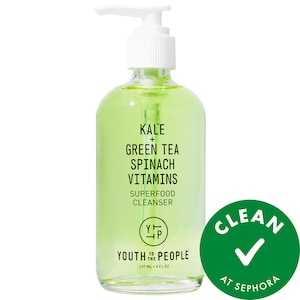 | Daily antioxidant gel cleanser | Better as the everyday baseline |
| Caudalie Vinopure Pore Purifying Gel Cleanser | 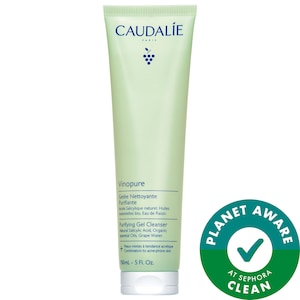 | Fresh salicylic-acid gel cleanse for oily skin | More acne-prone and oil-control coded |
| Skinfix Acne+ 2% BHA + Azelaic Acid + Niacinamide + AHA Cleanser | 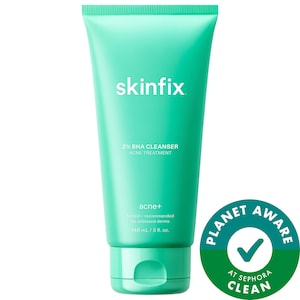 | Stronger acne-cleanser lane | Better if breakouts are the main issue and skin tolerates actives |
If I wanted one cleanser to keep by the sink every day, I would lean Superfood.
If I wanted a few-nights-a-week texture step, I would look at Superfruit.
That distinction keeps the routine calmer.
The acne question
This cleanser can make sense in an acne-prone routine, but I would not call it an acne routine by itself.
The formula includes salicylic acid and other exfoliating acids, which are relevant for clogged-looking pores and texture. Mayo Clinic describes salicylic acid as an ingredient that can help prevent plugged hair follicles, and the American Academy of Dermatology also talks about acne products drying the skin enough that moisturizer can become important even for oily skin.
That is the practical lesson.
Active cleanser plus no moisturizer is often a trap.
If your skin is oily and acne-prone, you may still need moisturizer. If you skip it because you are afraid of shine, your face may get tight, irritated, and harder to treat consistently. The better move is a lightweight moisturizer that does not feel greasy.
For inflamed acne, painful cysts, or acne that is leaving marks, I would not rely on this cleanser alone. I would think of it as a supporting step. The main routine may still need benzoyl peroxide, adapalene, azelaic acid, prescription care, or a dermatologist's plan depending on severity.
A cleanser can help the routine feel cleaner.
It should not carry the whole routine.
The brightening question
I understand why people get pulled in by the brightening claim.
Dull skin is frustrating because it is not always one problem. Sometimes it is dead skin buildup. Sometimes it is dehydration. Sometimes it is leftover marks. Sometimes it is sunscreen inconsistency. Sometimes it is just sleep, stress, and a routine that changes every five days.
Superfruit Cleanser can help most when dullness is tied to surface texture and oil.
It is less likely to be enough when dullness is actually dryness, irritation, or discoloration.
That is why I would not judge it by "glow" after one wash. Freshly cleansed skin can look brighter because it is clean, not because anything meaningful has changed. I would look for a pattern over two to three weeks: smoother makeup, less roughness, fewer clogged-looking areas, and no new tightness.
If the glow comes with flaking, it is not the right glow.
The fragrance and sensitivity issue
Fragrance is not automatically evil.
But it is a real decision point.
Some people love a cleanser that smells fresh because it makes the routine feel finished. Other people cannot tolerate that kind of product at all. If your face gets red around the nose and cheeks after scented products, or if fragranced cleansers make your skin itch, I would not try to out-discipline your skin.
The same goes for acids.
There is a difference between a product being "gentle" compared with harsher exfoliating products and being gentle enough for your specific face. The label can be true and still not be true for you.
I would patch test this one.
I would especially patch test if you use prescription acne products, retinoids, barrier creams, or have a history of perioral dermatitis, eczema, rosacea, or unexplained burning from cleansers.
The one-week test I would actually run
I would not make this complicated.
Use it at night on Monday, Wednesday, and Friday. Keep the rest of the routine steady. Take one quick photo in the same lighting before the first use and again at the end of the week.
Track five things:
| Signal | What I would write down |
|---|---|
| Tightness | Does my face feel pulled ten minutes later? |
| Redness | Do cheeks or nose look more flushed? |
| Texture | Does forehead or nose feel smoother? |
| Breakouts | Any new tender bumps or unusual clusters? |
| Moisturizer feel | Does moisturizer sit calmly or sting? |
That is enough.
If the week goes well, keep the same schedule another week. If it still goes well, decide whether you even need more frequency. More is not automatically better.
If the week goes badly, stop. Do not keep using it because you paid for it, because the bottle is pretty, or because your skin looked glowy for one day.
Where Glass fits
This is exactly the kind of product that benefits from tracking.
The changes are subtle at first. Your skin may feel smoother after one use, but the real decision is whether the pattern stays good. Does your texture improve without dryness? Does your oil feel more controlled without tightness? Do breakouts calm down, or does irritation quietly build?
I would log Superfruit Cleanser as its own step in Glass, especially if you are rotating it with a retinoid, benzoyl peroxide, vitamin C serum, or another exfoliant. Take the same photo twice a week. Note which nights you used it. Mark tightness, oiliness, and new breakouts by area.
The point is not to obsess.
The point is to stop guessing when a routine has too many moving parts.
My bottom line
Youth To The People Superfruit Gentle Exfoliating Cleanser with Vitamin C + Papaya is a good idea for the right person: someone with dull, uneven, oily, or texture-prone skin who wants an exfoliating cleanse a few times a week and can tolerate acids plus fragrance.
I would not use it like a plain face wash at first.
I would not start twice daily.
I would not add it to an already irritated retinoid routine.
I would use it like a controlled texture step. Start slow, watch the ten-minute after-feel, moisturize properly, and let the pattern tell you whether your skin wants more or less.
FAQ
Can I use Youth To The People Superfruit Cleanser every day?
Some people may be able to use it daily, but I would start two or three times a week because it is an exfoliating cleanser with multiple acids. Increase only if your skin stays comfortable.
Is Superfruit Cleanser better than Superfood Cleanser?
Not exactly. Superfruit is the more active exfoliating option. Superfood is the better everyday baseline for many people. I would choose based on the job, not the brand family.
Can I use it with retinol or tretinoin?
I would use it on non-retinoid nights first. If your retinoid routine is new, peeling, or irritating, wait until your skin is stable before adding an exfoliating cleanser.
Is it good for acne-prone skin?
It can support acne-prone skin that is oily or clogged-looking, but it is not a full acne treatment plan by itself. If acne is painful, persistent, or leaving marks, a more complete routine or professional guidance may be needed.
Does it remove makeup and sunscreen?
I would not rely on it alone for heavy makeup, waterproof mascara, or very water-resistant sunscreen. Use a first cleanse when your daytime layers are stubborn, then use this as the skin cleanse if your face tolerates it.