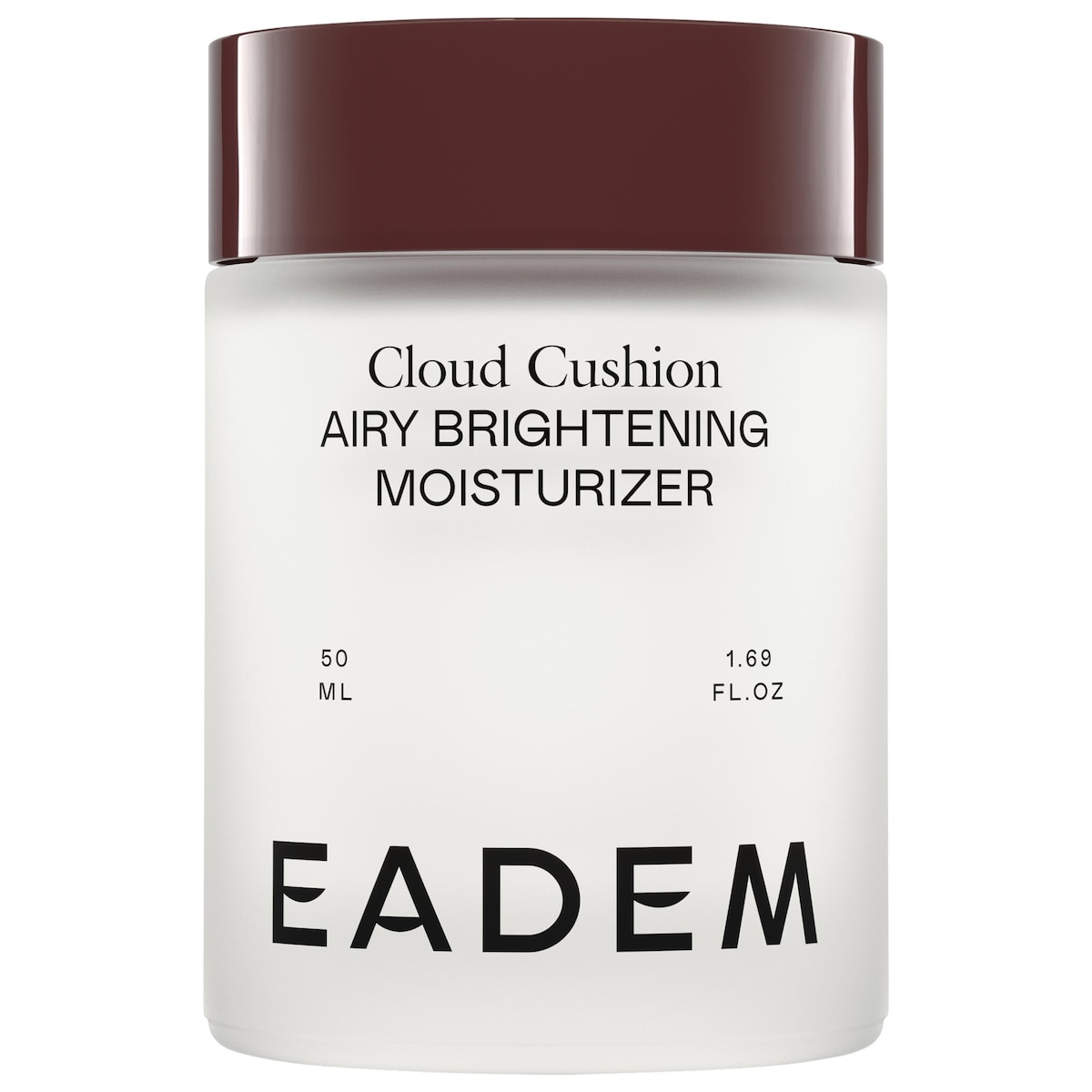
EADEM Cloud Cushion is not confusing because it lacks a point of view.
It is confusing because the name makes it sound soft, dewy, brightening, plumping, barrier-minded, makeup-ready, and gentle all at once. That is a lot to put on one jar.
So I would simplify the buying question in May 2026: do you want a moisturizer that feels plush enough for dry or dull skin, but still polished enough to wear under sunscreen or makeup?
That is the lane where EADEM Cloud Cushion Dewy Plumping Cream makes sense. It is a $48 cream with a strong rating signal, about 4.78 with roughly 900 reviews in the Glass product file, and it sits in a very specific middle space: more comfort than a water gel, less heavy-looking than a recovery balm.
I would not buy it because I expect one moisturizer to fix every tone, texture, redness, and dryness concern. I would buy it if my routine keeps failing at the cream step: too light and my face gets tight, too rich and my face looks coated, too matte and my makeup catches, too shiny and I stop using it.
That is a real routine problem.
Quick Verdict
EADEM Cloud Cushion is most interesting for normal, dry, combination, and dull-looking skin that wants a cream with cushion, ceramides, niacinamide, squalane, and a peptide angle without a fragrance-heavy feel.
It is not the first moisturizer I would choose for very oily skin that wants an invisible dry-down. It is also not the boring emergency cream I would choose when my skin is actively burning from overuse of acids or retinoids. In that situation, I would start with a stricter skin barrier repair routine and reduce variables before adding a prettier cream.
But for the person whose skin is merely dry, flat, red-looking, or hard to prep for makeup, the formula map is coherent. Glycerin and betaine support hydration. Squalane, plant oils, fatty alcohols, and dimethicone help the cream feel more cushioned. Ceramide NP, ceramide AP, ceramide EOP, cholesterol, phytosphingosine, and sodium lauroyl lactylate give the barrier story some structure. Niacinamide and tetrapeptide-30 push it toward tone and brightness support.
That is why I would judge it as a daily comfort cream, not as a miracle dark spot treatment.
What The Product Is Trying To Be
Cloud Cushion is a dewy moisturizer that tries to do three jobs at once.
First, it wants to moisturize in a way that lasts longer than a watery gel. Second, it wants to make the face look smoother and more alive immediately, especially before makeup. Third, it wants to feel relevant to people who care about uneven tone, because EADEM as a brand has a strong melanin-conscious brightening identity.
That mix is useful, but only if you keep the expectations clear.
A moisturizer can make skin look brighter by reducing dryness, softening rough patches, and keeping the surface more even. It can make tone look calmer when the barrier is less stressed. It can support a routine built around dark marks.
It cannot replace sunscreen, a dedicated pigment serum, patient retinoid use, or time.
So I would read Cloud Cushion as a moisturizer that helps the rest of the routine look better. That is a good job. It just needs to stay in its lane.
The Ingredient Read
The ingredient list starts with water, glycerin, caprylic/capric triglyceride, glyceryl stearate SE, palm kernel oil, cetearyl alcohol, niacinamide, babassu seed oil, squalane, methylpropanediol, and shorea seed butter.
That opening tells me this is not a thin gel. It is built with water-binding ingredients and a real emollient base. The cream should have slip, cushion, and a softer finish than a bare-bones gel moisturizer.
The barrier pieces show up later but still matter: ceramide NP, ceramide AP, ceramide EOP, cholesterol, phytosphingosine, sodium lauroyl lactylate, sunflower extract, and fatty texture builders. That is the kind of mix I like to see when a product says barrier support. It is not just one ceramide added for label appeal.
The brightening and tone-support side is led by niacinamide and tetrapeptide-30. Niacinamide is doing the broader work here: tone, redness look, pore appearance, and barrier support. Tetrapeptide-30 is the more specific brightening-positioned peptide.
The formula also includes oat bran extract, rice bran extract, bisabolol, tremella mushroom, adenosine, tocopherol, rosemary leaf extract, ginger root extract, and orange peel extract. I would not over-romanticize every botanical. The practical read is simpler: the base is a cushioned moisturizer with barrier lipids, niacinamide, squalane, and supporting soothers.
Who I Would Buy It For
I would buy this for someone who keeps saying, "My skin is not destroyed, but it never looks rested."
That person often has dry cheeks, dull tone, faint redness, and makeup that looks worse after lunch. They do not necessarily need a heavy balm. They need a cream that helps the surface look plump and even enough that sunscreen and makeup do not make the face look older or rougher.
This is also a good candidate for someone who wants a moisturizer that feels more grown-up than a bouncy gel but does not want a thick night cream as the default.
I would consider it for:
- dry skin that wants a dewy finish without a greasy balm feel
- normal skin that looks flat under makeup
- combination skin that needs more cheek comfort than a water cream gives
- tone-focused routines that still need a real moisturizer
- fragrance-avoidant shoppers who like a polished cream texture
- people who want ceramides and peptides in the cream step instead of adding another serum
The last point matters. Sometimes the smarter routine is not another treatment. Sometimes it is a moisturizer that makes the whole stack easier to repeat.
Who Should Skip It
I would skip Cloud Cushion if your main problem is that every moisturizer feels too shiny.
The word "dewy" is doing work here. I would not expect a flat matte finish. If you are very oily, live somewhere humid, or hate feeling cream on your face, there are cleaner fits in best lightweight moisturizers at Sephora.
I would also slow down if niacinamide has bothered you before. It is high enough in the formula that I would not ignore a known pattern. Some skin loves niacinamide. Some skin gets warm, bumpy, or flushed from it.
And I would not use this as a rescue product for a face that is currently stinging. When skin is in that state, the best move is usually fewer ingredients, fewer promises, and fewer new variables. Cloud Cushion may be gentle enough for many people, but "gentle enough" is not the same as "right for an active flare."
The Texture Question
The texture is the whole decision.
Cloud Cushion sounds like a cream that should sit between airy and plush. Based on the formula and the brand positioning, I would expect cushion, not invisibility. That means the best amount is probably smaller than the jar makes you want to scoop.
The usage direction is a generous pea-size amount on damp skin. That is a useful starting point. I would not begin with a thick layer, especially in the morning. The difference between a polished dewy finish and a heavy finish can be half a pea.
If you are combination, I would apply it unevenly on purpose. More on cheeks and around the mouth. Less on the forehead, nose, and chin. The face does not need a uniform layer if the face does not have uniform needs.
That one adjustment can make an expensive cream behave much better.
Morning Routine Fit
Cloud Cushion has a strong morning case because it is built around makeup prep.
The cleanest morning routine would be:
- Gentle cleanse or rinse.
- Hydrating serum only if it already works.
- Thin layer of Cloud Cushion.
- Sunscreen.
- Makeup if you wear it.
I would avoid stacking it over multiple sticky hydrating products on day one. If a cream is already cushiony, too many layers underneath can turn a good texture into pilling or shine.
The better test is simple. Does sunscreen spread more evenly? Do dry patches look quieter? Does base makeup cling less around the cheeks, mouth, or forehead? Does the finish still look intentional after a few hours?
Those are the signals I would use, not whether the face looks transformed after one application.
Night Routine Fit
At night, Cloud Cushion can be the last step in a simple routine.
I would use it after a hydrating serum, pigment serum, or gentle retinoid night if the skin already tolerates those steps. The product page's own usage direction points to using it after EADEM Milk Marvel and before or around retinol nights, but I would keep that idea broad: use the cream as the comfort layer, not as permission to add too many active steps.
The night value is especially clear if you wake up with tight cheeks after lighter moisturizers. That is the sign your cream is disappearing too quickly. Cloud Cushion has enough emollient structure that it may make a light night routine feel more complete.
If your skin is very dry, it still may need a richer option in winter. In that case, look at best night creams at Sephora rather than forcing this cream to act like a balm.
What I Would Track For A Week
I would not judge this cream from a hand swatch.
A hand swatch tells you slip. It does not tell you whether the face feels tight after lunch, whether sunscreen sits well, whether makeup separates, or whether your cheeks look calmer after several days.
For one week, I would track:
- morning tightness after cleansing
- comfort by late afternoon
- shine on the T-zone
- dry patches under sunscreen
- makeup settling around texture
- redness look around cheeks and nose
- whether any bumps appear after repeated use
If you already use Glass, this is exactly the kind of moisturizer I would log in the routine tracker. The win may be boring: fewer skipped moisturizer days, less midday tightness, a smoother sunscreen layer. Boring wins are still wins.
How It Compares To A Water Cream
A water cream is better if you want speed, lightness, and less finish.
Cloud Cushion is better if a water cream feels good at first but leaves your skin flat later. It is a more substantial cream with a brighter, softer finish. That can be great for dry or normal skin and too much for oily skin.
If I were choosing between the two, I would ask: do I want my moisturizer to disappear, or do I want it to leave a soft comfort layer?
If the answer is disappear, choose lighter.
If the answer is comfort layer, Cloud Cushion is more relevant.
How It Compares To A Rich Barrier Cream
A rich barrier cream is still the stronger choice for peeling, rough, cold-weather dryness, or recovery nights.
Cloud Cushion is more polished. It is a better fit when the cream needs to work under SPF or makeup and still look elegant. The tradeoff is that it may not feel as protective as a heavier ceramide cream.
That makes it a daily barrier-support cream, not the most serious emergency repair cream.
If you want the heavier end of this category, I compared ceramide moisturizers at Sephora is the better next read.
The Mistake I Would Avoid
The mistake is buying Cloud Cushion because it sounds like a brightening treatment.
Buy it as a moisturizer first. The tone-support ingredients are useful, but the main job is comfort, hydration, barrier support, and a dewy base. If it does those well, the product earns its place. If it does not moisturize your skin correctly, the brightening story does not matter.
I would also avoid adding it at the same time as a new exfoliant or retinoid. You will not know what caused irritation, bumps, or better texture. Give the cream its own week.
Bottom Line
EADEM Cloud Cushion Dewy Plumping Cream is worth considering if you want a $48 moisturizer that gives dry, dull, or normal-to-combination skin a cushioned dewy finish with ceramides, niacinamide, squalane, and a peptide angle.
I would buy it for skin that wants comfort without a heavy repair-balm look. I would skip it for very oily skin, niacinamide-sensitive skin, or a barrier that is currently in a burning, reactive phase.
The shortest buying rule: choose Cloud Cushion when your moisturizer needs to make skin look rested, smooth, and makeup-ready, not just hydrated for ten minutes.
FAQ
Is EADEM Cloud Cushion good for dry skin?
Yes, dry skin is one of the cleanest fits. The cream has glycerin, emollients, squalane, ceramides, cholesterol, and fatty texture builders, so it makes more sense for dry skin than a thin water gel.
Is it good under makeup?
It can be, especially if dry patches make makeup look rough. Use a thin layer and let it settle before sunscreen or base.
Is it fragrance-free?
The product is positioned as fragrance-free, which is useful for shoppers who like a polished cream but do not want a scented moisturizer.
Can oily skin use it?
Some oily skin may like it at night or in a small amount on drier areas, but I would not make it my first pick for very oily skin that wants a barely-there finish.